A home bar is about having the right things, not having everything. Whether you're working with $150 or $1,000, the goal is the same: a bar that reflects your taste and lets you pour something worth drinking without scrambling.
Here's how to think about it at three different budgets, and why, at some point, budget stops being the right frame entirely.
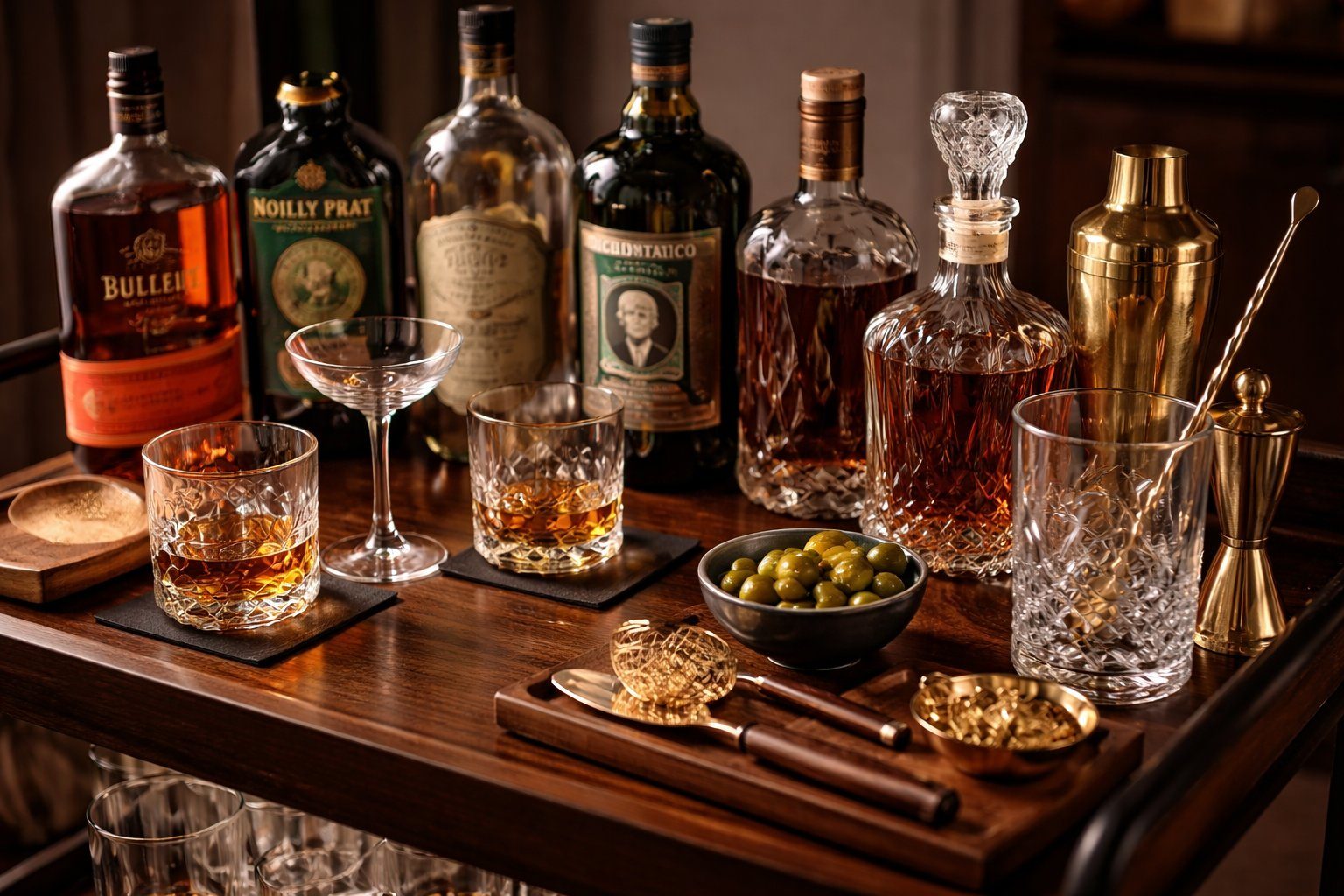
Under $150: The Foundation
At this budget, focus entirely on what goes in the glass.
The bottles: One bourbon (Wild Turkey 101 or Bulleit, both reliable and affordable). One blended Scotch (Monkey Shoulder or Famous Grouse). One gin (Tanqueray or Hendrick's). One rum (Diplomatico Planas or Appleton Estate Signature). One bottle of vermouth (Dolin Dry and Dolin Rouge, get both, they're inexpensive). Keep the vermouth in the fridge once opened. It's essentially a wine and will oxidize and go flat if you leave it out. A bad vermouth ruins a good cocktail.
That gives you the base for a Manhattan, a Negroni, an Old Fashioned, a Martini, and a solid rum drink. Five bottles, endless combinations.
What to skip at this budget: Fancy glassware, bar carts, exotic bottles. Get the basics right first.
Under $500: The Real Bar
This is where it starts to feel like a proper setup. At this level you can think about spirits plus tools plus glassware.
The bottles (build on the $150 list, then add): One rye whiskey (Rittenhouse or Sazerac 6). One tequila blanco (Cimarron or El Tesoro). One amaro (Averna or Montenegro). A bottle of Angostura bitters and orange bitters, essential not optional. Luxardo maraschino cherries, the real ones in the dark jar. Once you've had them in an Old Fashioned or a Manhattan you won't go back to the neon red ones.
The tools: A proper mixing glass (Libbey or similar). A bar spoon. A Hawthorne strainer. A jigger, double-sided 1oz/2oz. A cocktail shaker (Boston shaker if you want to do it properly). A channel knife for citrus peels. A muddler if you drink Old Fashioneds.
Glassware: Four Glencairn glasses for whiskey. Four coupe glasses for up drinks. Four rocks glasses for everything else.
On the bar cart: At $500 you can find a solid bar cart. IKEA's RASKOG trolley modified with a wood top, or look secondhand. You don't need to spend $300 on a cart. Spend it on bottles.
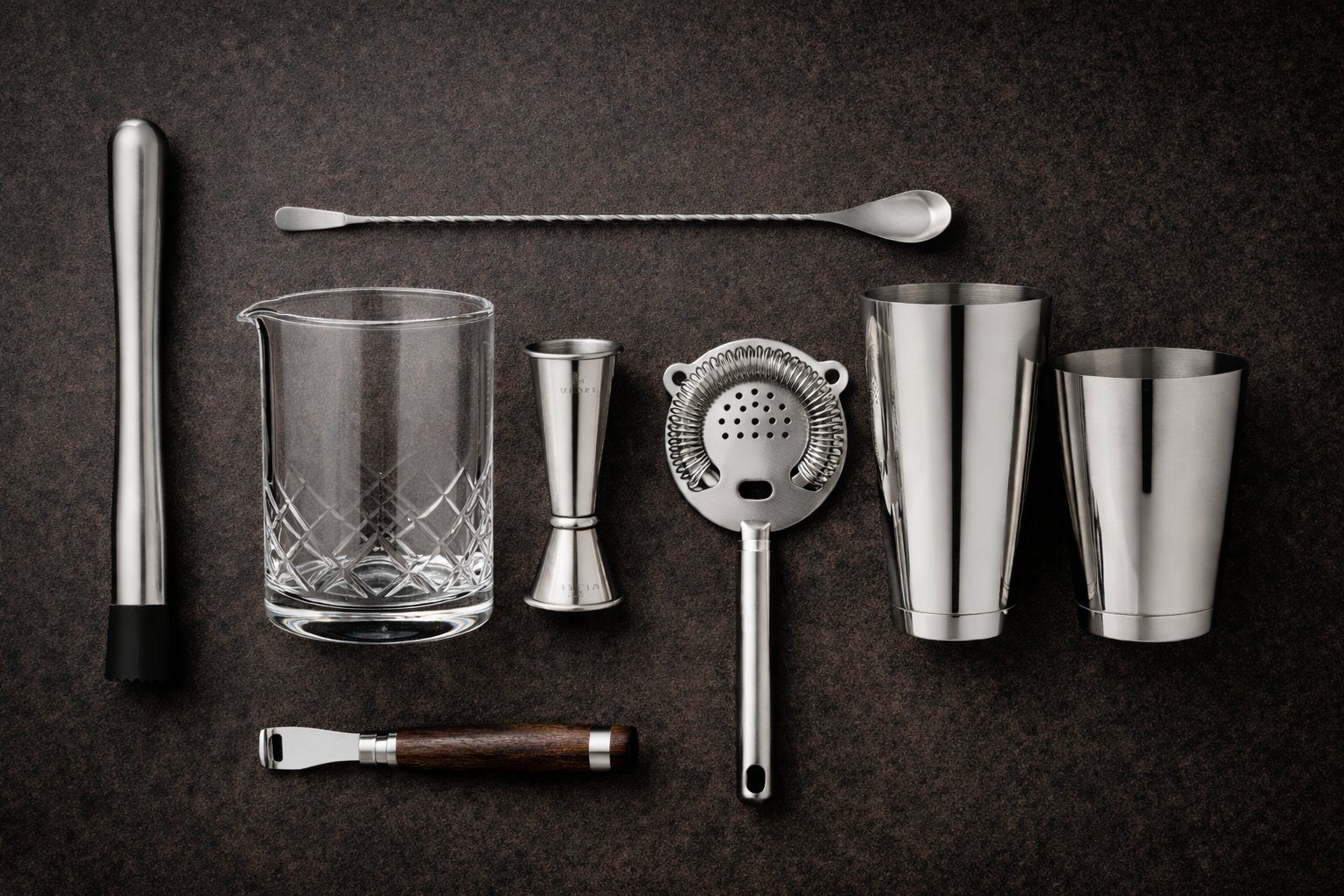
Under $1,000: The Considered Bar
At this level you're not just stocking a bar. You're building a space.
The bottles (build on $500, then add): A quality single malt Scotch (Glenfarclas 15 or Aberlour 12). A premium aged rum (Ron Zacapa 23 or Diplomatico Reserva Exclusiva). A mezcal (Banhez or El Silencio Espadin as entry, Del Maguey Vida if you want the real thing). A cognac or armagnac (Pierre Ferrand 1840 or Armagnac de Montal). Upgrade your vermouth to Carpano Antica Formula. A few liqueurs: Cointreau, Luxardo maraschino, and one good amaro.
The bar furniture: Now it makes sense to invest. A proper bar cart or sideboard in oak, walnut, or marble. Crate and Barrel, CB2, and West Elm all have options in the $200 to $400 range that look the part. Alternatively, a vintage bar cart from a secondhand shop can be exceptional.
Glassware upgrade: Riedel or Zalto wine glasses if you serve wine. Upgrade to Riedel or Schott Zwiesel rocks glasses. A good crystal decanter, lead-free, sealed tight.
Ice: A large format ice tray (Tovolo 2-inch cubes or sphere molds). Good ice matters more than most people realize.
Beyond Budget: When Cost Stops Being the Frame
At some point a home bar stops being about what you can afford and starts being about what you've decided to pursue.
This is the level where you're hunting allocated bottles, building a spirits collection alongside a whiskey collection, investing in a proper bar setup with a back bar display, temperature-controlled storage, and dedicated glassware for every pour.
Some people get to this point naturally. Their interest deepens, their palate sharpens, and what started as a few bottles on a shelf becomes something more intentional. There's no ceiling here. Vintage cognacs, rare single malts, small-production agricole rums, aged armagnacs. These are not purchases, they're commitments.
The thing that doesn't change at any level: the best bar is the one you actually use. Fill it with what you love. Pour it for people worth sharing it with.