This is the complete single-page version of the SSS Events series. Use your browser’s print function (Ctrl+P / Cmd+P) to save or print.
Contents
Part 1
1. Why Serving Order Matters
A good meal needs a proper ending. Not just dessert but something that tells the room the night has shifted. Digestifs have done that job for centuries, in monasteries, in restaurants, in private clubs, and at the kind of dinner parties where people actually care about what they’re drinking.
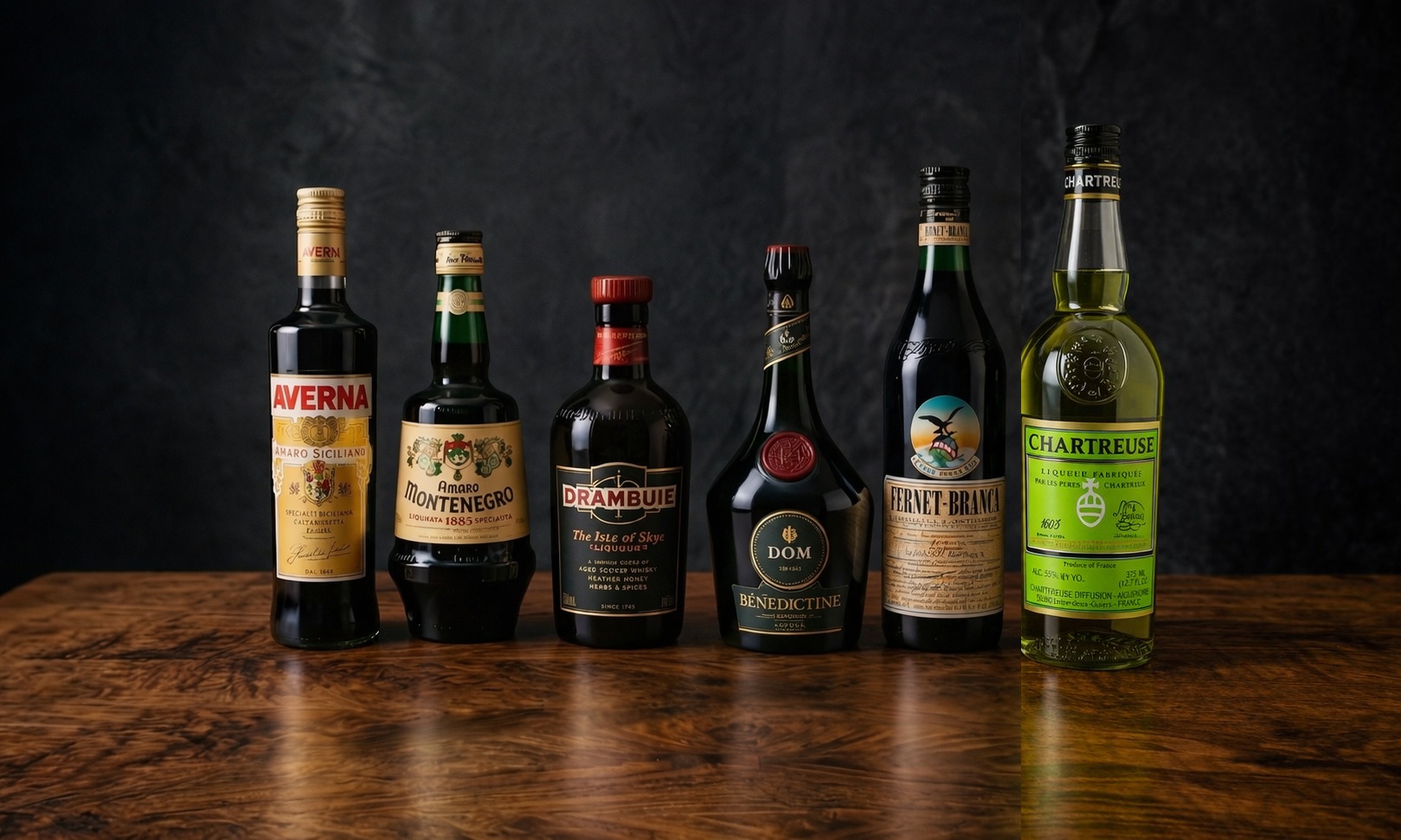
We hosted an evening of digestifs for a small group. Six bottles, poured in order from light to heavy. The rule is simple: start light, save the difficult stuff for last. Same logic as a whisky tasting or a wine flight. The order is part of the drink.
Both evenings were produced by the Society of Scents and Spirits under The Society Table, our curated tasting experience for private dinners and corporate events. The spirit selection, serving order, cocktail pairings, and tasting cards were all designed in-house. If you want to bring something like this to your table, reach out at sales@societyofscentsandspirits.com.
2. The Six Bottles
The evening ran in this order: Averna, Amaro Montenegro, Drambuie, Bénédictine, Fernet-Branca, Chartreuse Verte.
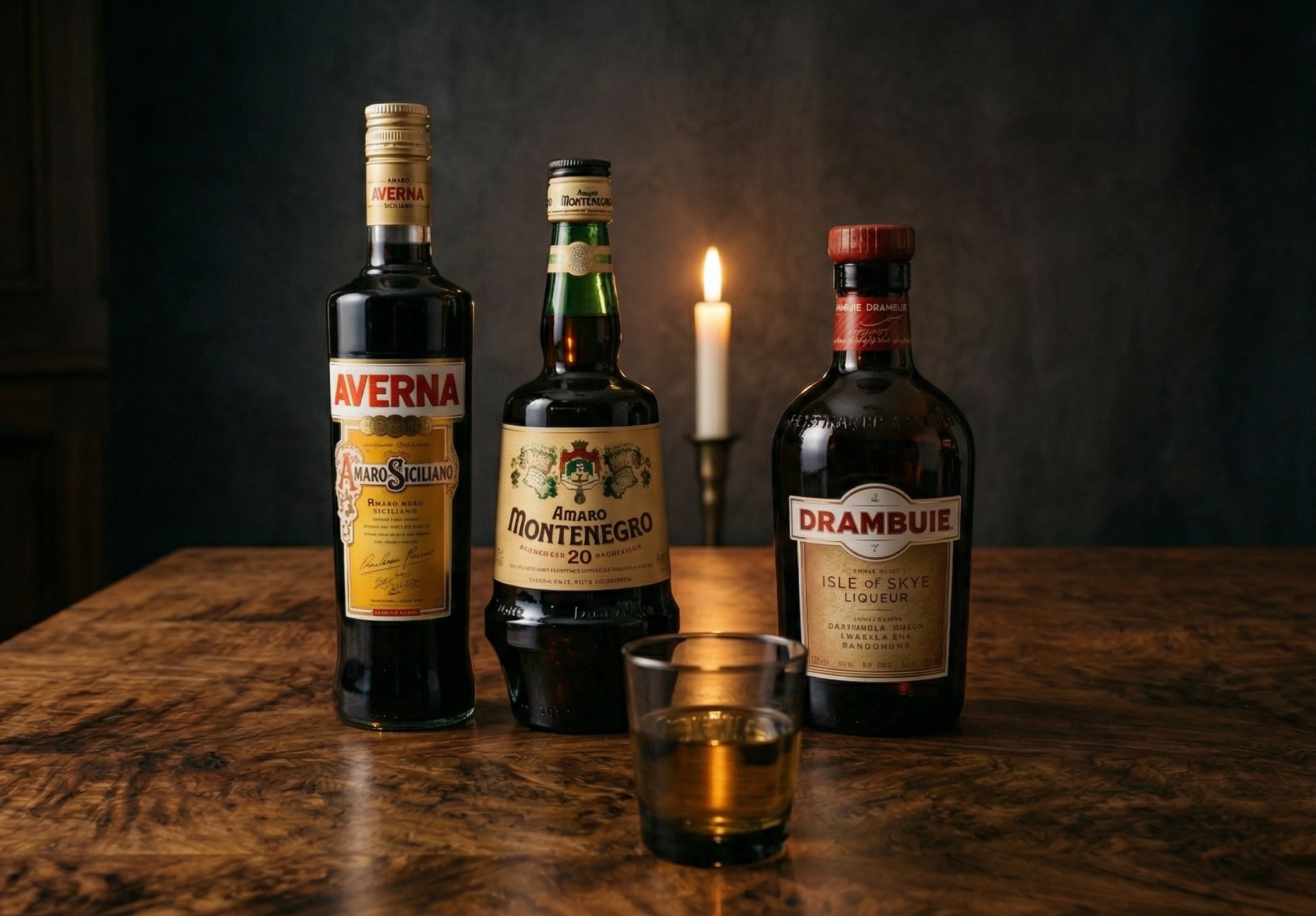
Sicily, 1868. Herbs, roots, and citrus peel steeped in spirit, sweetened with honey and caramel. The gateway. Sweet enough to be easy, bitter enough to be honest.
Named after Princess Elena of Montenegro in 1896. Over 40 botanicals: vanilla, orange peel, coriander, and the rest. Lighter and more floral than most amari. Bartenders reach for it because it cooperates. Most bottles in this category don’t.
300 years old. Scotch, heather honey, herbs, spices. Legend says Bonnie Prince Charlie gave the recipe to a MacKinnon clan member in 1746 after they sheltered him following Culloden. Rich, warming, and drinkable.
1510, Benedictine Abbey of Fécamp, Normandy. Formula lost in the Revolution, reconstructed in 1863 from an old manuscript. Every bottle reads D.O.M.: Deo Optimo Maximo. 27 botanicals. Nothing simple in this glass.
27 herbs across four continents. Unchanged since 1845. Only the Branca family knows the full list. A year in the barrel before it goes anywhere near a bottle. Ask a bartender what they drink after their shift. Usually this. The Ferrari cocktail in Part 1 is built on exactly this tension.
Carthusian monks, French Alps, 1737. 130 botanicals, known to exactly two monks at any time. One of only two spirits that keeps improving in the bottle after it’s sealed. 110 proof. Serve it cold. Pour it small.
3. The Cocktails
Four cocktails after the flight, each showing a different side of the evening’s bottles.
Born in the 1960s, made famous at New York’s 21 Club. Drambuie softens the Scotch and pulls out the honey. That’s the whole idea.
Chartreuse and gin is one of the more underrated combinations. Both herbal, both opinionated. The lime stops it from becoming too much. A small pour of Chartreuse is enough to complement the gin.
Named for the D.O.M. monks. Bénédictine on a clean vodka base, framed by lemon and maple syrup. Tastes more put-together than it has any right to.
Equal parts Fernet-Branca and Campari. Nobody knows who made it first. The name is the color. Campari pulls the menthol edge off the Fernet. Fernet cuts Campari’s bitterness. Salt sharpens both. Order this without being prompted. The bartender will notice.
Part 2
4. Why Whisky Is the World’s Most Storied Spirit
The second event was at the Amateur Comedy Club in Murray Hill, one of the oldest continuously operating private members clubs in America, founded in 1884. Seven whiskies, seven regions, a cocktail for each. And at the end, something I’ve been working on for a while.
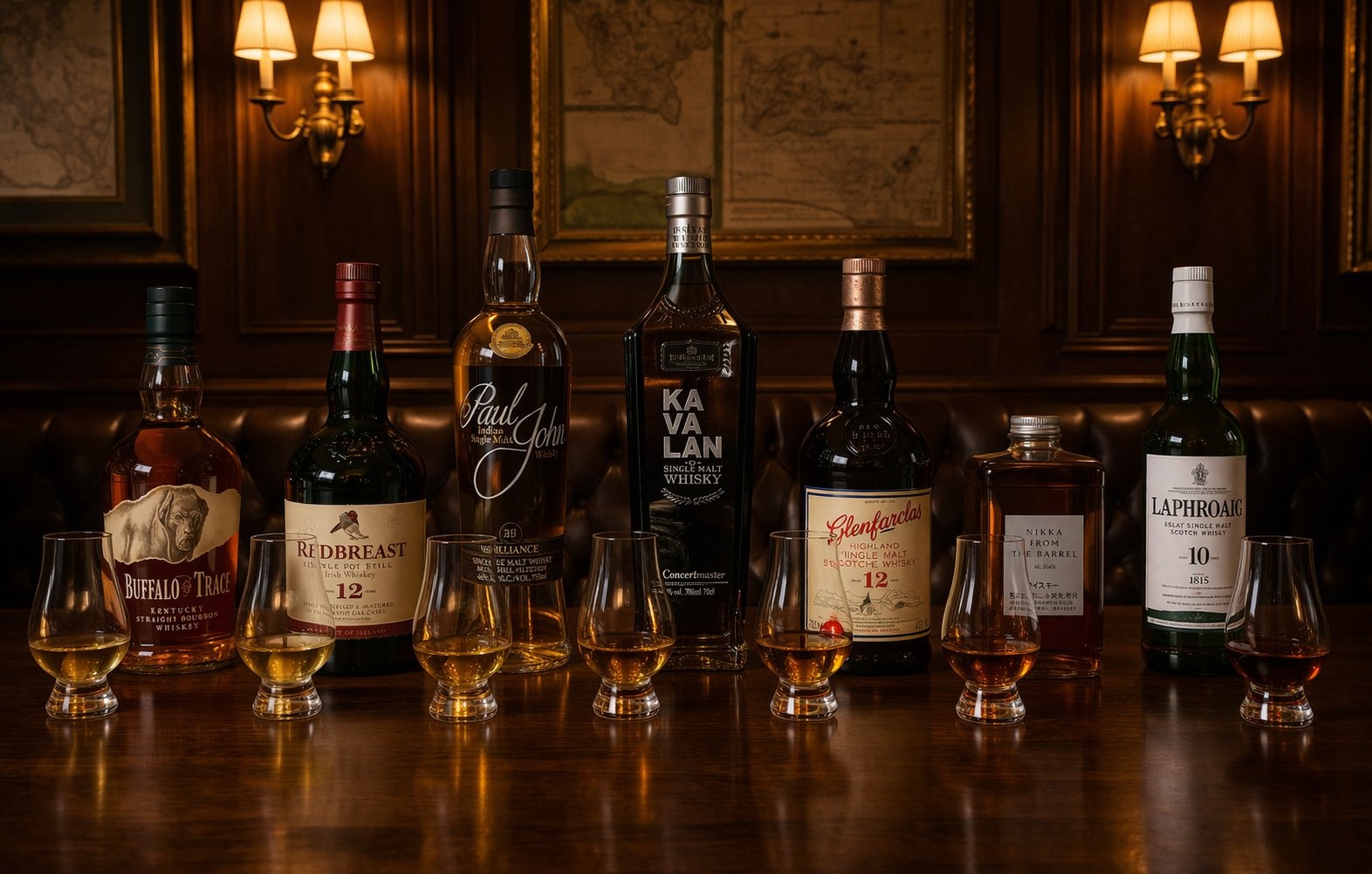
No other spirit carries place the way whisky does. The peat in the bog, the grain in the field, the wood from a barrel that used to hold sherry. We went new world to old, easy to demanding. Buffalo Trace first. Laphroaig last.
5. The Seven Whiskies
Oldest continuously operating distillery in America. Frankfort, Kentucky. In production since 1787. Buffalo Trace goes first because it argues with nobody. Vanilla, caramel, clean oak. Sets the reference point.
Single pot still is Ireland’s own style. Malted and unmalted barley in the same mash. The unmalted barley gives it texture and spice you won’t find in Scotch. Bourbon and Oloroso sherry casks. A few people at the table said they didn’t drink Irish whiskey. They have since reconsidered their opinions.
Goa, foot of the Western Ghats. Tropical climate does in 5 years what Scotland takes 12 to do. Unpeated flagship. Tropical fruit, honey, light spice. India is producing some of the most interesting whisky in the world right now and Paul John is one of the reasons people started paying attention.
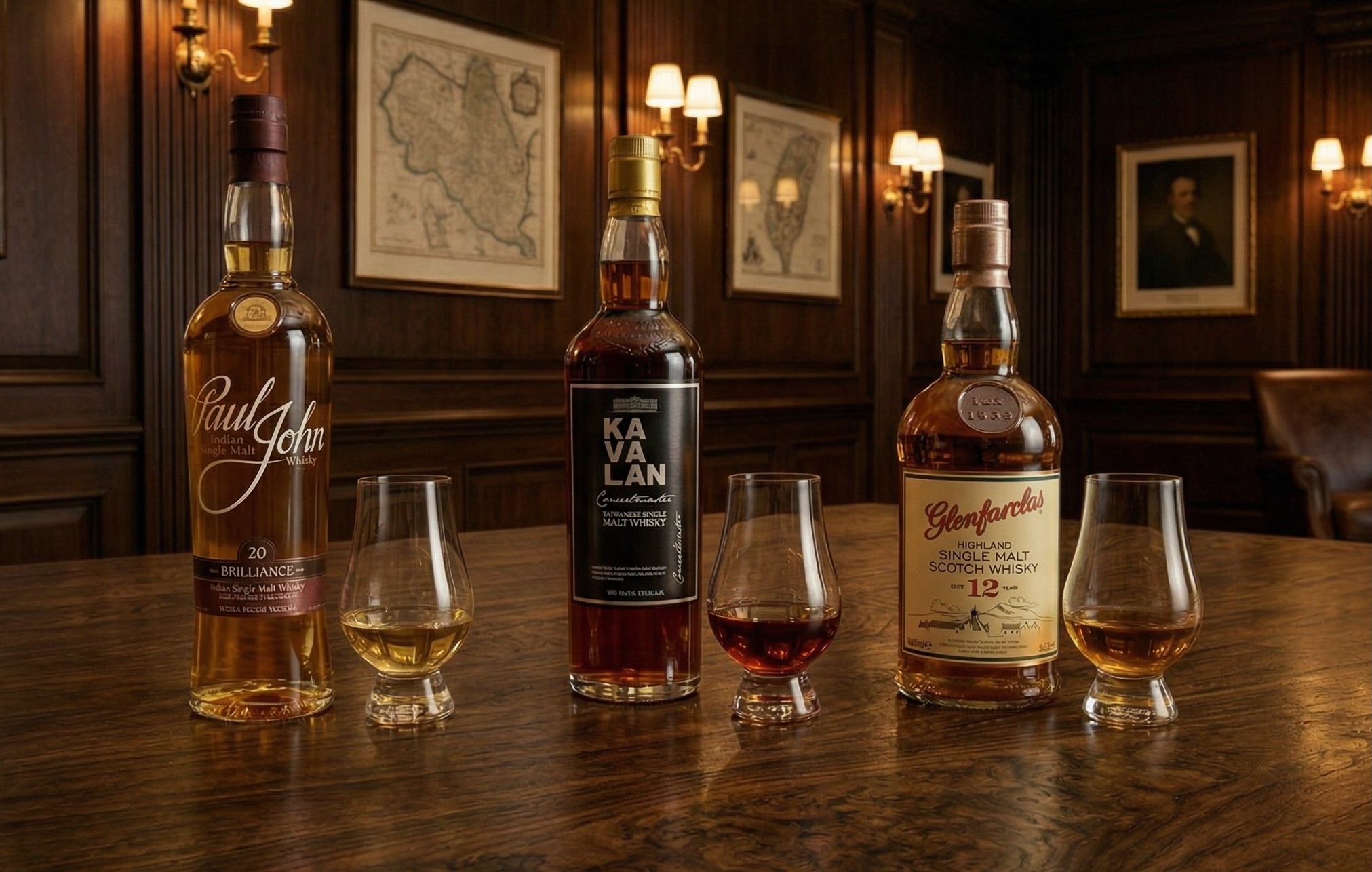
Yilan Valley, Taiwan, founded 2005. More international awards than almost any distillery its age. Concertmaster finished in Port casks. Red berries, dark chocolate, tropical fruit. The room agreed on this one.
Grant family, Speyside, 1865. One of the last independent distilleries in the region. Aged entirely in first-fill Oloroso sherry casks, which is expensive. Most distilleries use ex-bourbon because it costs less. Dried fruit, toffee, a hint of smoke. I’ve watched people who said they don’t like whisky finish this glass and ask what it was.
Malt and grain married, put back into cask, bottled at 51.4% without chill filtration. Masataka Taketsuru trained in Scotland in the 1910s, brought everything back to Japan. He thought whisky should be drunk at full strength. At 51.4%, it can take the ice or the dilution, and still show you what it is.
Islay, 1815. Peat bogs 10,000 years old. King Charles III granted Laphroaig a Royal Warrant in 1994 as Prince of Wales, has visited the distillery three times, and is a member of the Laphroaig Appreciation Society. He has also commissioned exclusive bottlings for Highgrove House. You will either love this or you won’t. No middle ground. Both reactions are correct.
6. The Cocktails & The Kannan
Oldest surviving cocktail recipe, 1806. Sugar, bitters, water, spirit. That’s the whole formula. Buffalo Trace handles it cleanly.
Ginger beer leans into the spice in Redbreast. Lime echoes the fruit. Hand this to someone who says they don’t drink whisky.
Maple syrup instead of simple syrup because the raw depth fits the terroir. Paul John’s tropical fruit makes the sour format sing. Named for the city.
Port cask, Cointreau, and orange juice are all on the same frequency. The lemon keeps it honest. Named for the Taipei mountain sunsets, which are worth seeing.
The Manhattan’s Scottish cousin. Named after the Scottish folk hero Rob Roy MacGregor. We use Carpano Antica Formula for the sweet vermouth, which has enough body and spice to hold its own against the sherry in Glenfarclas. Stirred, served up.
Worth knowing: a Dry Rob Roy uses dry vermouth instead of sweet. A Perfect Rob Roy splits both equally. A Bobby Burns adds a dash of Bénédictine, which given the evening’s earlier pours was a natural encore.
The Japanese highball is its own discipline. Ice size, glass temperature, water ratio. Nikka at 51.4% handles the dilution without disappearing. The yuzu is optional.
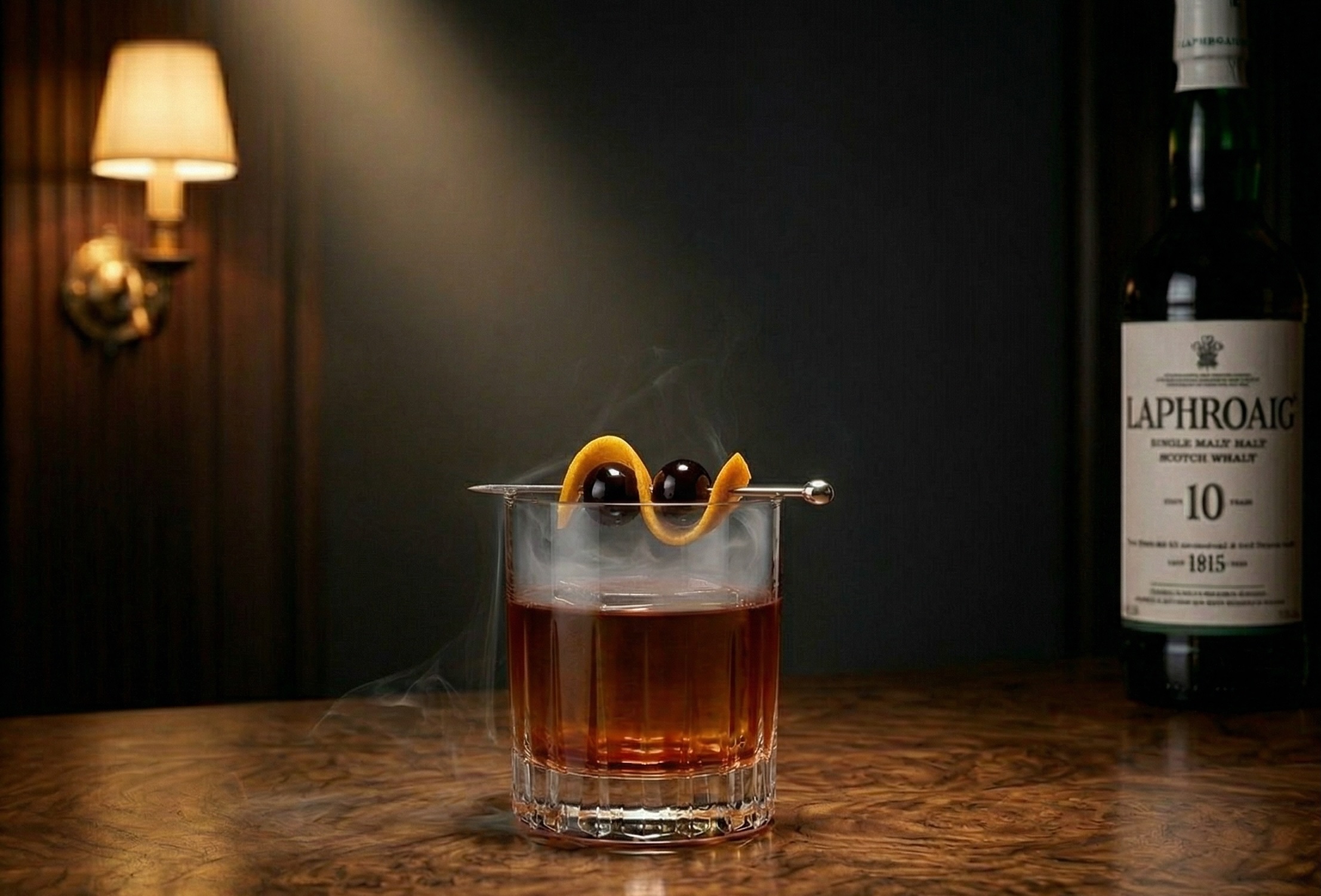
Old Fashioned bones, taken further. Demerara sugar for the molasses depth. Buffalo Trace as the base. A splash of Laphroaig for peat and smoke, just enough to shift the character without taking over. Apple cherry wood smoke pulls it together. Two Angostura cherries.
I’ve been working on this for a while. The Amateur Comedy Club is where it finally felt done.
Bring This to Your Table
Both evenings were produced under The Society Table, the SSS curated tasting experience. We select the spirits, design the serving order, build the cocktail pairings, and produce the printed cards. The format is flexible. A curated lineup you run yourself, or a fully hosted evening with presentation. Private dinners and corporate events both welcome. More events coming. Watch the Journal and social channels.
Get in touch at sales@societyofscentsandspirits.com.