The perfume industry depends entirely on nature. Flowers, woods, resins, roots. And the way it has sourced, produced, and packaged those materials has often worked against the ecosystems it pulls from.
Today is Earth Day, a reminder set aside each year to take stock of what we are doing to the planet and what we owe it going forward.
Progress is real but uneven.
The Raw Material Problem
The most urgent issue is not packaging. It is what goes inside the bottle.
Oud is the clearest example. Wild agarwood, the infected heartwood of the Aquilaria tree, has been harvested so aggressively across Southeast Asia and India that it now sits on the CITES endangered species list. Mysore sandalwood faced the same pressure for decades. Both are core ingredients across a large share of the world's luxury fragrance market.
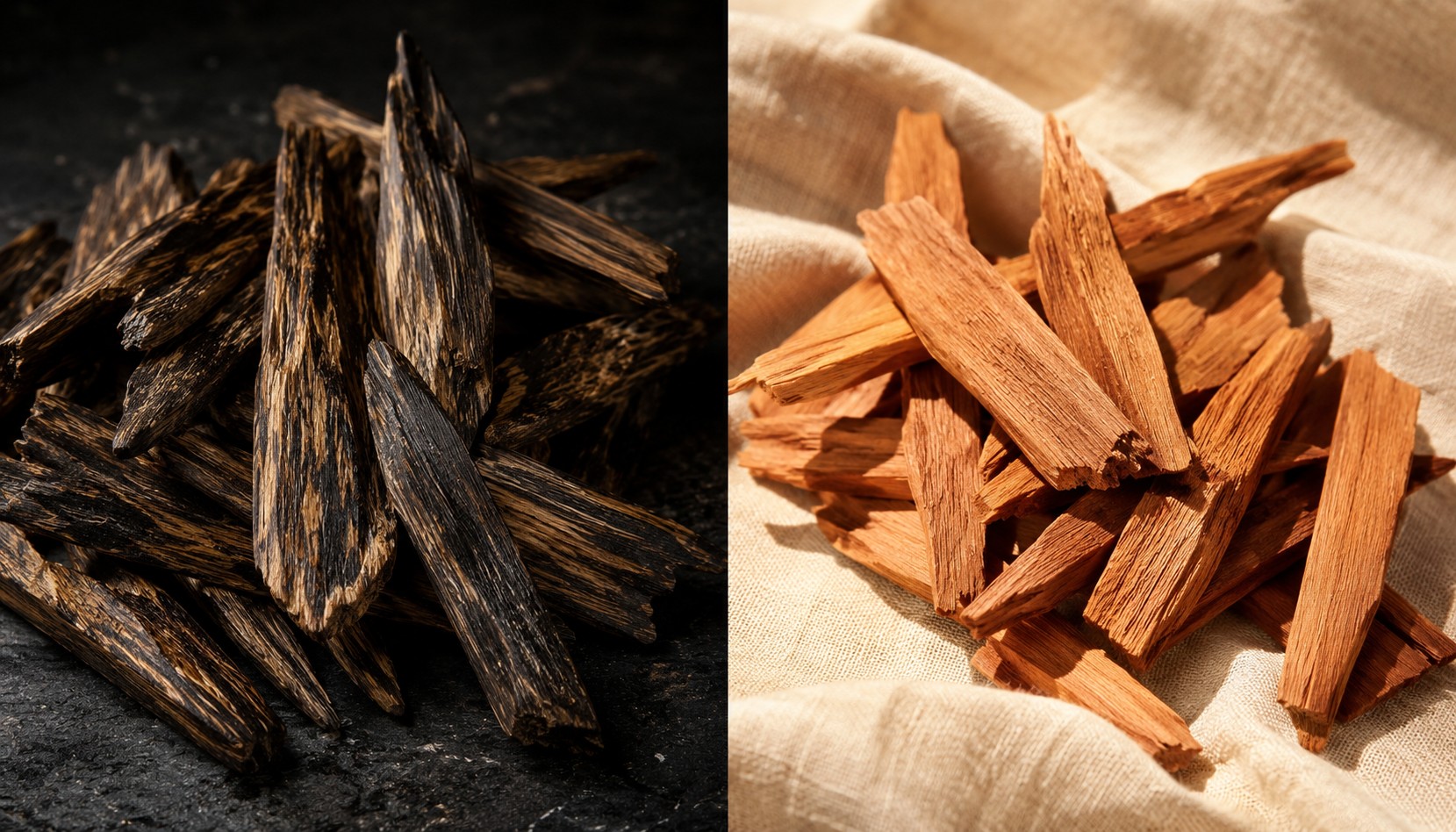
Agarwood (left) and sandalwood (right), two of perfumery's most endangered raw materials.
Global demand for these ingredients has consistently outpaced the industry's willingness to manage supply responsibly. When commercial pressure to deliver is high enough, the incentive to wait for natural replenishment disappears. That dynamic has driven both oud and sandalwood to the edge of viable wild supply.
Some houses are responding. Chanel, after witnessing sandalwood deforestation, developed a new source on the island of New Caledonia in the South Pacific. The brand established a program to breed new trees, control woodcutting zones, and conserve 75,000 existing trees in their natural habitat. Bleu de Chanel, Bois des Iles, and Allure EDP all draw from that supply.
Givaudan's foundation supports Aboriginal communities in Western Australia who sustainably harvest native sandalwood, combining traditional Martu land management with ranger training. The company has also built House of Naturals, a unit dedicated to developing ingredients through responsible sourcing and cleaner extraction methods.

A Boswellia frankincense tree, the source Amouage works to protect.
Amouage supports sustainable frankincense harvesting from the Dhofar region of Oman. The brand trains new generations of farmers and contributes to conservation of the Wadi Dawkah, a UNESCO World Heritage site known for its ancient frankincense groves. Frankincense trees grow slowly. Overharvesting kills them outright.
Synthetics: The Lab Answer

Fragrance biotech has moved from wild harvest to engineered yeast and bacteria.
Biotechnology now allows the creation of fragrance materials from engineered yeast or bacteria that replicate natural scents without drawing on wild sources. Lab-grown oud molecules are already in wide use. The environmental case for them is clear. But synthetics are a more complicated story than they first appear.
Saffron is a good example of how this works in practice. Natural saffron absolute costs between $30,000 and $50,000 per kilogram in commercial-grade purity. It takes roughly 150,000 to 200,000 hand-picked Crocus sativus flowers to produce a single kilogram of dried stigmas, with Iran accounting for around 90% of global supply. Climate change has caused 40 to 60% yield drops in key producing regions over the past decade. The synthetic version, safranal, costs $200 to $500 per kilogram and captures the leathery, honeyed character of natural saffron adequately for most applications. Almost every saffron note you smell in a modern fragrance, including bottles priced at $500 or more, is synthetic. What the lab version misses is the depth of the full stigma extract, which contains crocin, picrocrocin, and dozens of minor terpenoids that give natural saffron an atmospheric quality the synthetic alone cannot fully produce.
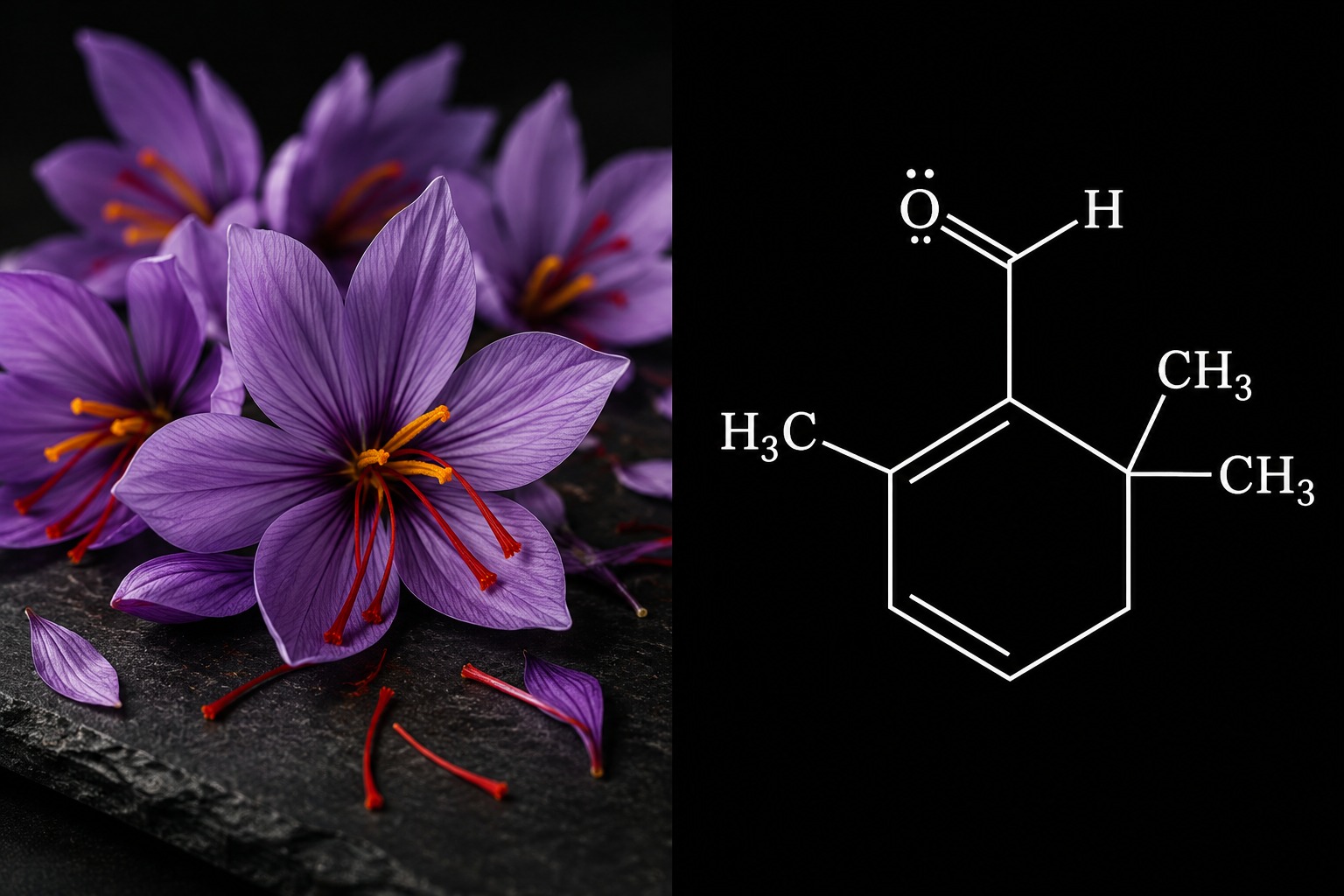
Natural saffron (left) versus safranal, its synthetic replacement, at roughly 1% of the cost.
Civet has a darker history. For centuries, civet paste was scraped from the perineal glands of captive civet cats held in small cages under poor conditions. The material was prized as a fixative and used in some of the world's most famous fragrances, including early versions of Guerlain's Jicky. As awareness of the harvesting conditions grew through the twentieth century, the fragrance industry moved toward synthetic civetone. Today, natural civet use in commercial perfumery is negligible. Ethiopia, which historically supplied around 90% of the world's civet musk, maintains some traditional production, but mainstream houses no longer source from it. Synthetic civetone is produced from oleic acid precursors, typically palm oil derivatives, and provides a warm, animalic, skin-close character at working concentrations.
Musk has a similar and arguably worse history. The original source was the musk deer, a small animal native to Central and South Asia. Extracting muscone, the primary musk compound, required killing the deer. One animal produced a small quantity of musk pod, and the combination of demand and poaching drove several musk deer species to endangered status. Synthetic musks appeared in the late 19th century, starting with musk Baur, discovered accidentally by a German chemist in 1888, and became the industry standard through the 20th century. Most musk fragrance used today is synthetic. The issue is that some early synthetic musks, particularly nitromusks and certain polycyclic musks, have raised their own safety and environmental concerns. Several have been found to bioaccumulate in human tissue and the environment, leading Japan and the European Commission to restrict or ban some compounds. The US has not restricted their use. Newer generations of synthetic musks are considered safer, though long-term data is still being accumulated.
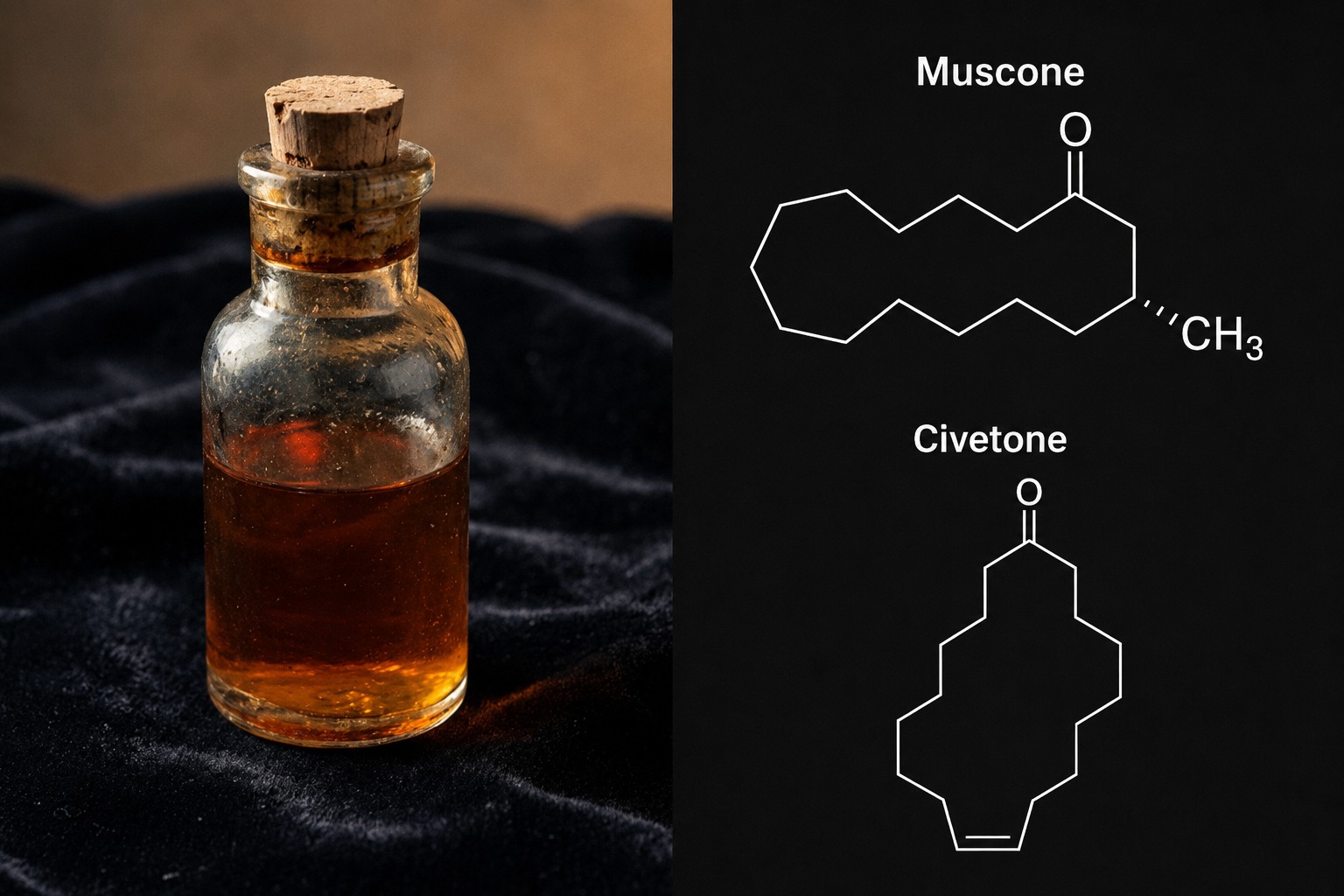
Civetone and muscone, the synthetic molecules that ended commercial demand for civet paste and musk pod.
The Labs Behind the Molecules
The companies producing most of the world's synthetic fragrance ingredients are a small group of large ingredient houses. Givaudan, IFF, Firmenich, and Symrise together supply the majority of aroma chemicals used globally. These are not household names to most fragrance consumers, but almost every bottle on your shelf contains their work.
Developing a new synthetic molecule is expensive. Safety testing alone can take years and cost millions of dollars before a material reaches commercial use. Some synthetics end up costing more per kilogram than the natural ingredients they replace. Ambroxan, the synthetic replacement for ambergris, costs $350 to $590 per kilogram, which is far cheaper than natural ambergris at $20,000 to $100,000 per kilogram, but still represents a significant investment compared to many commodity ingredients. Safranal as noted above sits at $200 to $500 per kilogram against natural saffron absolute at $30,000 to $50,000. In both cases the synthetic is the economically rational choice at scale, but it is not free.
The accuracy of synthetics varies by ingredient. For ambergris, synthetic Ambroxan reproduces the warm, woody, musky character well enough that most consumers cannot distinguish it from the natural in a finished composition. A 2023 study using advanced gas chromatography confirmed that synthetic and natural fragrance materials share similar macro-level chemical profiles. Trained analysis can still detect differences through minor compounds and trace elements. Perfumers call this the halo of a natural material. For most wearers, the difference is not perceptible. For perfumers working at the highest level, it matters.
The most consequential area where this plays out is reformulation. Oakmoss, a lichen that formed the backbone of the classic chypre family of fragrances, was progressively restricted by IFRA starting in the early 1990s and severely limited from 2001 onward due to two allergenic molecules, atranol and chloroatranol, found within it. The reformulations that followed changed some of the most beloved fragrances in history. Chanel No. 5 lost its oakmoss depth and natural musks, resulting in a more transparent, synthetic-musk version that long-time wearers found thinner. Guerlain Mitsouko, one of the great chypres, was reformulated multiple times as oakmoss concentrations were reduced. Dior Fahrenheit lost natural musks and had its violet leaf and oakmoss components adjusted. Thierry Wasser became Guerlain's in-house perfumer in 2008. He eventually developed an IFRA-compliant version using a modified oakmoss extract with the restricted molecules removed. The result was widely regarded as a more successful reconstruction than the earlier attempts. These reformulations were not cosmetic changes. They fundamentally altered compositions that had taken years to develop.
The ingredient houses profited from the transition to synthetics, which has led some in the fragrance community to question whether IFRA restrictions, which are set in part through industry input, always reflect genuine safety necessity or also reflect commercial interest. That debate is ongoing.
Packaging
Walk through any fragrance counter today and the shift is visible. Refillable bottles are no longer a niche concept. The global market for refillable perfume bottles was valued at around 1.5 billion euros in 2025, with projected annual growth of 7% through 2033.
Maison Margiela's Replica line went refillable in 2022. Their refill sets use 32% less packaging compared to four separate 30ml flacons, and the brand has reduced glass consumption per bottle by 17% compared to 2019, using 15% recycled glass across all bottles. The capless Replica bottle design is part of the same logic. Fewer materials, simpler construction.
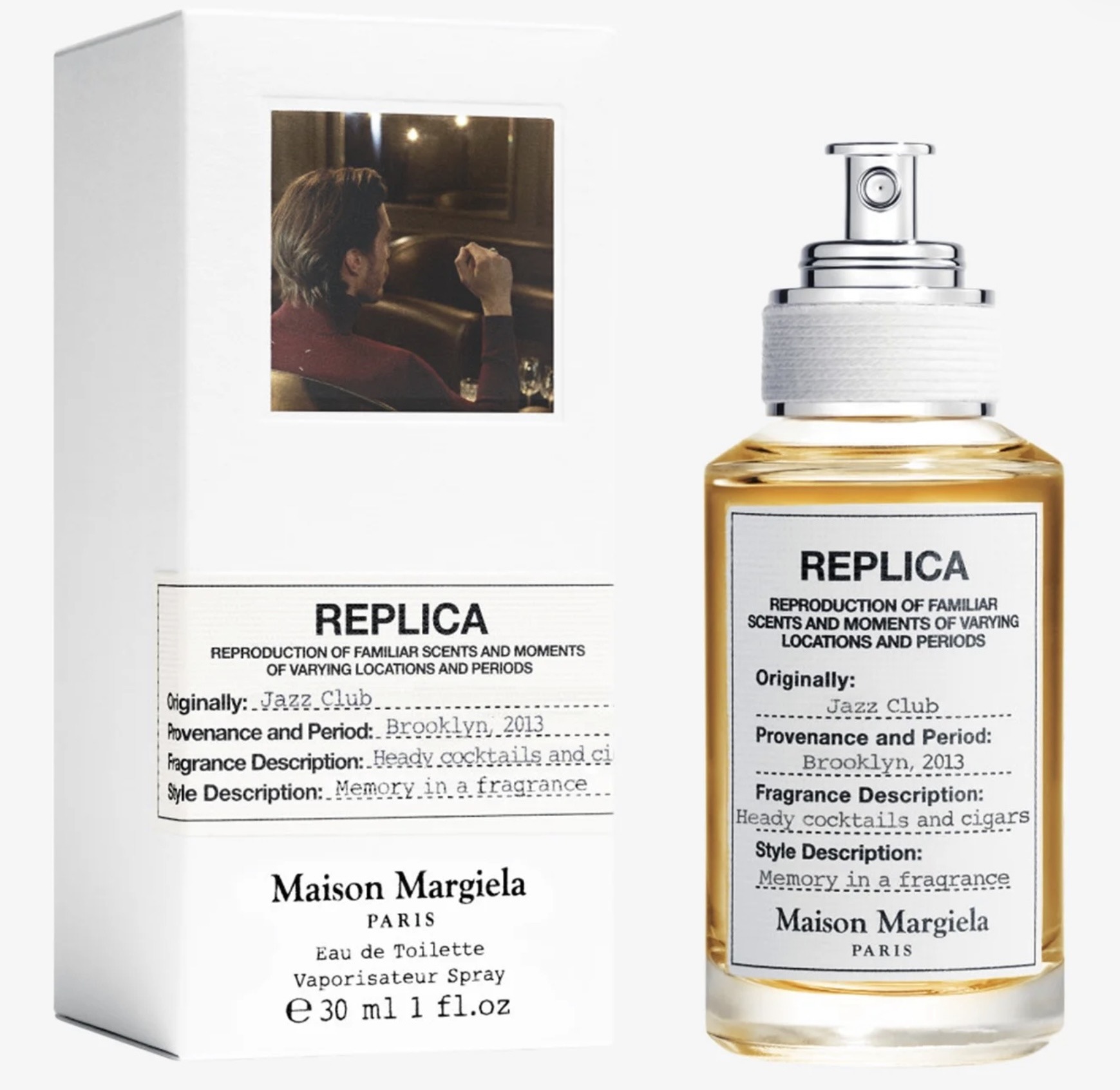
Maison Margiela Replica, Jazz Club. Capless, refillable, minimal packaging by design.
Estee Lauder's switch to refillable glass bottles reduced emissions and water consumption by 20% while cutting packaging weight by 40%. By fiscal 2024, 71% of the brand's packaging by weight was recyclable, refillable, reusable, recycled, or recoverable.
Cartier introduced laser engraving on the aluminum cases of its Santos de Cartier fragrance in 2023, removing the wastewater tied to traditional chemical etching. Hermes committed to vegetable-based inks across all fragrance packaging by March 2025.
Parfums de Marly and Creed are worth noting here. Both use minimal outer packaging. What you get is essentially the bottle and a simple box. No layered inserts, no velvet pouches, no decorative medallions. For houses at their price point, that restraint is a deliberate choice, and it is the right one.
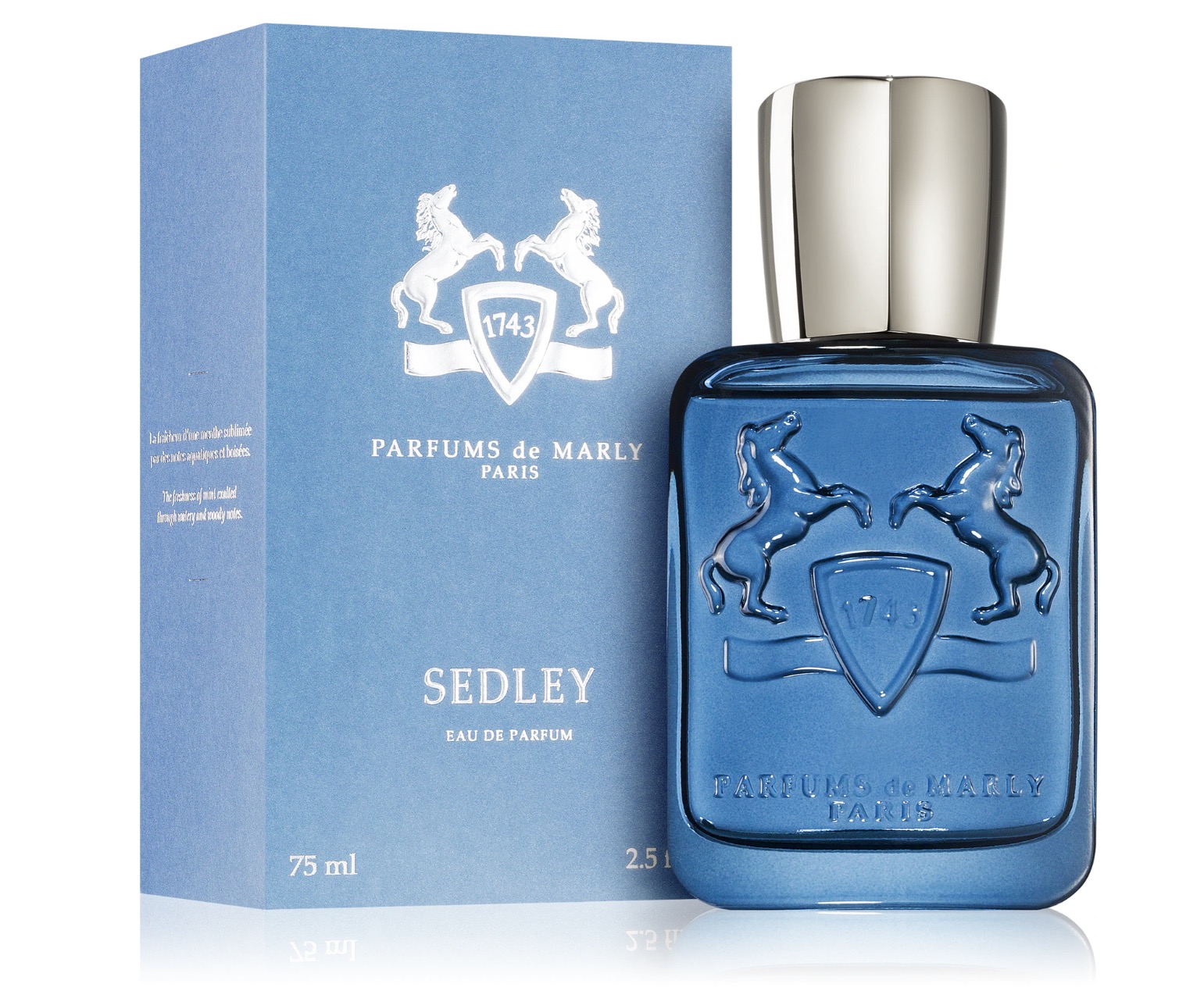
Parfums de Marly Sedley. Just the bottle and a simple box.

Creed Virgin Island Water. Same restraint, same logic.
Costume National belongs in this conversation too. Founded in 2001 as an offshoot of Ennio Capasa's fashion house, the brand broke early from conventional perfumery, in scent and in bottle design alike. Soul was the first bottle I owned with no separate cap over the sprayer, just the atomizer, exposed. It struck me as unusual at the time. Looking back, it was an early lesson in what minimal packaging actually looks like.
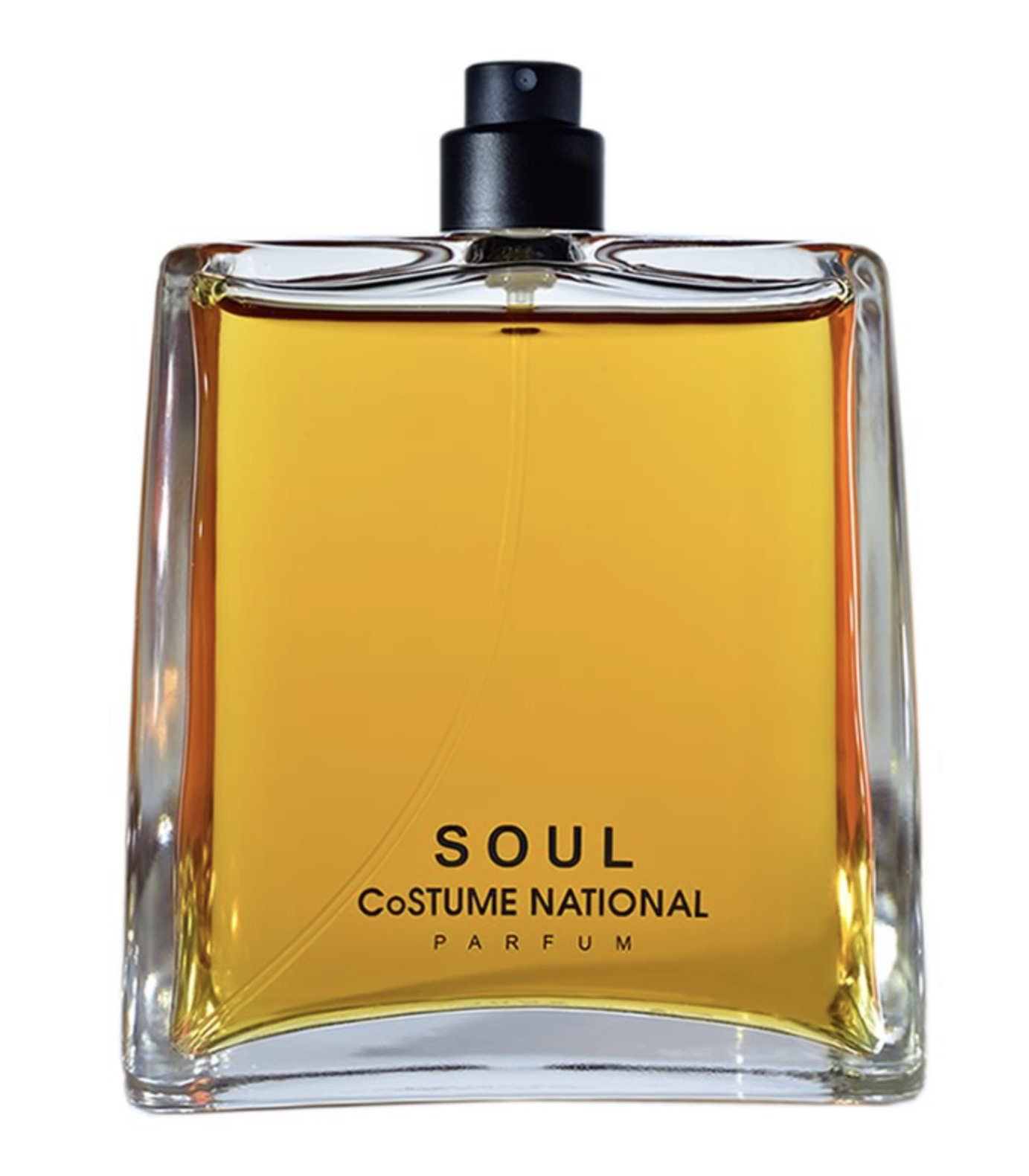
Costume National Soul. No cap, no extra material, just the bottle.
These changes carry real environmental impact. They also cost more to implement than standard packaging, which is why smaller brands often skip them.
The Contrast
While Western and European niche houses move toward minimal packaging, a significant portion of the Middle Eastern luxury fragrance market goes the other direction.
Elaborate wooden presentation boxes. Multiple layers of internal padding. Heavy decorative caps with metal inlays. Velvet pouches inside cardboard sleeves. Some releases arrive in boxes within boxes. When you unbox a high-end release from certain Gulf-based houses, the packaging generates more waste by weight than the bottle itself.
The tradition of elaborate gifting in Gulf culture is genuine and deep-rooted. The packaging reflects something real about where these brands come from.
Amouage is worth separating from the broader criticism here, their packaging is restrained by Gulf market standards. A box, a bottle, minimal excess. The problem sits more squarely with mid-tier and clone houses that adopt elaborate packaging as a positioning tool without the brand history to justify it.
There is also a commercial dimension worth acknowledging. In a crowded global market, elaborate packaging is a way to stand out on shelf and signal premium positioning. For smaller houses competing against established Western brands, the unboxing experience becomes part of the product. The problem is that this approach prioritizes the moment of opening over everything that comes after. Most people throw the box away. The velvet pouch sits in a drawer. The decorative cap ends up in a bin. What remains is the bottle, which could have arrived in a simple box at a fraction of the environmental cost.
The shipping footprint compounds this. Heavy glass and dense packaging materials increase freight weight, which increases fuel consumption across air and sea transport. When you are moving millions of units globally, shaving weight off each shipment has a measurable effect on emissions. The reverse is also true. A house shipping a 100ml bottle in a three-layer wooden box with a metal medallion is generating significantly more transport emissions per unit than one shipping the same volume in a simple carton. At scale, that difference is not trivial.
Some regional brands are adjusting. Ajmal presented a collection with recycled packaging at Beautyworld Middle East 2025, citing sustainability and ethical sourcing as priorities. Rayhaan uses minimal packaging by regional standards. But the major clone houses, which produce enormous volumes, have not followed. The creativity in their bottle designs is real. The environmental cost is also real.
Where Things Stand
Raw material sourcing is receiving more attention than it was a decade ago. Refillable systems are growing. Recycled glass is becoming standard at the upper end of the market. Biotech is reducing pressure on endangered ingredients.
The International Fragrance Association's 51st Amendment, effective January 2025, restricted or banned over 100 materials based on updated safety assessments, requiring brands to reformulate legacy products at costs ranging from $200,000 to $1 million per SKU. Regulation is doing work that voluntary commitment has not covered.
I own over a thousand bottles. I have no position of moral authority on any of this. What I can say is that sourcing sustainably is also sourcing strategically. The houses investing in long-term ingredient security today are the ones that will still have access to those ingredients years from now.
I would love to see Middle Eastern brands take a more sustainable approach to marketing and packaging. The material waste has to stop, especially from the clone houses.