Most people know the daiquiri from a spinning slush machine at a beach bar, neon pink, more sugar than rum. National Daiquiri Day falls on July 19, and the original drink has almost nothing in common with that version. It's three ingredients, shaken hard, with a history older than most cocktails still on menus today.
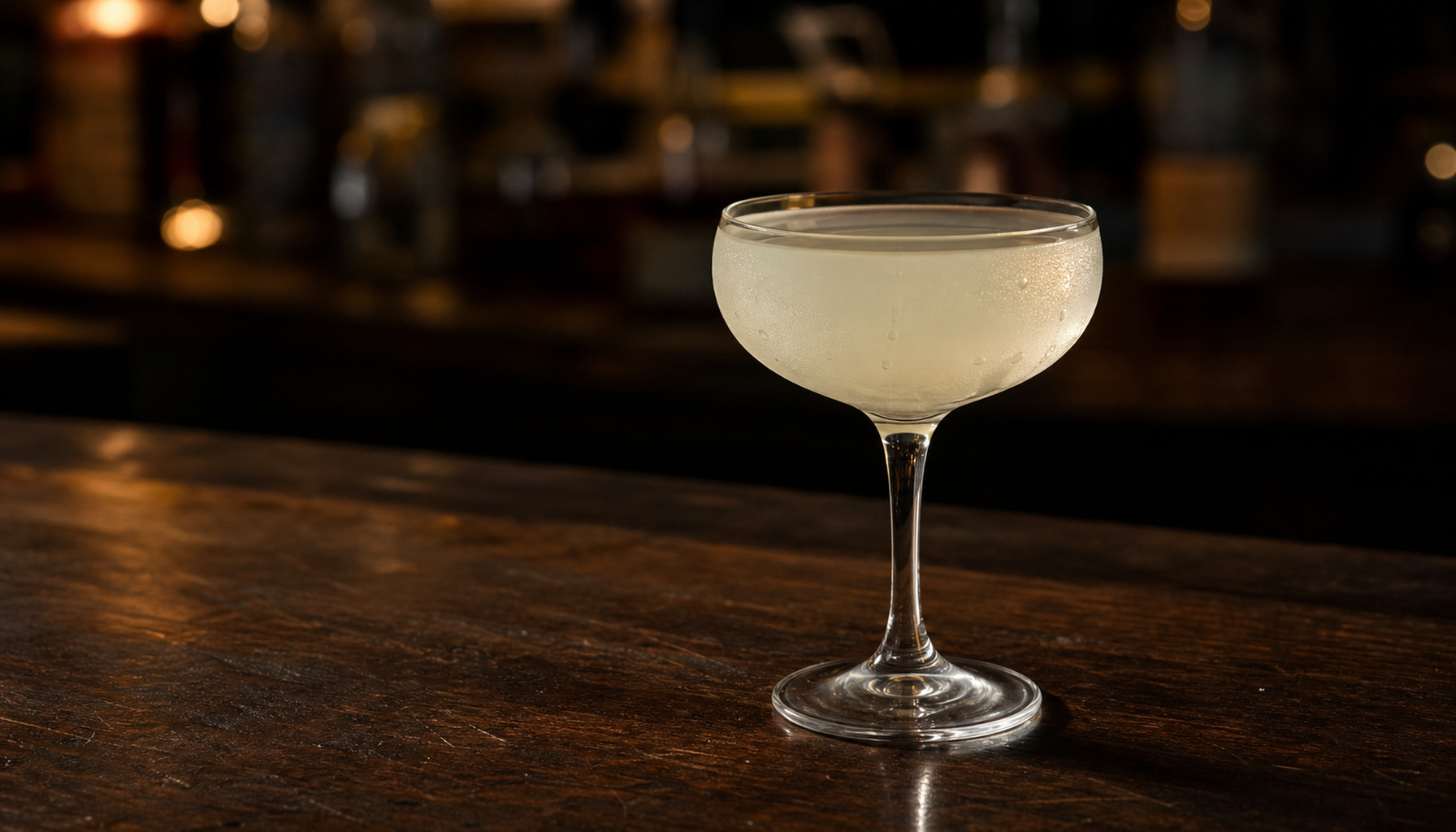
A daiquiri as it was meant to be served. No blender required.
The name comes from a real place, a mining town on the southeastern coast of Cuba, tied to a war most people don't think about anymore. Here is how a three-ingredient drink survived that war, a Prohibition-era Havana bar, and decades of frozen fruit machines to remain one of the better cocktails still around.
A Short History
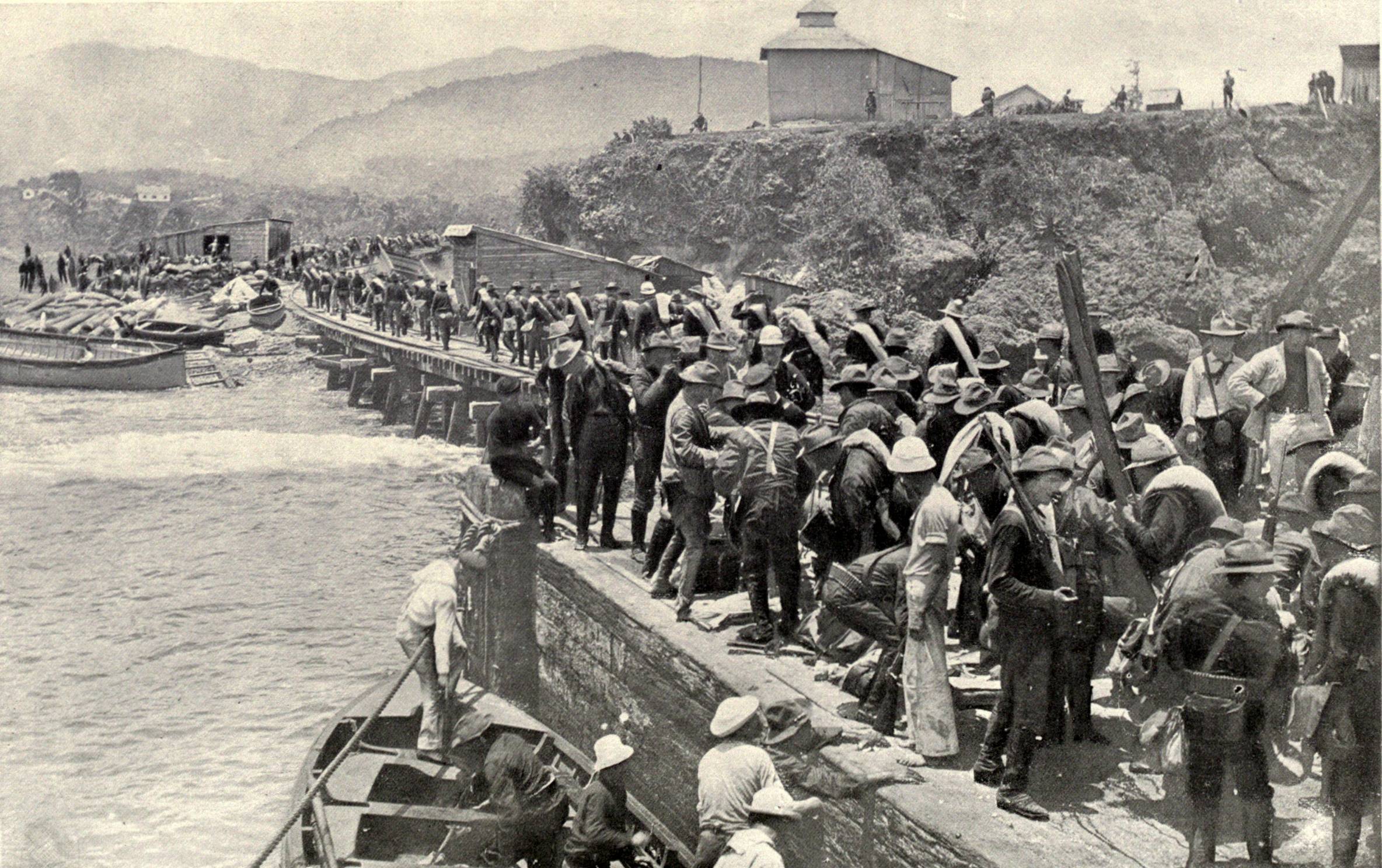
American troops landing at the pier in Daiquiri, Cuba, 1898.
In 1898, during the Spanish-American War, an American mining engineer named Jennings Cox supervised an iron mine near the village of Daiquiri, close to Santiago de Cuba. He ran out of gin one evening while entertaining guests. Local rum, lime, and sugar filled in, and the drink took the name of the mine.
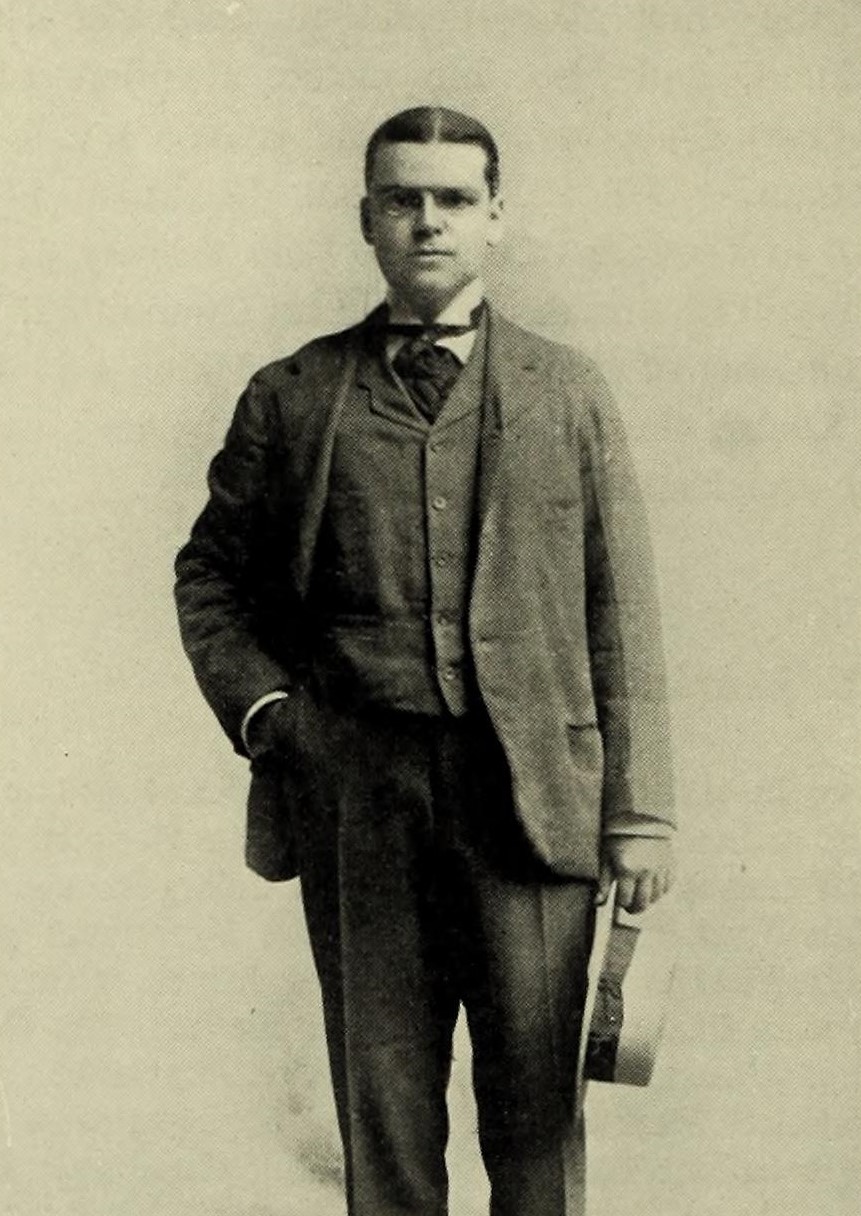
Jennings Stockton Cox Jr., the mining engineer credited with the drink's creation.
Some tellings put Facundo Bacardi at that table, handing over the recipe himself. Bacardi died in 1886, twelve years before the story is supposed to have happened. That detail doesn't hold up.
The recipe crossed to the United States in 1909, when U.S. Navy medical officer Lucius Johnson visited Cox in Cuba and carried the formula back to the Army and Navy Club in Washington, D.C. From there it spread through American bar culture, one of several rum drinks riding a wave of Caribbean interest that Prohibition only sharpened.
The version most people would recognize today came out of El Floridita in Havana, run by a Catalan bartender named Constantino Ribalaigua Vert. He bought the bar in 1918 and spent the next few decades refining the daiquiri, reportedly going through something like 80 million limes over his career. Around 1931 he ran the drink through an electric blender for the first time, and the frozen daiquiri was born.
Ernest Hemingway became a regular at El Floridita in the 1930s and asked for his without sugar, doubled on rum. The usual story is that he was diabetic. The more accurate explanation is hemochromatosis, a hereditary condition that causes the body to absorb too much iron and can lead to diabetes among other complications. Ribalaigua added grapefruit juice and maraschino liqueur to balance out the missing sweetness and named the result the Papa Doble. It is the same drink most bars now call the Hemingway Daiquiri, though the modern version is considerably tamer than what Hemingway actually drank.
What's Actually In One
The classic daiquiri is rum, lime juice, and sugar, shaken hard with ice and strained into a chilled glass. Everything else on a cocktail menu called a daiquiri is a variation on that structure.
Rum is the backbone. It comes from sugarcane, either fresh juice or molasses, fermented and distilled. Light or white rum is traditional here, filtered or lightly aged to strip out color. Aged rum works too and pulls the drink toward something richer, closer to dessert than a summer cooler. Rum is also one of the most varied spirits made anywhere, since every producer ferments, distills, and ages it differently, and swapping one rum for another can change a daiquiri as much as swapping the fruit does. There's a longer breakdown of rum styles in Rum, the Misunderstood Spirit, if you want to go deeper.
Lime juice has to be fresh. Bottled lime juice is preserved and oxidized, and it tastes flat next to what an actual lime gives you. This is the one place in the recipe with no shortcut worth taking. Limes are also seasonal, tarter at some points in the year and sweeter at others, so the same recipe can taste slightly different from one month to the next even when nothing else changes.
Sugar traditionally means simple syrup, equal parts sugar and water dissolved together, because granulated sugar does not fully incorporate into a cold, shaken drink. Demerara or turbinado syrup adds more depth when you are working with an aged rum. The standard ratio runs close to 2 parts rum to 3/4 part lime to 3/4 part syrup, though bartenders argue about the exact numbers the same way they argue about everything else. Nudging that ratio toward more lime or more sugar is its own way to make the drink yours, on top of whatever rum or fruit you choose.
The Right Glass
A shaken daiquiri belongs in a chilled coupe or cocktail glass. Stemmed glassware keeps your hand off the bowl, which matters more on a hot day than people think. Warm palms take the chill off a drink faster than the ice melts on its own.
One of the earliest recorded versions of the recipe, credited to Cox himself, called for a tall flute-shaped glass packed with shaved ice, with the shaken rum poured straight over it. That is closer to how a frozen daiquiri gets served today than the clean coupe pour most bars use for a classic. If you are blending rather than shaking, a stemmed wine glass or a hurricane glass gives the ice room to sit without turning into soup before you finish it.
The Daiquiri Today
Walk into most casual restaurants and the daiquiri on the menu comes out of a machine, pre-batched and sweetened to cover for flat ingredients. Sour mix stands in for fresh lime. Bottled syrup stands in for real fruit. The rum is usually whatever pours cheapest by the well. Almost nobody behind the bar bothers to make it correctly.
Serious bartenders treat it differently. With only three ingredients to hide behind, a daiquiri shows exactly what a bartender knows about balance, the same way an omelet gives away a cook. Some bars use it as an actual hiring test, handing new bartenders a shift to make one before they touch anything else on the menu. The Sunken Harbor Club in Brooklyn, a tropical bar known across the industry, keeps a rotating list of daiquiri riffs on its menu for exactly this reason. It is a drink people in the business take seriously, even while most restaurants can't be bothered.
Fresh citrus, real sugar, and a rum you would actually drink on its own get you most of the way there. A flavored daiquiri built the same way, with real fruit instead of syrup, is one of the easier cocktails to turn into something people ask you to make every time they visit.
A daiquiri makes a good signature drink because the base recipe never changes. Only the fruit or the spice does. Pick one combination, get it right, and repeat it all summer. Easy Signature Cocktails Worth Knowing covers the same idea across a few other drinks, if the daiquiri isn't the one you want to make your own.
Six Ways to Make One
Six versions follow, in order from oldest to newest.
1. The Classic Daiquiri
Mount Gay Black Barrel
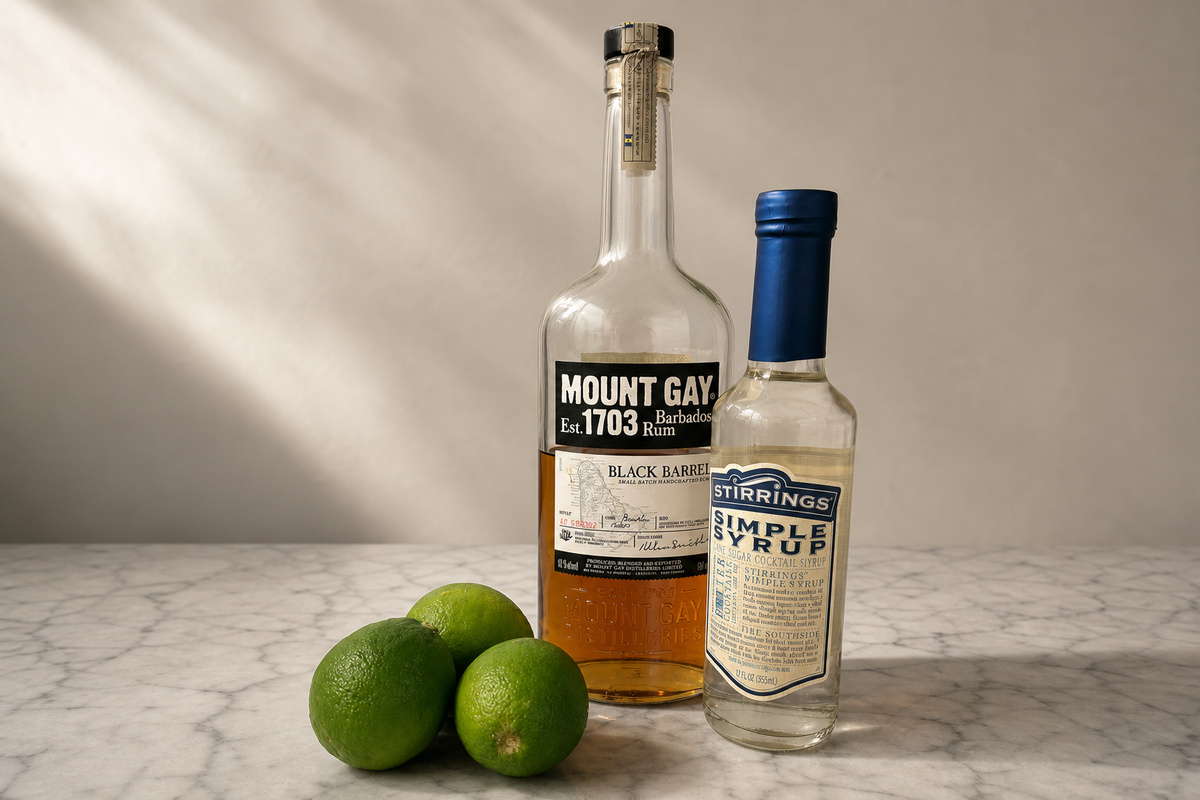
Mount Gay Black Barrel. From a distillery dating to 1703.
This is close to what Jennings Cox mixed in 1898, minus the guesswork about exact proportions. Mount Gay is one of the oldest rum houses in the Caribbean, dating to 1703 in Barbados, the island most historians credit as the birthplace of rum itself. Black Barrel is a step up from their basic white rum, a small-batch blend with a little more char and weight, and it still keeps the drink clean.
Classic Daiquiri
- 60ml Mount Gay Black Barrel
- 25ml fresh lime juice
- 20ml simple syrup
- Ice
- Glass: Chilled coupe
Combine rum, lime juice, and syrup in a shaker with ice. Shake hard for about 15 seconds, until the shaker is cold to the touch. Double strain into a chilled coupe. Serve with no garnish, or a lime wheel if you want one.
2. The Hemingway Daiquiri (Papa Doble)
Santiago de Cuba 12 Extra Anejo
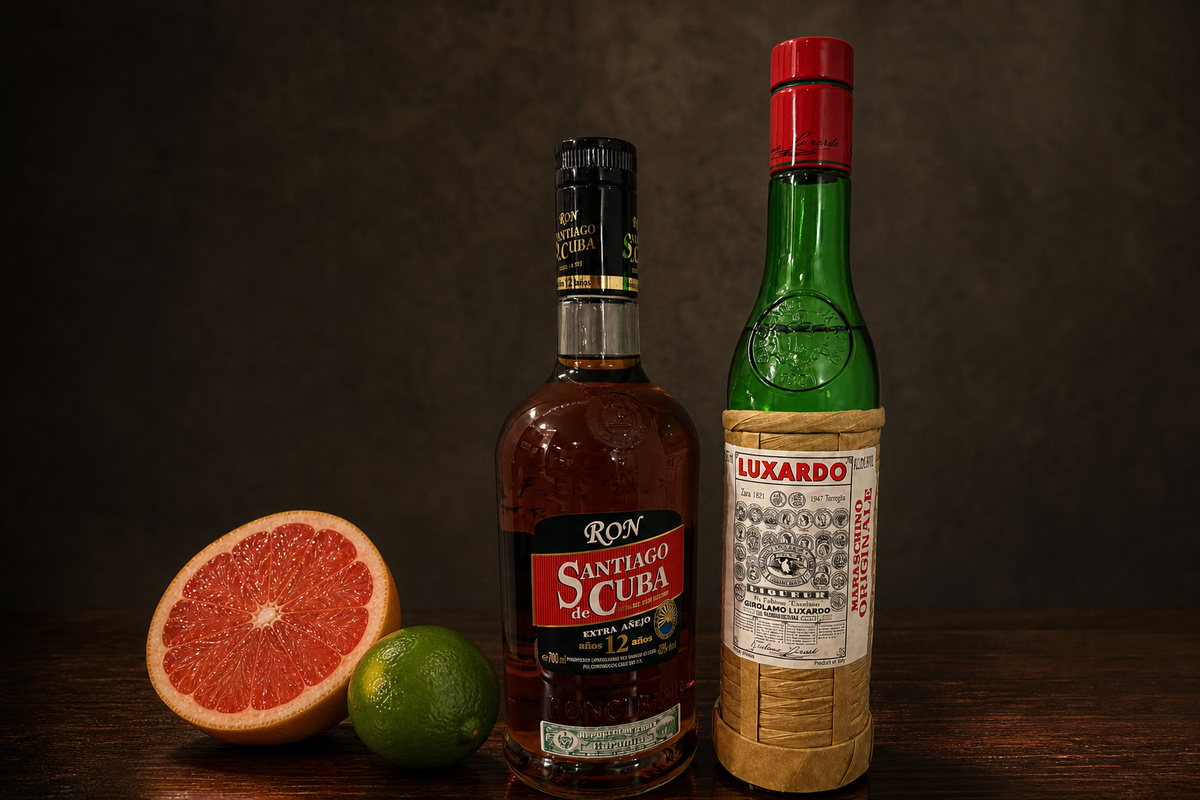
Santiago de Cuba 12 Extra Anejo. Named for the city where this whole story starts.
The original Papa Doble used Bacardi White Label. I am using Santiago de Cuba 12 Extra Anejo instead, aged rum from the same Cuban city where Hemingway drank the original at El Floridita. It trades some of the original's rawness for weight and a little vanilla, which suits a drink already built to be strong rather than balanced.
Hemingway Daiquiri (Papa Doble)
- 75ml Santiago de Cuba 12 Extra Anejo
- 25ml fresh lime juice
- 25ml fresh grapefruit juice
- 7ml maraschino liqueur
- Ice
- Glass: Chilled coupe, or a double old fashioned glass over crushed ice
Combine all ingredients in a shaker with ice. Shake hard until well chilled. Strain into a chilled coupe, or over crushed ice in a double old fashioned glass, closer to how it was served at El Floridita.
3. The Royal Bermuda Yacht Club
Ron Tambu 8 Year
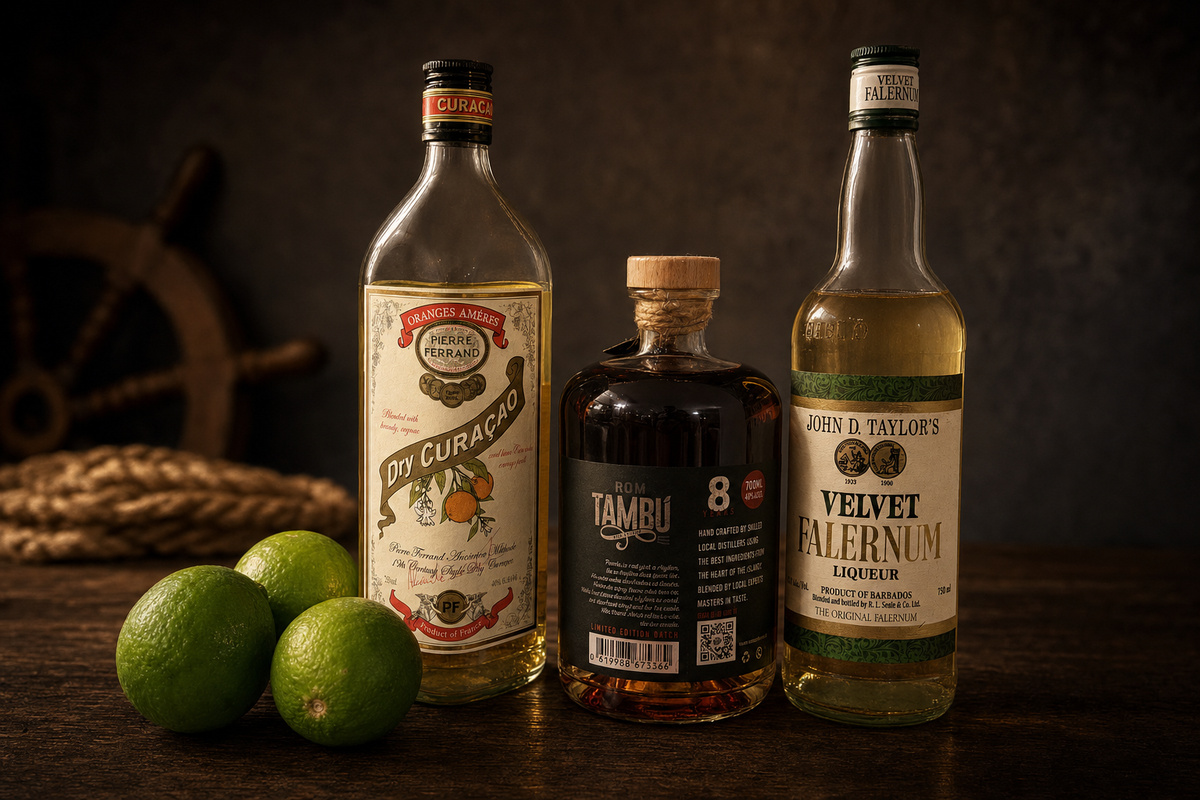
Ron Tambu 8 Year. A Trader Vic classic with a Curaçao detour.
This one first turns up in Crosby Gaige's 1941 Cocktail Guide and Ladies' Companion, then again in Trader Vic's Bartender's Guide, where it's usually credited from. Vic called for Barbados rum, but I'm using Ron Tambu 8 Year, an oaky, peppery rum from Curaçao with a finish closer to whisky than most rums this style. It stands up well against the falernum's clove and spice.
Royal Bermuda Yacht Club
- 45ml Ron Tambu 8 Year
- 15ml fresh lime juice
- 7ml velvet falernum
- 1 dash orange curaçao
- Ice
- Glass: Chilled coupe
Combine all ingredients in a shaker with ice. Shake hard and strain into a chilled coupe. Garnish with a lime wheel.
4. The Parasol
Plantation 5 Year
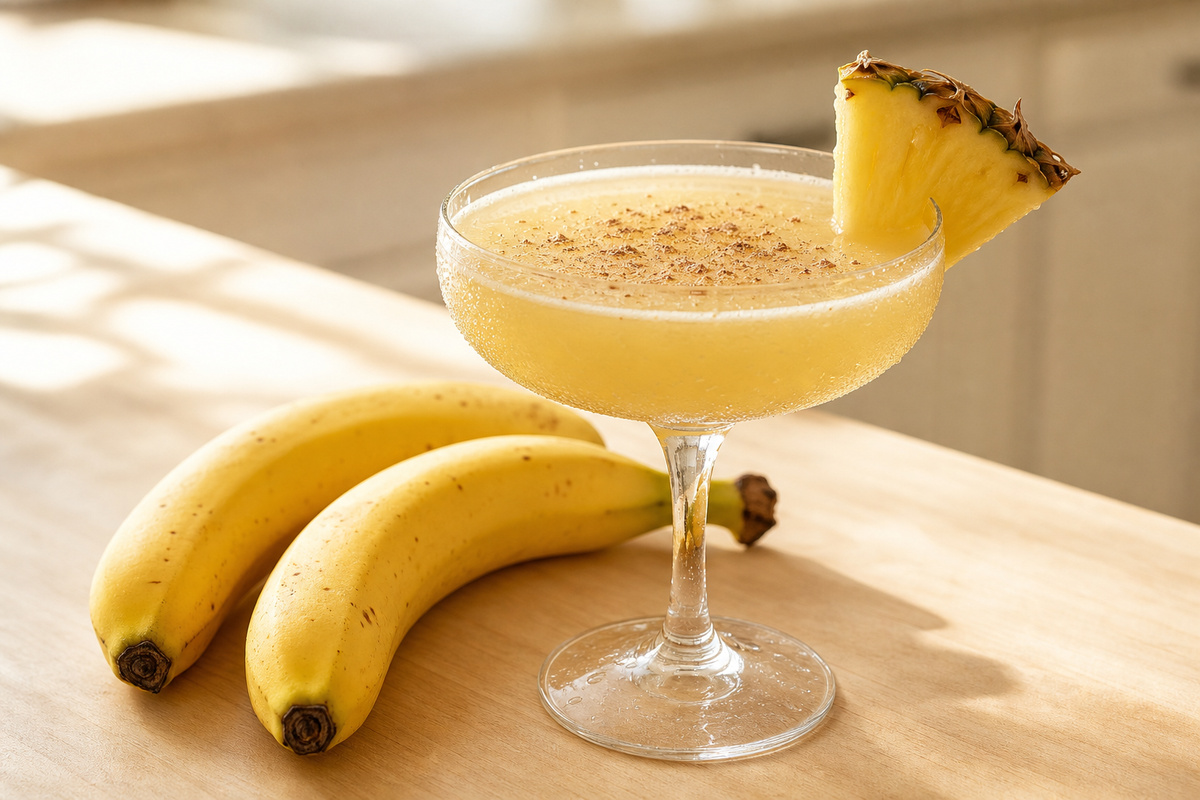
The Parasol. A banana daiquiri from bartender Shannon Mustipher's book Tiki.
Shannon Mustipher created this at Glady's in Brooklyn and published it in her book Tiki: Modern Tropical Cocktails. Banana liqueur and a little pineapple juice do the sweetening instead of syrup, and grated nutmeg on top gives it a warmth that a straight banana daiquiri doesn't have. Plantation 5 Year is a lightly aged gold rum with enough weight to hold its own against the banana.
The Parasol
- 60ml Plantation 5 Year
- 22ml banana liqueur
- 22ml fresh lime juice
- 15ml pineapple juice
- Ice
- Glass: Chilled coupe
Combine all ingredients in a shaker with ice. Shake hard and fine strain into a chilled coupe. Garnish with a pineapple wedge and freshly grated nutmeg.
5. The Aged Daiquiri
Ron Zacapa 23
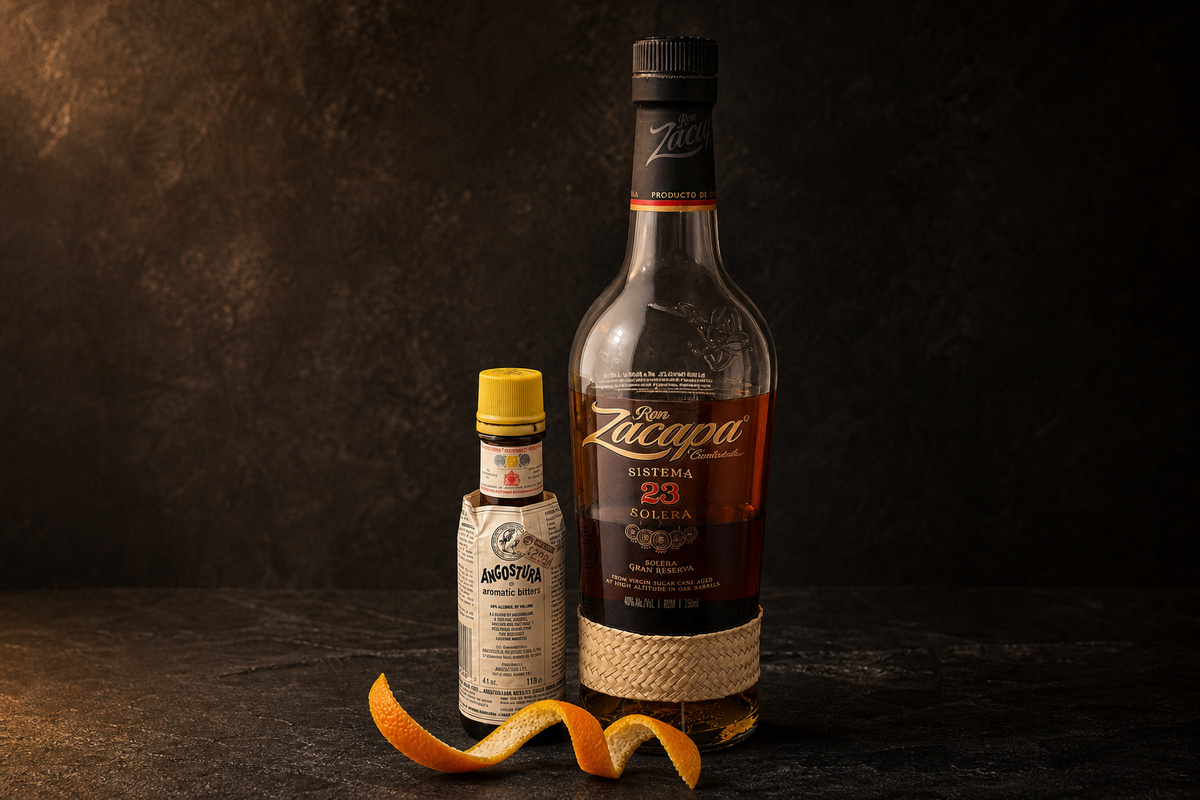
Ron Zacapa 23. Aged at altitude in Guatemala, heavy on caramel and dried fruit.
This version has no historical backstory. Ron Zacapa 23 is aged at altitude in Guatemala and comes out heavy on caramel and dried fruit. Demerara syrup in place of standard simple syrup keeps the drink from getting lost against a rum this rich, and a couple dashes of Angostura round out the edges.
Aged Daiquiri
- 60ml Ron Zacapa 23
- 20ml fresh lime juice
- 15ml demerara syrup
- 2 dashes Angostura bitters
- Ice
- Glass: Chilled coupe
Combine all ingredients in a shaker with ice. Shake hard and strain into a chilled coupe. Express an orange twist over the glass, then drop it in.
6. The Roasted Peach and Thyme Daiquiri
Appleton Estate 8
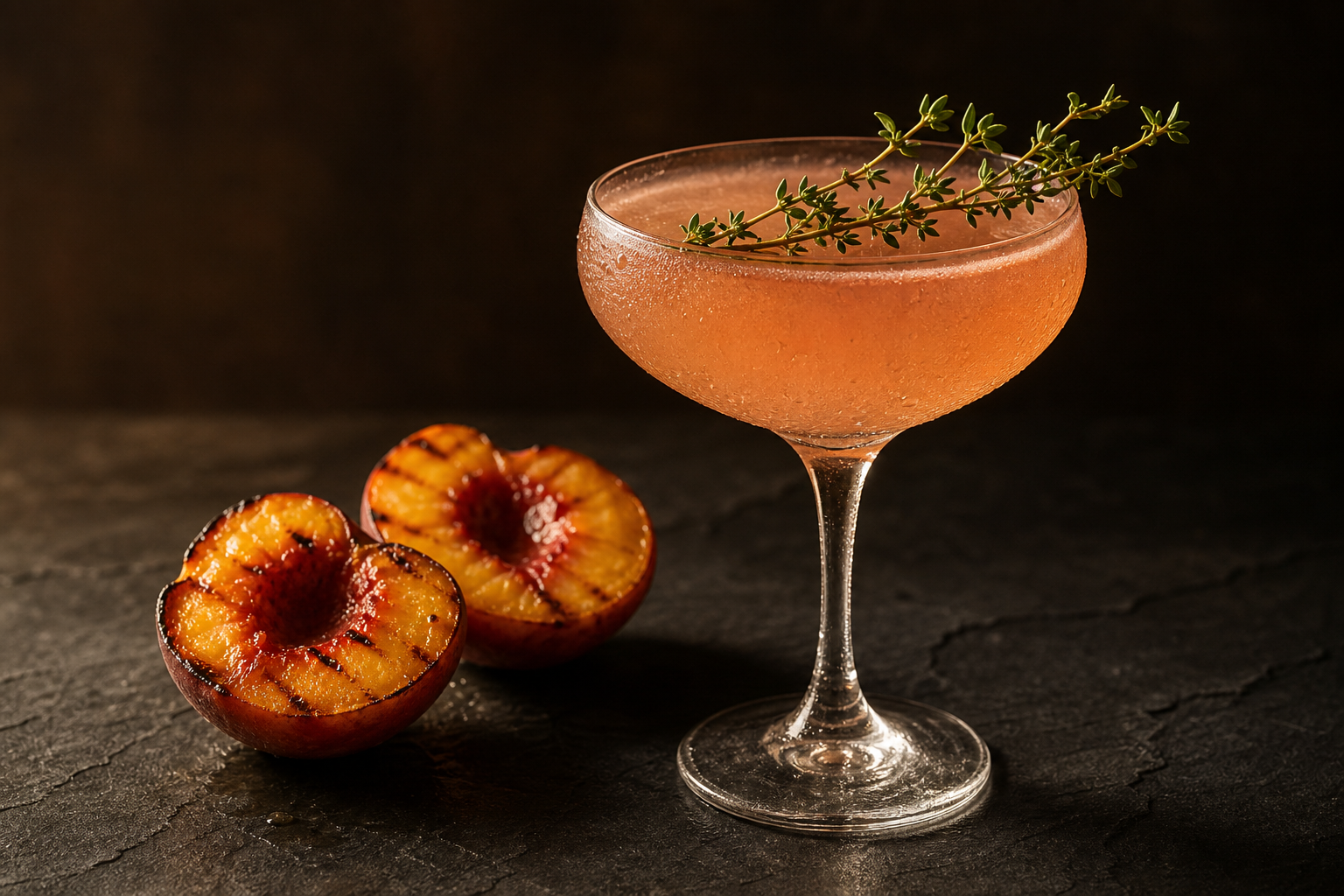
Roasted Peach and Thyme Daiquiri. Appleton Estate 8, real fruit, no syrup.
This one is built to be a signature drink. Peaches get roasted first, which concentrates the sugar and adds a little char rather than just diluting the drink with raw juice. Appleton Estate 8 has enough pot still funk to hold its own against the fruit.
Roasted Peach and Thyme Daiquiri
- 60ml Appleton Estate 8
- 30ml roasted peach puree
- 20ml fresh lime juice
- 15ml honey syrup
- 3 thyme leaves, plus a sprig to garnish
- Ice
- Glass: Chilled coupe
Halve and roast two peaches at 400°F (200°C) for about 20 minutes, until caramelized. Let them cool to room temperature. Blend the flesh and strain for a smooth puree. Muddle the thyme leaves lightly in the shaker to release their oil. Add rum, peach puree, lime juice, honey syrup, and ice. Shake hard and double strain into a chilled coupe. Garnish with a thyme sprig.
Three ingredients, one shaker, and a history that runs through a Cuban mining camp, a Havana bar, and a writer who could not have sugar. Pick a rum you actually like, and if you want a version that is only yours, pick one fruit and get it right.