National Tequila Day falls on July 24. It is worth marking, because tequila has traveled further than almost any spirit. A rural Mexican distillate the world once ignored now gets poured in every bar on earth, and in America, the drink that carried it there was the Margarita.
The day itself has murky roots, which is fitting. No government created it. One often-repeated story traces it to a group of American college students in the 1970s, though that origin is thinly documented, and by the 2000s tequila brands and bars had claimed July 24 as their own. Mexico only made the date official in 2026, when it moved its own national tequila day to line up with the American one.
Before the cocktail, though, comes the spirit. Where tequila comes from and what it means in Mexico is a richer story than the drink it usually hides inside.
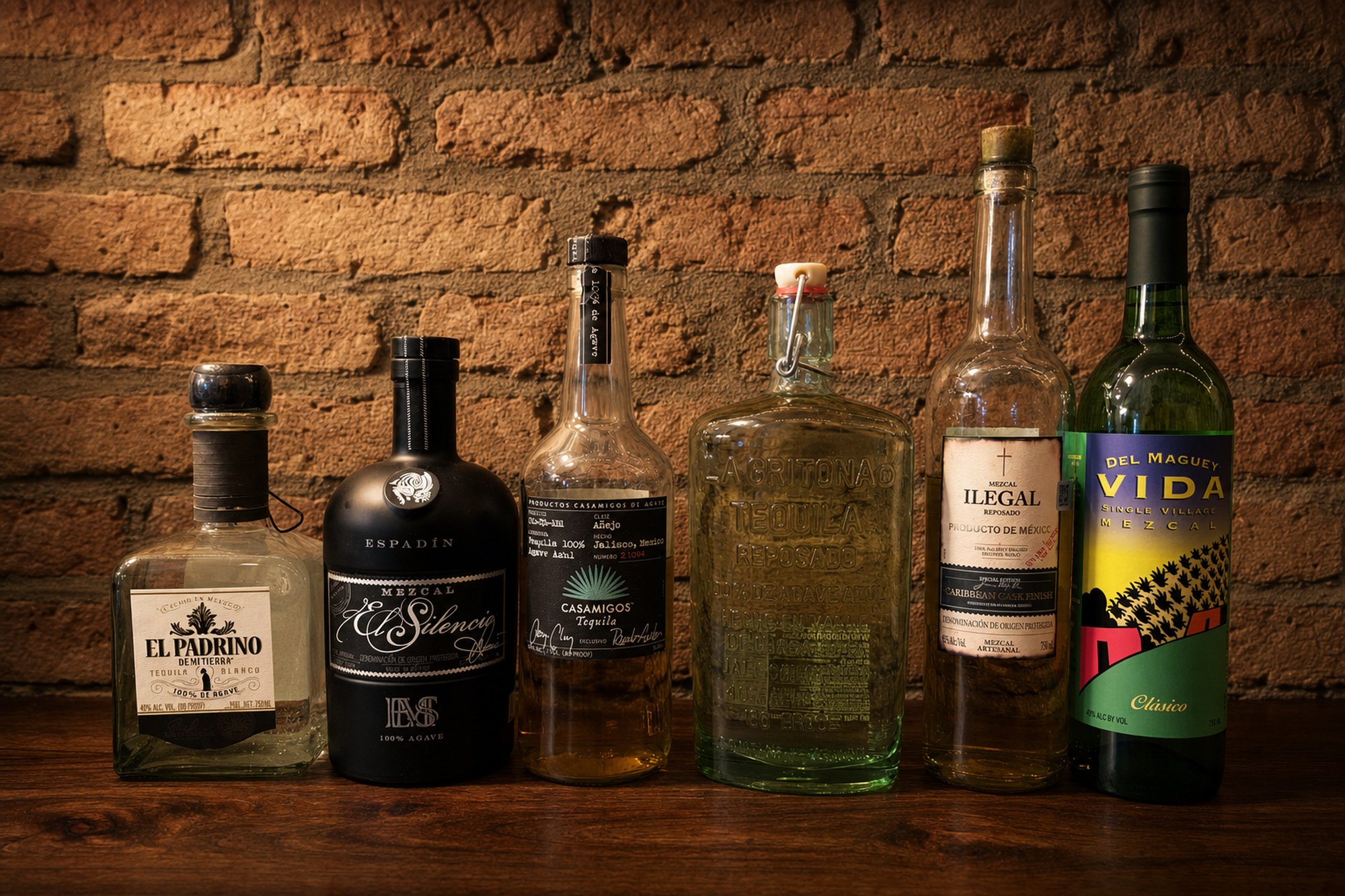
A varied selection of agave spirits available today.
Tequila, and What It Means in Mexico
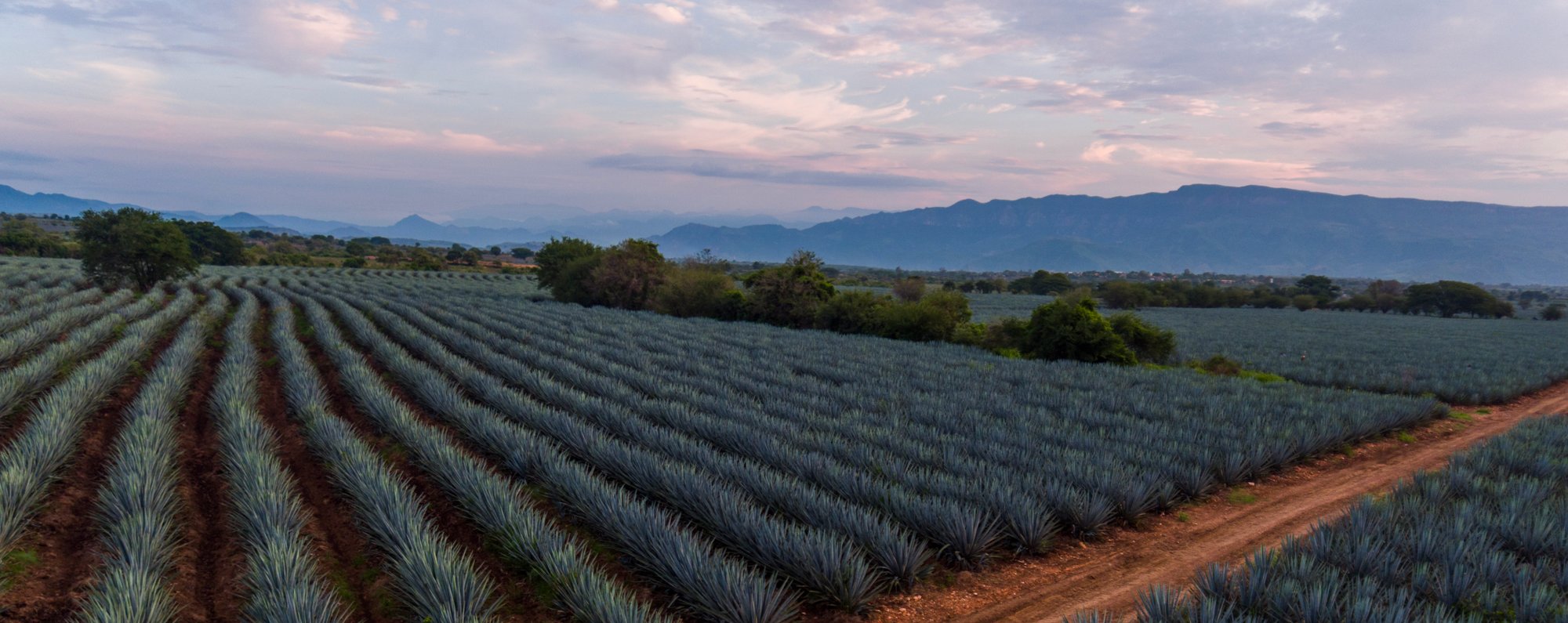
The blue agave fields of Jalisco, where real tequila begins.
Agave was sacred long before anyone distilled it. For thousands of years, people across central Mexico fermented its sap into pulque, a milky, low-proof drink tied to ritual and religion. The Aztecs had a goddess of the maguey plant, Mayahuel, and the agave fed, clothed, and intoxicated the people who grew it. Pulque came first. Tequila came much later.
Distilling arrived in the colonial period, though how is still argued. The Spanish had copper stills, but the evidence leans toward Filipino sailors on the Manila galleons, who brought small coconut stills across the Pacific that locals adapted to agave. A Spanish conquistador, Cristóbal de Oñate, founded Santiago de Tequila in 1530, and he saw quickly what the locals were doing with the plant. In a letter to the Spanish crown he noted that from the agave they made both wine and sugar. A ban on new vineyards in the colonies pushed settlers harder toward that agave, and the spirit that came off the still around the town took its name. One of the first to make it at scale was Pedro Sánchez de Tagle, the Marquis of Altamira, who built a tequila works on his Jalisco hacienda in the early 1700s. Some call him the father of tequila. The Cuervo family got the first royal license to sell it commercially not long after.
That title gets claimed twice, though. The other man it belongs to is Don Cenobio Sauza, who did more than anyone to turn tequila into an industry. In 1873 he bought a distillery in Tequila, renamed it La Perseverancia, and that same year carried three casks and six jugs across the border at El Paso, the first tequila ever exported to the United States. He served a term as the town's mayor, and in the 1890s he settled which plant tequila should be made from, arguing that blue agave was the only one worth using. The name caught up to the place around then too: producers petitioned to call their mezcal tequila after the town, and once it took a prize at the 1893 Chicago World's Fair, they dropped mezcal from the label for good. The railroad did the rest, carrying a local drink out of Jalisco and across the country.
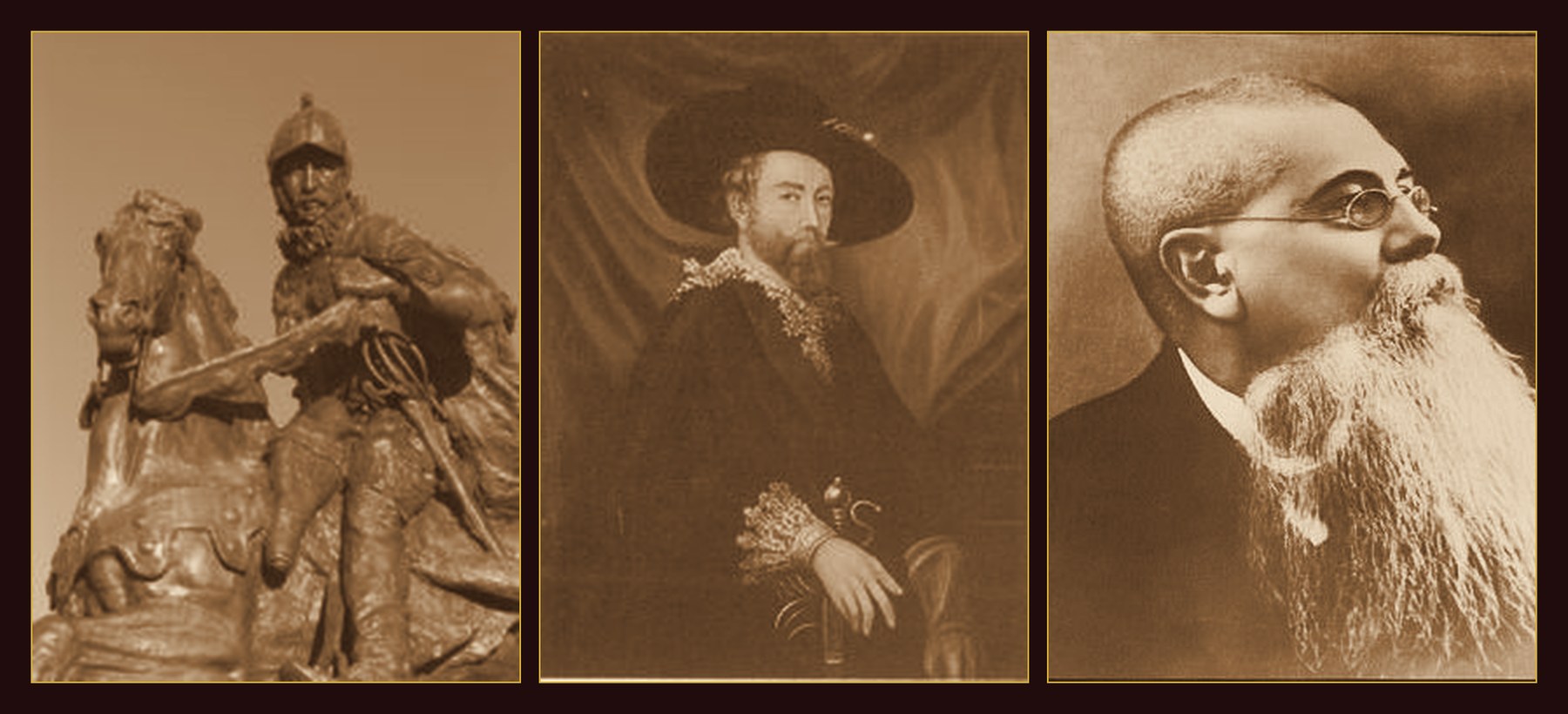
The men behind the spirit, oldest to newest: Cristóbal de Oñate, who founded Tequila in 1530; the Marquis of Altamira, an early producer; and Don Cenobio Sauza, father of the industry.
Tequila became Mexican shorthand in the twentieth century. After the Revolution it stood in for the country itself, homegrown where imported brandy and wine read as foreign. The charro and the mariachi drank it on screen through the golden age of Mexican cinema, and the association held. Tequila stopped being only a drink and became a symbol.
It crossed the border in the same decades. American Prohibition sent drinkers south and smugglers north, and when the Second World War choked off European spirits, tequila filled the gap, with agave planting jumping more than a hundred percent through the 1940s. The Margarita landed in the middle of that wave, which is part of why it caught.
Mexico made that official in 1974, claiming the word tequila as its own and limiting the real thing to blue Weber agave grown in Jalisco and a few neighboring states, policed by a regulatory council. The global boom came later, and with it a wave of celebrity brands and a real strain on a plant that takes years to mature. Two things worth carrying to the shelf. Buy 100 percent agave: anything labeled only "made with agave" is a mixto, cut with cheaper sugar, a style that goes back to a 1930s agave shortage that let producers get away with 51 percent agave and stuck because the blander result sold well in the States. And forget the worm, which belongs to old mezcal marketing and was never part of tequila at all.
The Future of Tequila
For a while the future of tequila was all marketing. The more interesting shift is quieter. It runs on transparency and restraint: additive-free tequila with nothing hidden in the bottle, distillers who reuse the agave fiber and recycle their water instead of cutting corners with industrial diffusers, and small independent producers, a growing number of them women-led, who care more about the plant and the place than the logo. The strain on agave is real: prices ran from about forty cents a kilo to sixteen dollars between 2000 and 2003, a stretch growers still call oro azul, blue gold. So is the pressure to mass-produce. The distillers worth watching are pushing the other way.
A better version of that future is already being made. La Gritona, a small distillery in Valle de Guadalupe, Jalisco, is run by master distiller Melly Barajas and an all-women local team who handle every step. It makes one thing, an additive-free reposado rested a few months in reused whiskey barrels, and it comes in a bottle blown from recycled glass, with the spent agave sent to local farmers as feed. I picked one up on a shopkeeper's recommendation, and it earns the praise, herbaceous and clean with the oak kept quiet. If tequila has a future worth drinking, it looks more like this than like another celebrity label.
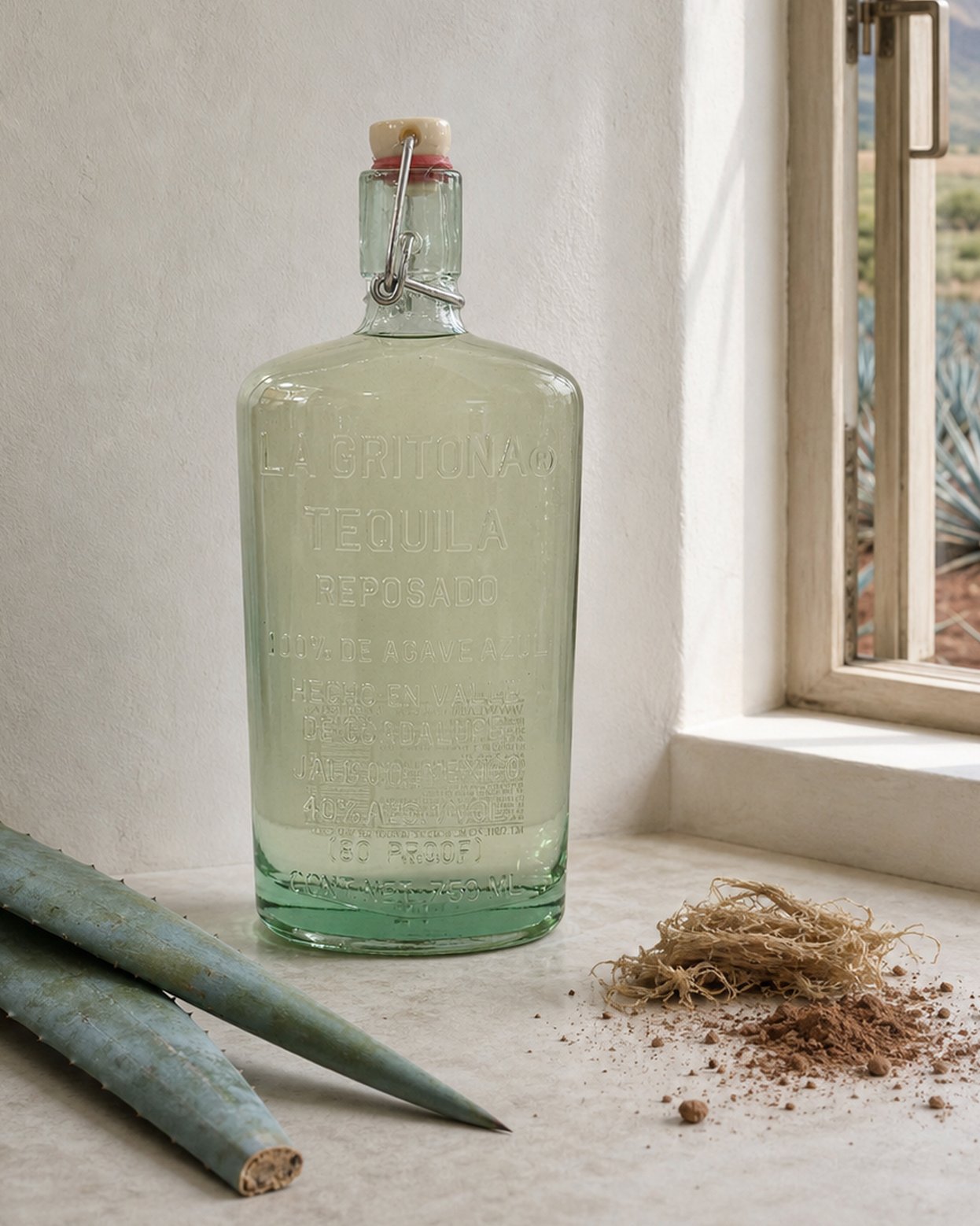
La Gritona Reposado. Woman-run, additive-free, and bottled in recycled glass in Jalisco.
Enter the Margarita
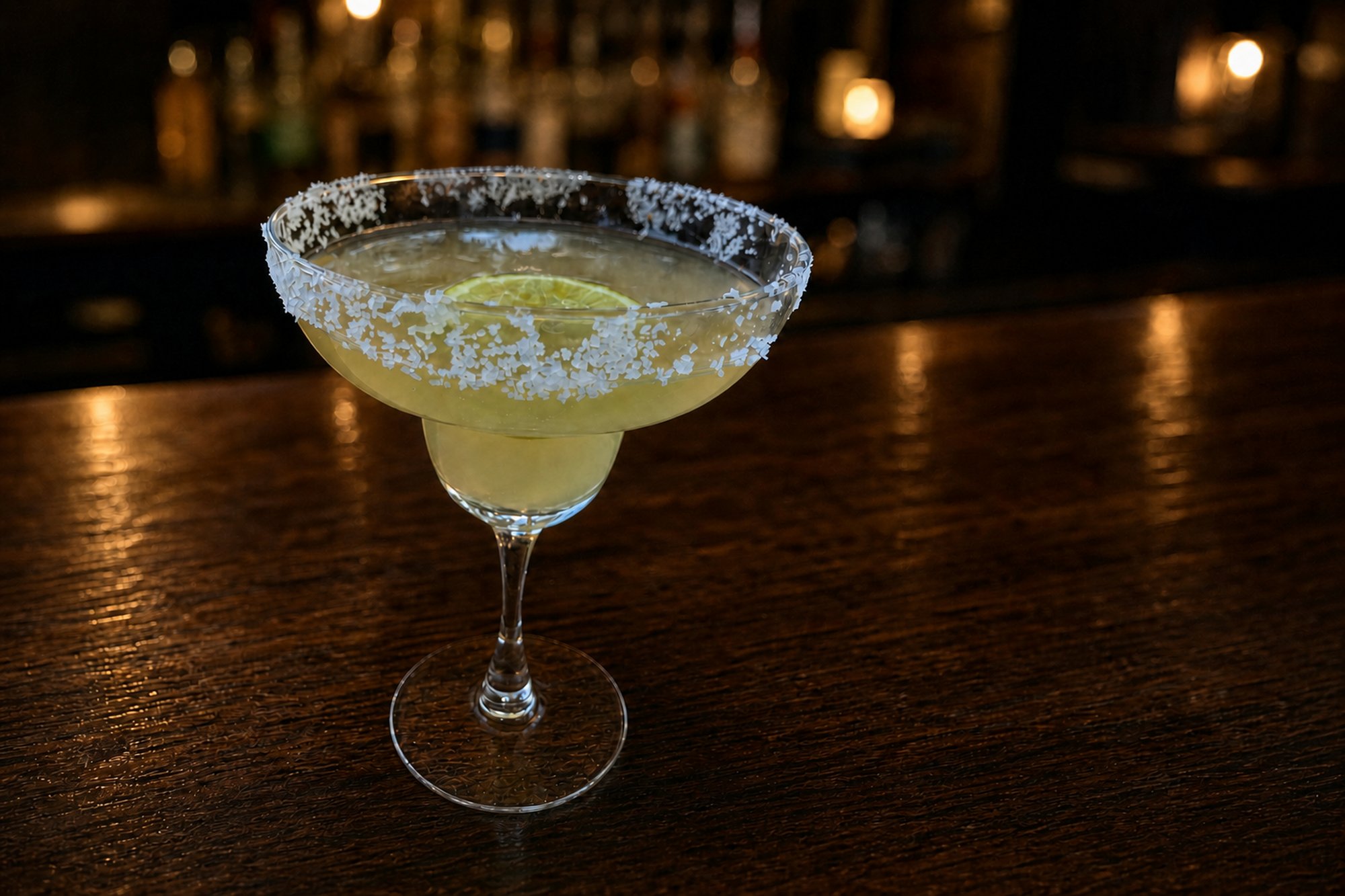
A Margarita made properly. Fresh lime, real orange liqueur, no machine.
Tequila needed a way into American glasses, and the Margarita became it. Almost everyone who claims to have invented the drink is probably wrong, and the more interesting answer is that no single person did. A bartender named Carlos Herrera is said to have made one near Tijuana around 1938 for an actress. A Dallas socialite, Margaret Sames, claimed she poured the first at a party in Acapulco in 1948. A Juarez bartender, Pancho Morales, dated his to 1942. None fully checks out, and they all describe the same drink.
The likelier truth is that the Margarita is a tequila Daisy. The Daisy was a whole family of older cocktails built from a spirit, citrus, and a sweet orange liqueur, and margarita is simply Spanish for daisy. A Tequila Daisy turns up in a Tijuana newspaper mention as early as 1936, and a drink with the exact modern proportions, the Picador, appears in a 1937 London cocktail book, years before the name Margarita shows up in print. The salt rim came with the tequila-and-lime tradition it grew out of.
The name first reaches an American paper in 1953. What actually made the drink famous was advertising. Through the 1940s and 50s, tequila importers ran national campaigns to sell an unfamiliar spirit to American drinkers, and the Margarita was the vehicle. It worked well enough that the cocktail became the reason most Americans ever tasted tequila at all.
What's Actually In a Margarita
A Margarita is tequila, fresh lime juice, and orange liqueur, shaken with ice and served over a salted rim. Everything else called a Margarita is a variation on that structure.
Tequila is the backbone, and which one you pick changes the drink more than anything else. A blanco is unaged and clean, bright with agave and pepper, and it is the classic Margarita choice because nothing hides the citrus. Reposado spends a few months in oak and adds a little vanilla and spice. Añejo spends a year or more in barrel and turns rich and soft, better in a slower, sipping version of the drink.
Lime juice has to be fresh. Bottled lime is preserved and oxidized and tastes flat next to a real one, and sour mix is worse. This is the one place with no shortcut worth taking. Limes are seasonal too, sharper at some points in the year and rounder at others, so the same recipe can shift a little month to month.
Orange liqueur does the sweetening. Cointreau is the standard, clean and dry. Grand Marnier is richer and brandy-based, which is what turns a Margarita into a Cadillac. Some builds drop the liqueur and use agave syrup instead, which puts the tequila front and center. Between the tequila, the sweetener, and how far you push the lime, the Margarita gives you more room to make it your own than almost any other three-part drink.
The Right Glass
That wide, saucer-shaped Margarita glass has a longer pedigree than it looks. It descends from the champagne coupe, the shallow bowl once used for sparkling wine. When the Margarita took off, the shape carried over almost by accident, and the broad rim turned out to be useful, since it gives the salt somewhere to sit. The stepped, double-bowl version most bars stock came later, an American flourish that echoes the silhouette of a sombrero. It looks handsome, though a plain coupe pours a better drink.
A Margarita served up belongs in a chilled coupe or the classic coupette, the wide saucer most people picture. Served on the rocks, it goes in a short tumbler over fresh ice, which holds the cold longer on a hot day. Skip the giant novelty bowl. It looks the part but warms and dilutes before you reach the bottom.
For the salt, rub a lime wedge around the outside edge of the glass and roll only the outer rim in coarse salt, not fine table salt. Salting the outside instead of dipping the whole lip lets you decide how much salt reaches each sip, and leaving one side bare is a courtesy to anyone who would rather skip it. A flaky sea salt or a chili-lime salt like Tajín both work depending on the build.
A tequila you mean to sip wants a different glass entirely. Skip the caballito, the tall narrow shot glass built for slamming, which throws the alcohol straight up your nose. The traditional pour is a veladora, a small ridged glass used across Mexico, or a copita, the tulip shape borrowed from sherry that funnels the aroma without the burn. A Riedel tequila glass or even a regular wine glass does the same job. Pour an ounce or two at room temperature, no salt or lime, and take it in small sips. Nose it gently rather than diving in, and give a good añejo a minute to open up the way you would a whiskey.
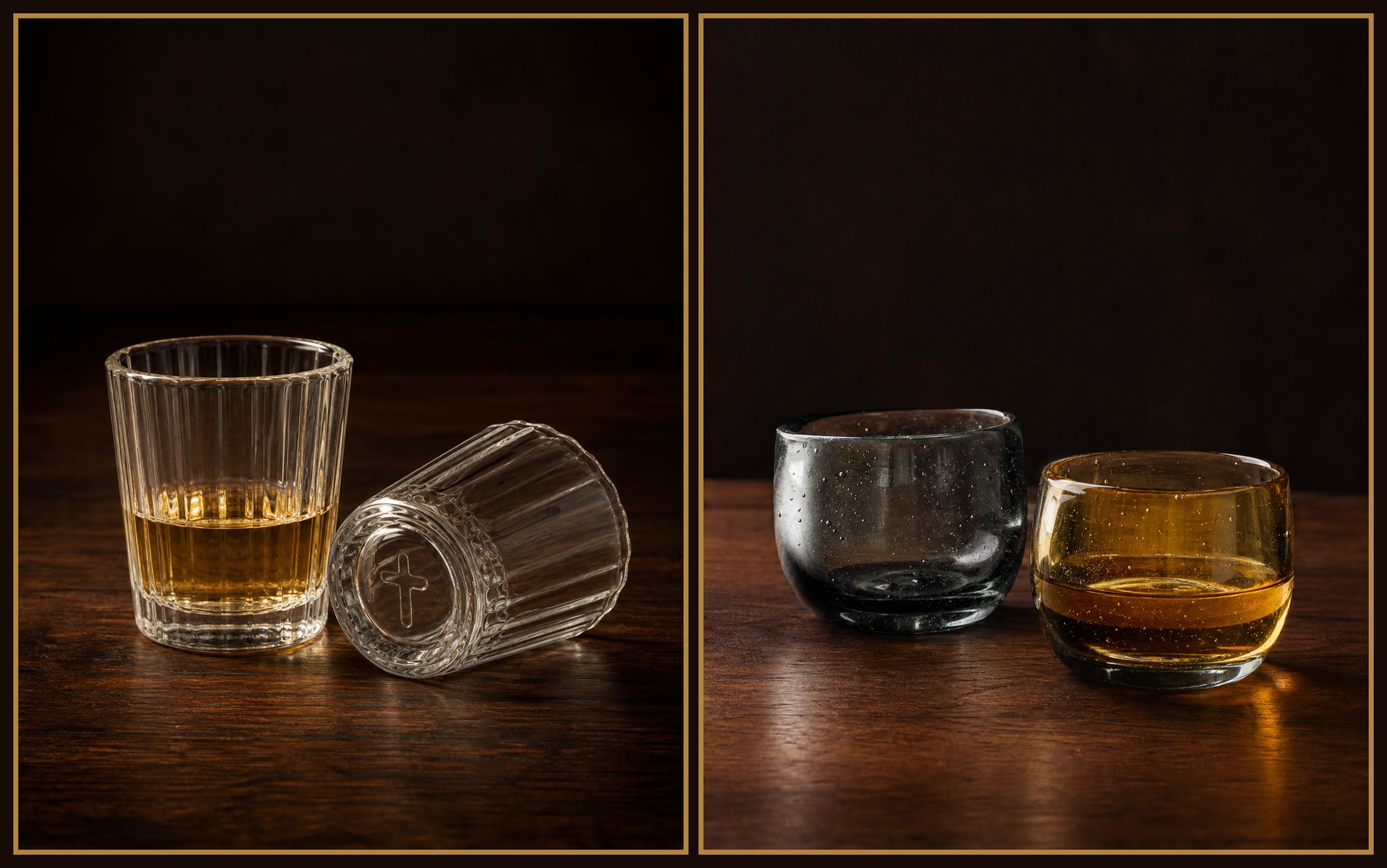
Two ways to sip it: the ridged veladora on the left, the hand-blown copita on the right. No stem, no shot, just the tequila.
Tequila Beyond the Margarita
The Margarita gets the attention, but it is only one way to drink tequila, and hardly the everyday one.
The best tequila never sees a cocktail at all. A good reposado or añejo is made to be sipped neat, at room temperature, from a small copita rather than shot back with salt and lime. That ritual exists to cover for cheap tequila, and a bottle worth the money asks for neither. If you want to taste what the fuss is about, pour something like Fortaleza, Tequila Ocho, El Tesoro, or G4, all traditional producers that let the agave show. The recognizable splurges are Don Julio 1942 and Clase Azul. Even the añejos in the recipes below, Casamigos and Cenote, reward a slow pour on their own before they go near ice.
Two to think twice about. The base Jose Cuervo Especial is a mixto, not 100 percent agave, so it belongs in a frozen machine drink and nowhere near a sipping glass. A bottle like Patrón is perfectly good, just priced for its fame, an example of paying for the name and the marketing rather than the taste. The four traditional names above give you far more on taste for the price.
Aged tequila also takes a cocktail closer to how you would treat whiskey, stirred and spirit-forward rather than shaken and sour, which is exactly what the Oaxaca Old Fashioned below does. Whatever you pour it into, a tequila drink makes a strong signature, because the frame stays simple and the bottle does the talking. Easy Signature Cocktails Worth Knowing covers that idea across a few other drinks, and last week's National Daiquiri Day post makes the same case for rum, if tequila is not your spirit.
Five Ways to Drink It
Five to make for the day, in order from oldest to newest, each on a bottle from my own shelf. Three are Margaritas, because the day belongs to them. The other two show what tequila does once you set the Margarita down.
1. The Classic Margarita
El Padrino Demitierra Tequila Blanco
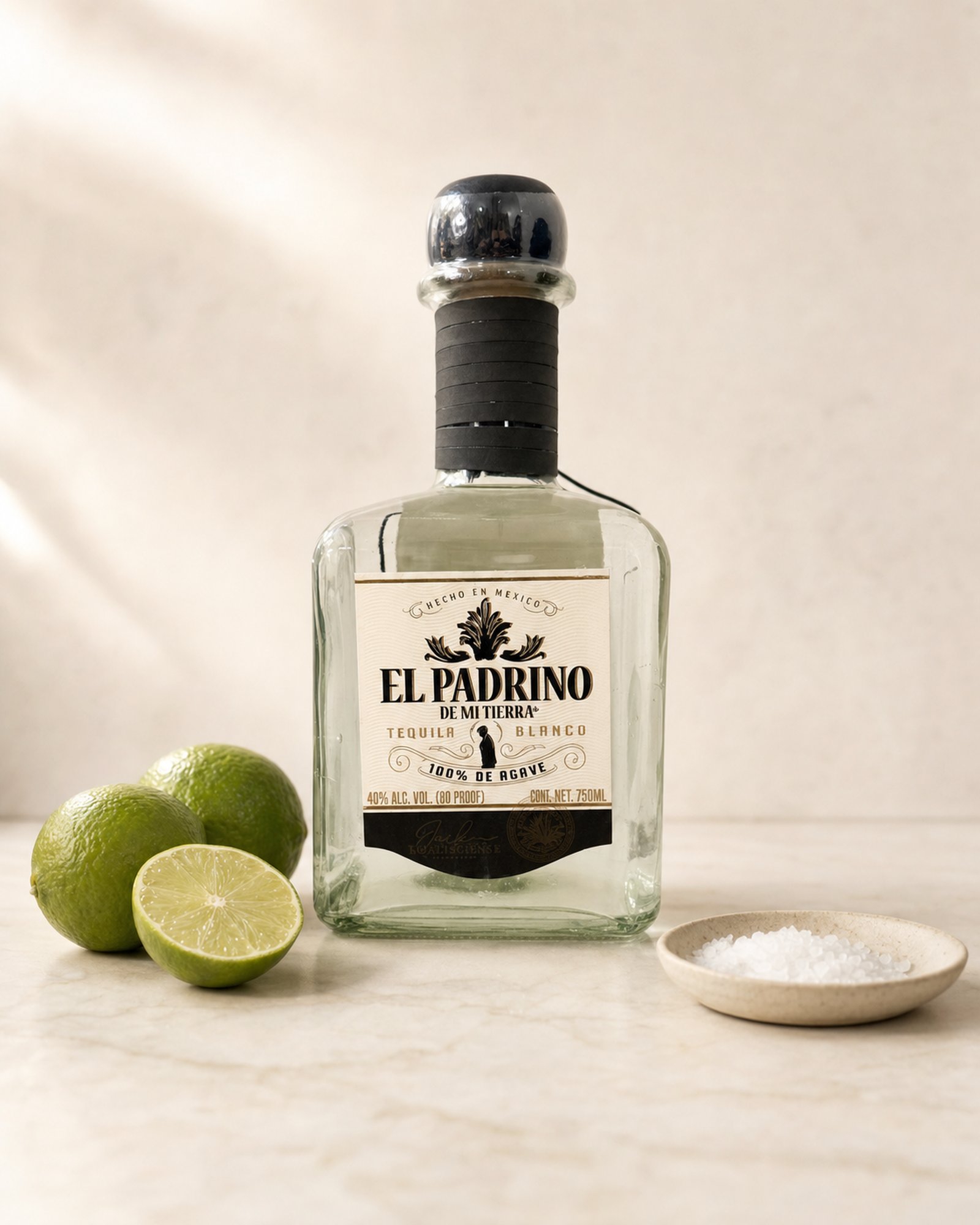
El Padrino Demitierra Blanco. Clean agave, the right base for a classic.
This is the Margarita in its plainest and best form, the tequila Daisy the whole thing grew out of. A blanco keeps it bright, so the agave and the lime carry the drink with nothing muddying them. El Padrino Demitierra is an unaged blanco, crisp and peppery, exactly what a classic wants. The ratio here is the well-worn 2:1:1, and a small pour of agave is optional if your limes are sharp.
Classic Margarita
- 60ml (2oz) El Padrino Demitierra Blanco
- 30ml (1oz) Cointreau
- 30ml (1oz) fresh lime juice
- 5ml (1 barspoon) agave syrup, optional
- Ice
- Glass: Salt-rimmed rocks glass, or a chilled coupe served up
Rim the outer edge of the glass with lime and coarse salt. Combine tequila, Cointreau, lime juice, and agave in a shaker with ice. Shake hard for about 15 seconds, until the shaker is cold to the touch. Strain over fresh ice in the rocks glass, or double strain into a chilled coupe. Garnish with a lime wheel.
2. The Paloma
Cenote Añejo
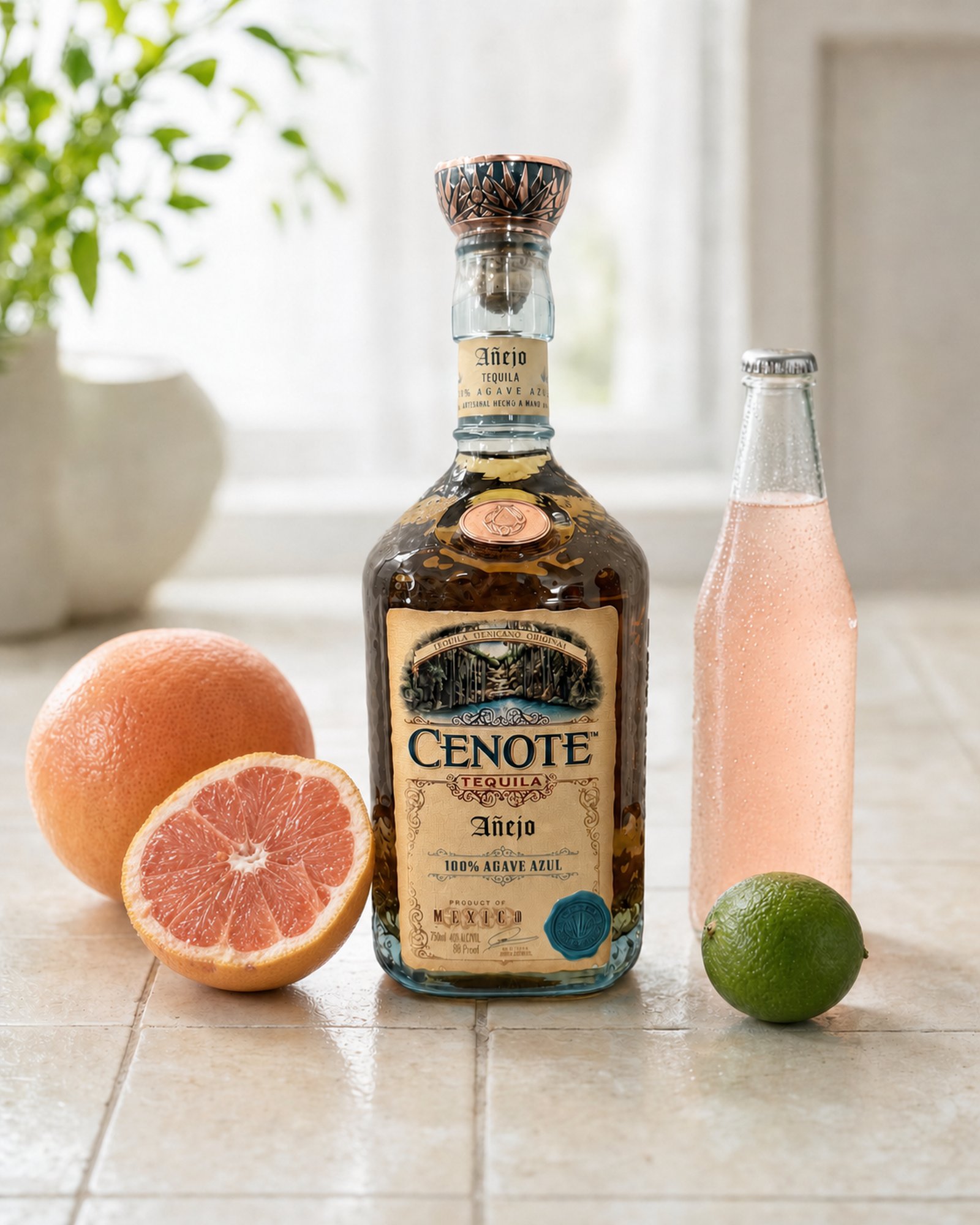
Cenote Añejo. The everyday Mexican tequila drink, no shaker needed.
Ask most Mexicans what they actually drink and the answer is a Paloma, not a Margarita. It is tequila, grapefruit soda, lime, and a pinch of salt, built straight in the glass, and it is reputed to date to the 1950s and the bar La Capilla in the town of Tequila itself. A blanco keeps it crisp and is the usual pick. I am reaching for Cenote Añejo here, which trades a little of that snap for body, and the grapefruit soda is loud enough to keep up.
Paloma
- 50ml (1¾oz) Cenote Añejo
- 15ml (½oz) fresh lime juice
- 7ml (¼oz) agave syrup
- Pinch of salt
- 90ml (3oz) pink grapefruit soda, to top
- Ice
- Glass: Salt-rimmed collins or highball glass
Rim the outer edge of the glass with lime and coarse salt. Build tequila, lime juice, agave, and a pinch of salt over ice. Top with grapefruit soda and stir once, gently. Garnish with a grapefruit wedge. For a fresher version, use 25ml fresh grapefruit juice and top with soda water instead.
3. The Cadillac Margarita
Casamigos Añejo, cognac + dry curaçao
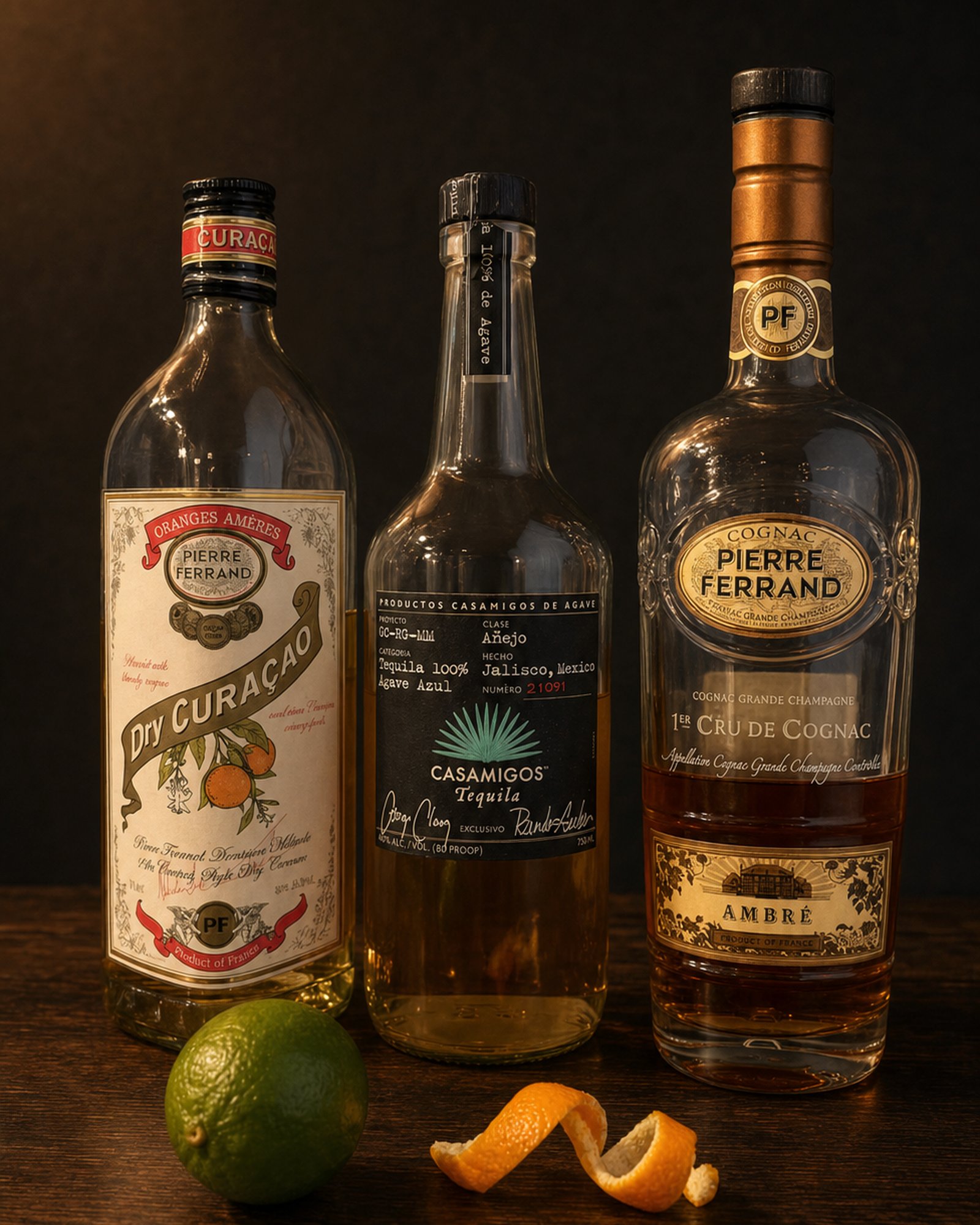
Casamigos Añejo with a cognac-and-curaçao float, my stand-in for Grand Marnier.
The Cadillac is what a Margarita becomes when you spend more on the two things that matter, the tequila and the orange liqueur. Classically the upgrade is Grand Marnier, brandy-based and deeper than Cointreau, floated on top so the first sip carries orange and oak before the lime hits. An añejo suits the build because the drink is meant to be richer and slower, and Casamigos is soft and full of vanilla and caramel from its time in oak.
Full disclosure: I ran out of Grand Marnier shooting this post. Grand Marnier is really just cognac married to orange liqueur, so I floated my own version instead, Pierre Ferrand Ambré with a little dry curaçao, and it held up beautifully. Rémy Martin VSOP in place of the Ambré is even better, though pouring good VSOP into a cocktail adds up fast.
Cadillac Margarita
- 60ml (2oz) Casamigos Añejo
- 30ml (1oz) fresh lime juice
- 22ml (¾oz) Cointreau
- 15ml (½oz) Grand Marnier, to float, or a cognac and dry curaçao blend
- Ice
- Glass: Salt-rimmed rocks glass
Rim the outer edge of the glass with lime and coarse salt. Combine tequila, lime juice, and Cointreau in a shaker with ice. Shake hard and strain over fresh ice. Float the Grand Marnier, or your cognac and dry curaçao blend, over the top by pouring it slowly over the back of a spoon. Garnish with a lime wheel.
4. The Oaxaca Old Fashioned
Del Maguey Vida or El Silencio + Casamigos Añejo
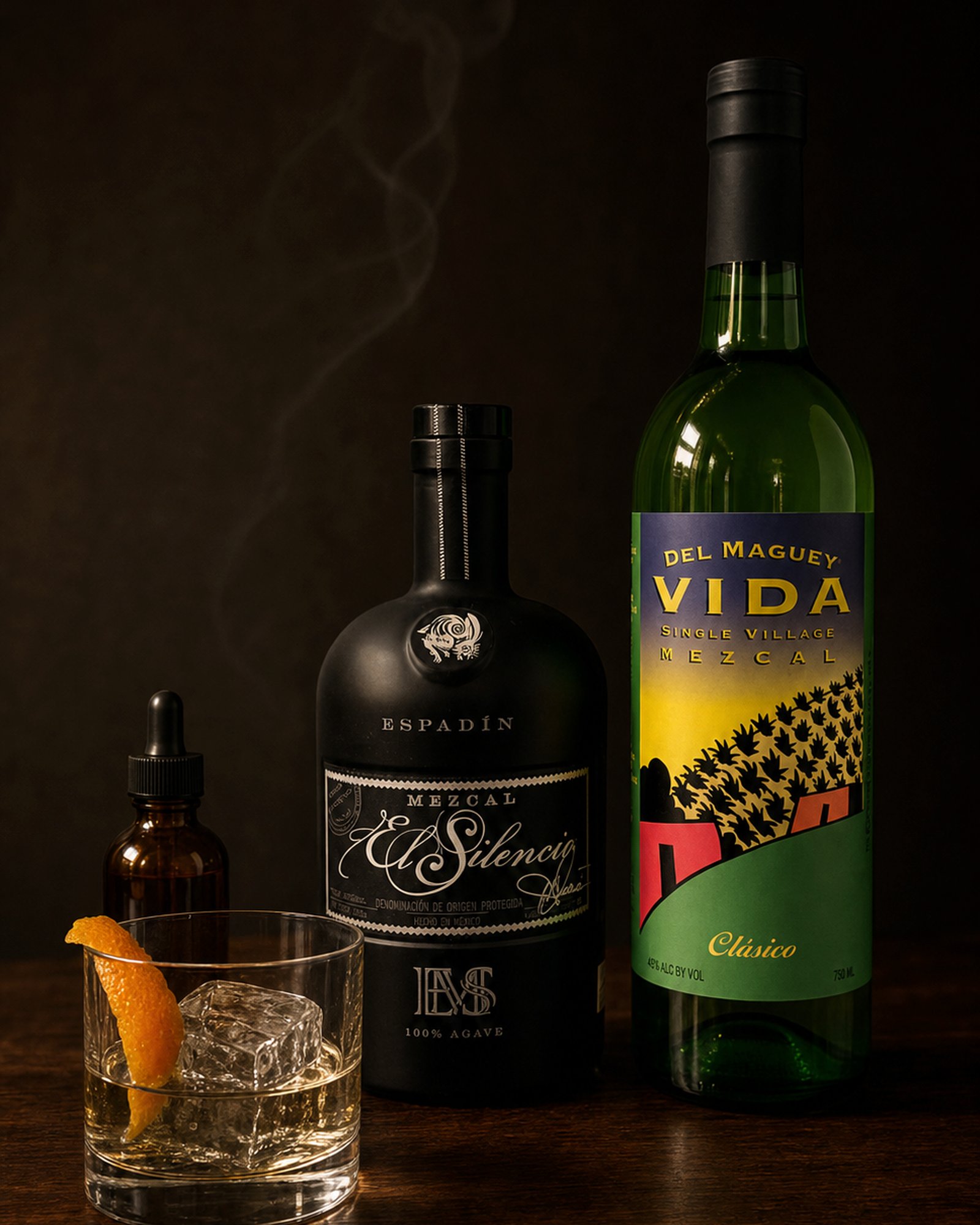
Del Maguey Vida or El Silencio under aged tequila. Sipped, not shaken.
Phil Ward built this at Death and Co in New York in 2007, and it did more than any drink to put mezcal in front of American drinkers. It treats aged agave like whiskey, stirred and spirit-forward, with a short pour of mezcal underneath for smoke. Casamigos Añejo carries the base, and the mezcal is yours to pick: Del Maguey Vida Clásico is the standard for this drink, and an El Silencio Espadín works just as well. For a rounder, rum-cask spin on that smoke, an Ilegal Caribbean Cask does the job too. A reposado stands in for the añejo if you want it a shade brighter.
Oaxaca Old Fashioned
- 45ml (1½oz) Casamigos Añejo
- 15ml (½oz) mezcal, Del Maguey Vida Clásico or El Silencio Espadín
- 7ml (¼oz) agave syrup
- 2 to 4 dashes mole or chocolate bitters (Angostura also works)
- Ice, ideally one large cube
- Glass: Old fashioned glass
Combine tequila, mezcal, agave, and bitters in a mixing glass with ice. Stir until well chilled. Strain over a large cube in an old fashioned glass. Express a flamed orange twist over the top and drop it in.
5. The Tamarind Margarita
Estancia Raicilla
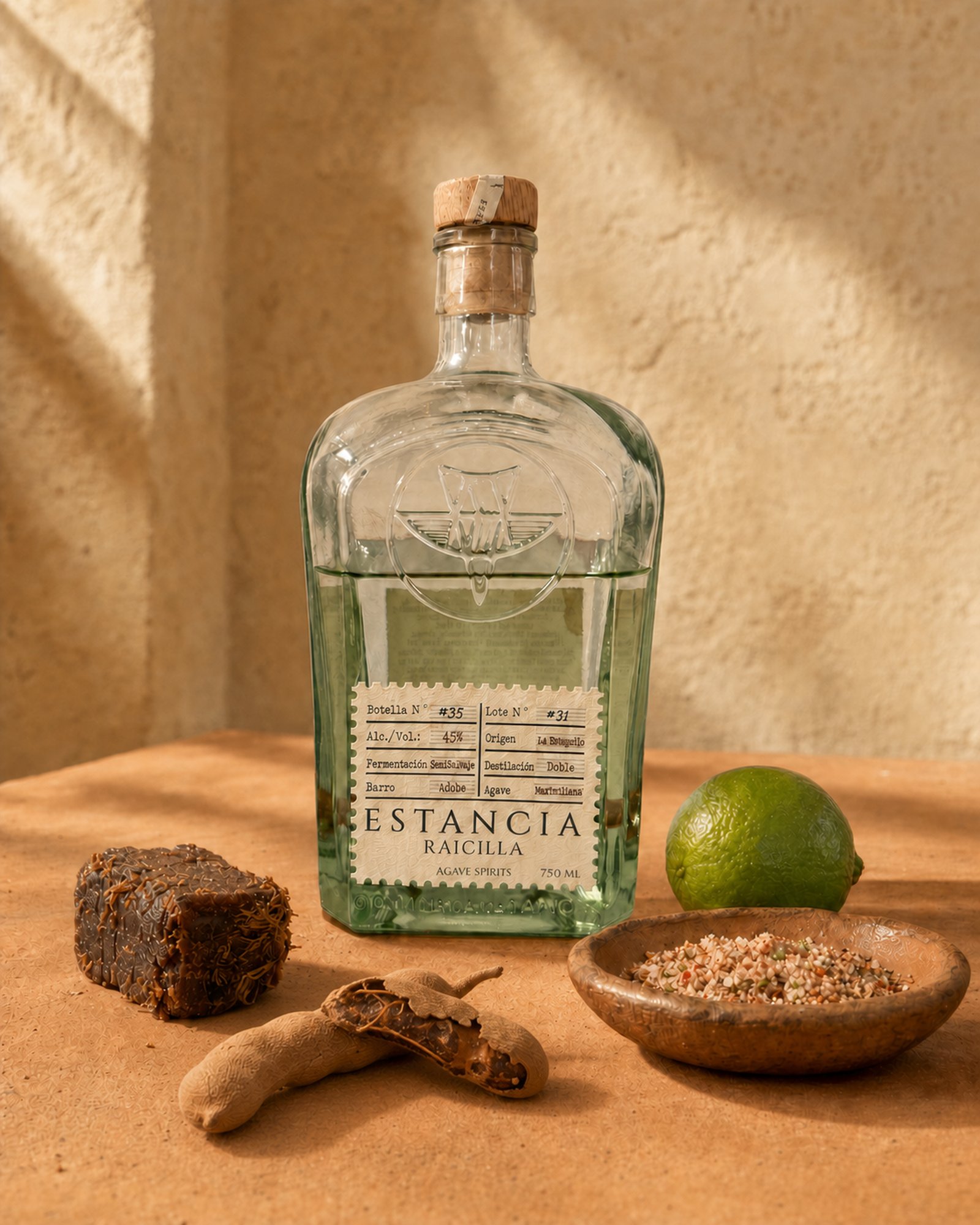
Estancia Raicilla with tamarind. The one built to be mine.
This one is built to be a signature. Raicilla is agave spirit from Jalisco made outside the tequila rules, wilder and funkier, with a green, slightly rustic edge that a polished tequila does not have. Tamarind is the classic Mexican partner for it, sweet and sour at once, and it stands up to the raicilla instead of getting flattened by it. A chili-lime salt rim ties the whole thing together. If you cannot find raicilla, a good mezcal gets you close.
Tamarind Margarita
- 60ml (2oz) Estancia Raicilla
- 30ml (1oz) fresh lime juice
- 22ml (¾oz) tamarind concentrate
- 15ml (½oz) agave syrup
- Ice
- Glass: Rocks glass, chili-lime salt rim
Rim the outer edge of the glass with lime and chili-lime salt. If your tamarind is a stiff paste, loosen it first with a splash of warm water. Combine raicilla, lime juice, tamarind, and agave in a shaker with ice. Shake hard and double strain over fresh ice. Garnish with a lime wheel.
One more pairing, since this is the Society of Scents and Spirits. My scent of the day for a Margarita is Parfums de Marly Sedley, lime, mint, and grapefruit that run right alongside the glass, with Goldfield and Banks Bohemian Lime a close second.
Good tequila does not need a day to justify it. Buy a bottle you would sip on its own, keep the lime fresh, and July 24 is only the excuse.
Much of the deep history here draws on Ian Chadwick's In Search of the Blue Agave, a thoroughly researched and generously sourced tequila history worth reading in full.