Key Takeaways
- Bottled in bond requires one distiller, one distillery, one six-month distilling season, at least four years in wooden containers, and exactly 100 proof, among the six conditions under 27 CFR 5.88.
- Bourbon itself guarantees no minimum age. A three-month-old spirit can legally be bourbon if it meets the other requirements; it just can't be called straight. Whiskey aged under four years generally needs an age statement. Bottled-in-bond whiskey is exempt because the designation already guarantees at least four years.
- Small batch, handmade, craft, and reserve carry no defined production standard under TTB's labeling rules. Maker's Mark won two separate "handmade" lawsuits, but on how a reasonable consumer reads the word, not simply because the term lacks a federal definition.
A bourbon label carries two kinds of words. Some sit inside a federal regulation with a citation number attached. Others have no prescribed federal production standard. On the shelf, both kinds look identical. In a courtroom, they aren't.
This site already told the origin story: the rectifiers who faked bourbon with iodine and prune juice, Colonel E.H. Taylor's fight against them, and the 1897 law Congress passed in response, covered in the Journal's America's 250th piece. What that piece didn't cover is what those words lock in today, more than a century later, and which words sitting right next to them lock in no defined production standard at all.
What Bottled in Bond Actually Requires
If you rank these terms by how much they legally constrain production, bottled in bond sits at the top, straight in the middle, and bourbon at the floor. That ranking is this piece's own framework, not a formal legal hierarchy TTB itself uses.
Few American spirits designations prescribe as much as bottled in bond, and the whole thing lives in one regulation, 27 CFR 5.88. Six numbered conditions have to be true at once, not five.
The spirit has to be one kind and type, made from one class of materials. It has to come from one distiller, at one distillery, inside a single distilling season, which the regulation splits into two six-month windows: January through June, or July through December. It has to sit in wooden containers, in contact with the wood, for at least four years. Nothing may be added or taken away except through filtration, chill proofing, or a similar physical treatment that doesn't leave a substance behind or change what the spirit is. Proof can be reduced with pure water only, down to exactly 100. And it has to be bottled at that same 100 proof, 50 percent alcohol by volume. Not 99. Not 101.
The label carries part of that paper trail. Domestic bottled-in-bond spirits must carry the real name of the distillery, or the trade name the distiller used, along with the plant number of where the spirit was distilled and the plant number of where it was bottled. Those numbers identify actual regulated premises the government can trace. A bonded label is a paper trail with an address, not a slogan.
Bottled in bond isn't whiskey-only, either. The same regulation covers other distilled spirits, with its own storage rules written specifically for vodka and gin, though whiskey is where the designation actually gets used on shelves.
What Straight Adds
Straight sits a tier below bonded. For bourbon specifically, it buys one thing: time. Base bourbon already excludes coloring, flavoring, and blending materials under its own standard of identity, so straight bourbon's real addition on top of that is two years minimum in new charred oak. For whiskey types whose base standard does permit some blending material, straight removes that allowance too. Either way, the floor is two years in the barrel type the whiskey's class already requires.
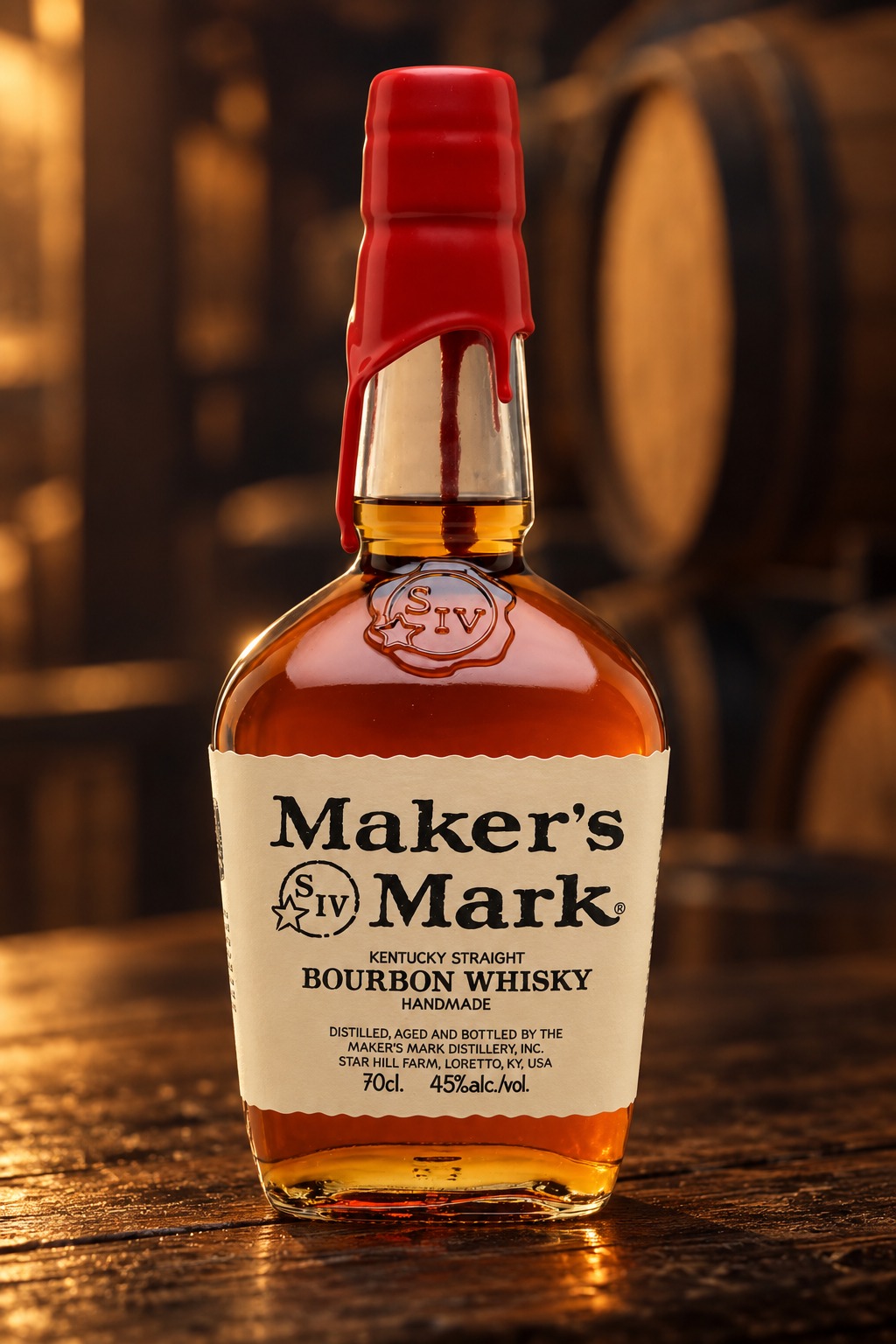
That rule says nothing about which distillery made the spirit, whether it came from one season or many, or what proof it landed at beyond bourbon's general 80-proof bottling floor. A straight bourbon can be a mingling of several straight bourbons from different distilleries in the same state and different years, and the label can still say straight, as long as every component already qualifies on its own. Bottled in bond can't do that. Straight can.
What Bourbon Itself Guarantees, and What It Doesn't
Strip away both bonded and straight, and bourbon on its own still isn't unregulated. The base spirit has its own list under 27 CFR 5.143: made in the United States, from a mash of at least 51 percent corn, distilled to no more than 160 proof, entered into a new charred oak container at no more than 125 proof, bottled at no less than 80 proof, nothing added but water.
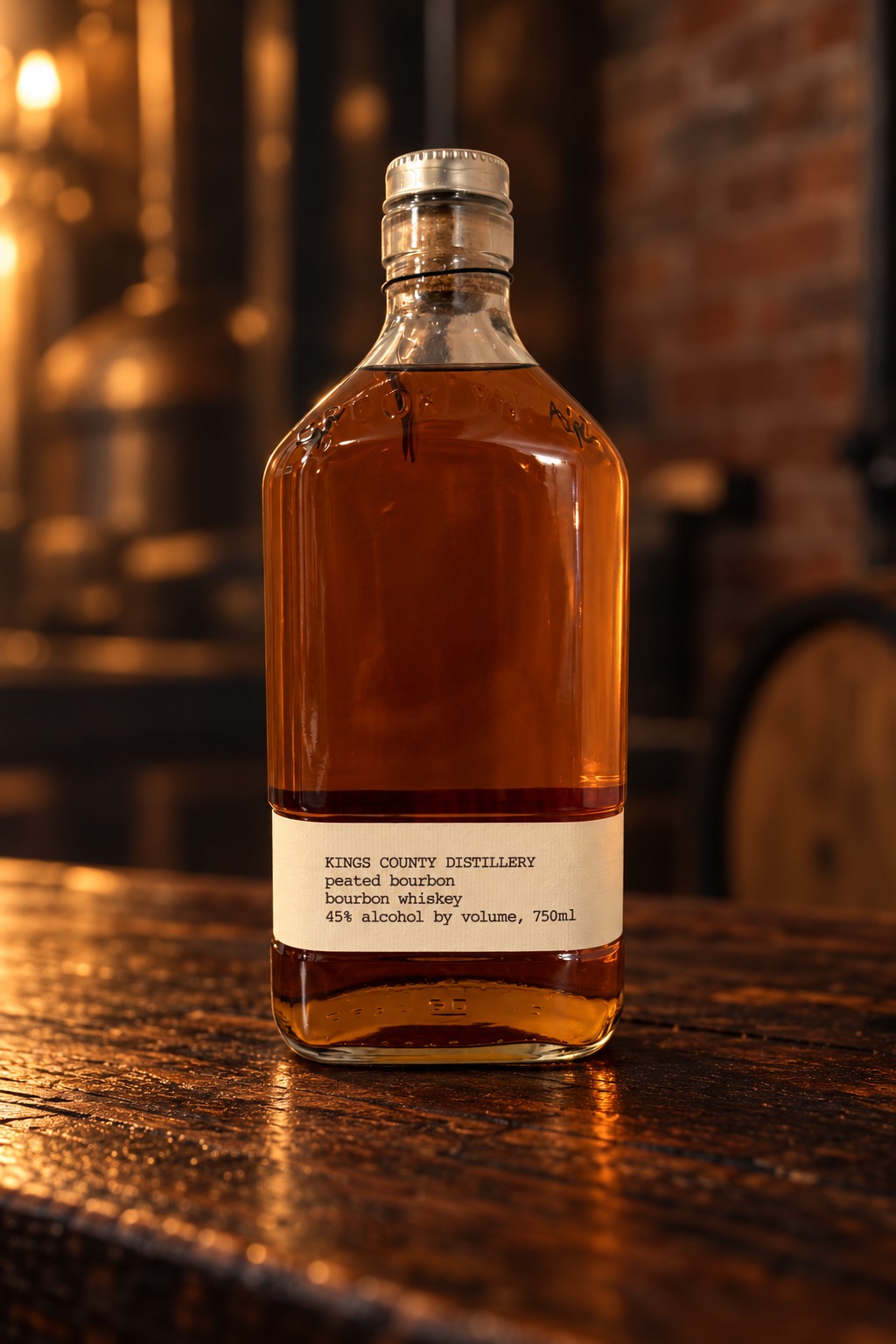
The United States part isn't decoration. Kentucky Representative John C. Watts introduced H. Con. Res. 57 in the House, pushing for bourbon to be recognized as American-only. The Senate moved its own companion version, S. Con. Res. 19, through the Finance Committee in September 1963, and both chambers ultimately adopted the Senate's version on May 4, 1964, declaring bourbon "a distinctive product of the United States" and expressing Congress's view that no foreign whiskey imported into the country should be labeled Bourbon whiskey. It did for bourbon what similar rules already did for Scotch and Cognac: reserved the name for spirits made in one country, not just a disclosed one. Kentucky isn't part of that legal test. Kings County Distillery, founded in Brooklyn in 2010 and based at the Brooklyn Navy Yard since 2012, makes bourbon several hundred miles from Kentucky while meeting the same federal standard.
What bourbon itself doesn't guarantee is age. There's no minimum at all. A bourbon distilled in the spring and bottled that same summer is still legally bourbon, as long as it meets the other bourbon requirements. Any whiskey aged under four years generally needs an age statement on the label. Bottled-in-bond whiskey is the one exception, and not because a bonded bottle is somehow allowed to be young. It's exempt from that rule because the designation itself already guarantees at least four years, which makes the statement redundant.
The Words With No Defined Federal Standard
Small batch, handmade, handcrafted, craft, reserve: none of these carry a defined production standard under TTB's distilled-spirits labeling rules. No barrel count for small batch. No hand-tool requirement for handmade. A 200-barrel blend doesn't automatically violate a small-batch production standard, because no such numerical standard exists. Master distiller Booker Noe is generally credited with popularizing the technique itself in the early 1990s at Jim Beam, mingling a limited, chosen set of barrels instead of dumping hundreds together. The phrase that followed him never got a legal floor of its own.
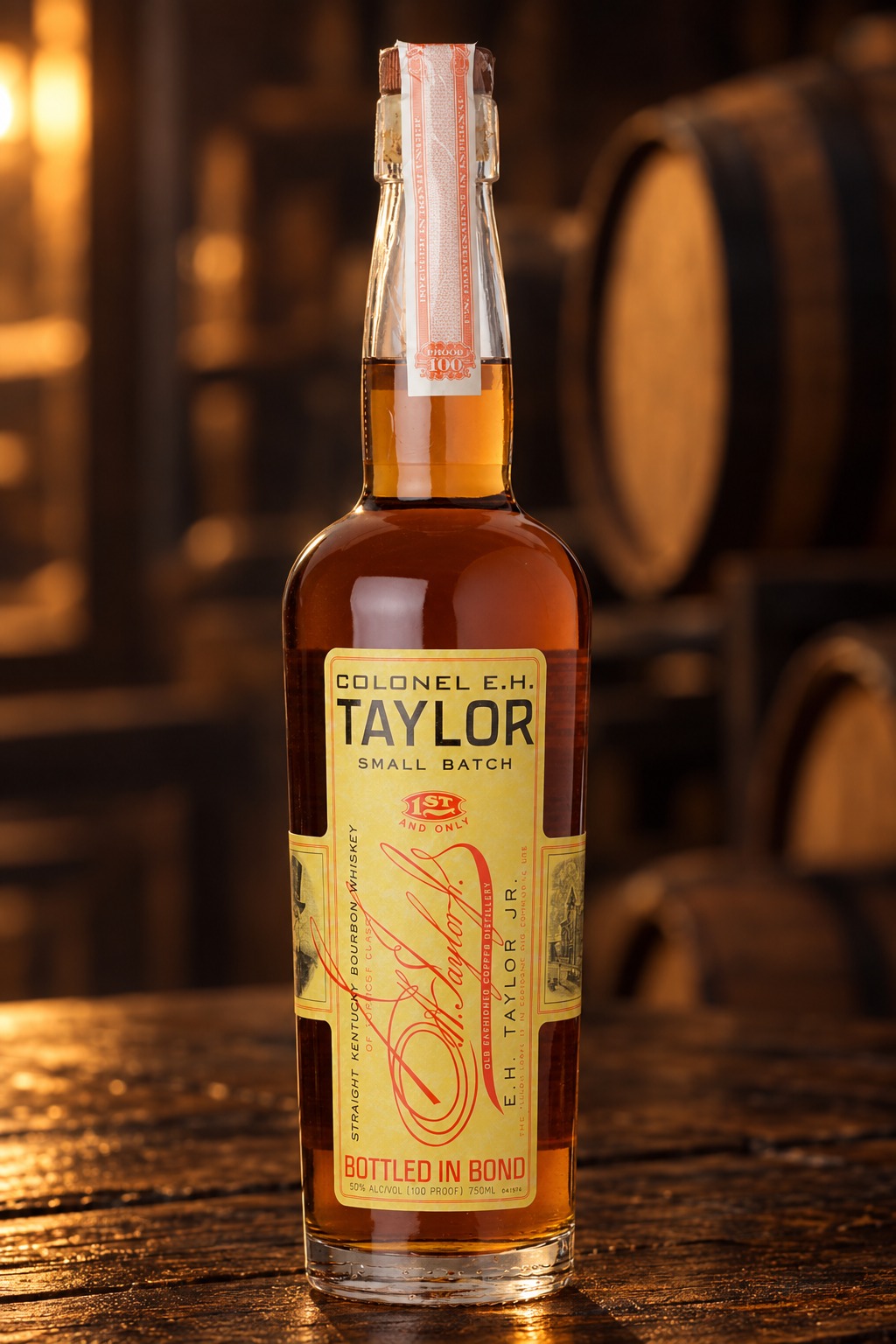
Maker's Mark tested exactly how far that goes, twice. In Nowrouzi v. Maker's Mark Distillery, filed in the Southern District of California, and in Salters v. Beam Suntory, filed the same month in the Northern District of Florida, consumers argued "handmade" was false advertising, since the bourbon is produced with the same mechanized equipment as every other major distillery's product. Both were dismissed in 2015. The Florida court went first, ruling that no reasonable consumer buying a nationally distributed bourbon off a grocery shelf would read "handmade" and assume it meant made without machines. The California court dismissed Nowrouzi months later on the same reasoning, quoting Salters directly. A separate suit that same year, over Jim Beam's own "handcrafted" white label bourbon, ended the same way.
What's more interesting than the outcome is an argument that lost. In the Jim Beam case, the distiller tried to argue that TTB's approval of the label created a legal safe harbor against the consumer claims entirely. The court rejected that too, finding that a Certificate of Label Approval doesn't establish that TTB investigated or verified the specific marketing claim at issue. Undefined words don't just lack a federal definition. Federal approval of the label they sit on doesn't rescue them either.
What TTB Approval Actually Checks
Distilled spirits generally need a Certificate of Label Approval, a COLA, before they can move in interstate commerce, though products sold only within the state where they're bottled can qualify for an exemption. Getting one means TTB checked the label against the mandatory information and the standards of identity above: class, type, proof, age statement where required, the rest.
What a COLA doesn't do is certify that an undefined marketing term means what a shopper assumes it means. TTB's own guidance states plainly that approval doesn't confer trademark protection and doesn't relieve the label's holder of liability for other claims made on it. Getting a label approved and proving every marketing claim on it are two different things, and the gap between them is exactly where small batch, handmade, and reserve live.
What the Label Doesn't Have to Say
None of this makes a $25 bonded pint from a gas station taste better than a $60 bottle carrying nothing but "reserve" on the front. Bottled in bond is a floor, not a rating. A distillery can clear all six conditions using its weakest barrels and still print the designation with a straight face.
What the designation actually buys a buyer is narrower than a taste guarantee, and more useful. It buys traceability: one distiller, one distillery of origin, one season, a plant number the government can trace to actual regulated premises. It buys a verified four-year minimum without needing to read an age statement at all. And it buys a proof point that isn't rounded, exactly 100, checked against a standard nine years older than the Pure Food and Drug Act of 1906.
The physical proof of that used to sit on the bottle itself. For decades, domestic bottled-in-bond spirits typically carried a green government tax strip over the cap, stating the distilling season and the bottling date in plain type. The strip was discontinued starting December 1, 1982, and the underlying tax-stamp requirement was repealed outright by the Deficit Reduction Act of 1984. What's left today is the label declaration and the plant numbers behind it, checked by TTB rather than stamped by hand.
Reading a Bourbon Label in 20 Seconds
- Class and type first: bourbon, or straight bourbon.
- Then the regulated extras: bottled in bond, an age statement, proof, state of distillation.
- Then who made it: the distiller or bottler actually named on the label.
- Then assess the marketing language: small batch, reserve, craft, handmade. Read it. Don't rely on it.
Read the regulated words on a label first. Bottled in bond, straight, bourbon, in that order, each backed by a citation number. Treat small batch, reserve, craft, and handmade for what they are: the distillery making its case.
Pull up a chair.
New writing on fragrance, spirits, and cigars goes up multiple times a week. Subscribe free on Substack for the Bite-Sized Brief, or pay a nominal fee to read the full article.

Sources
- The six numbered conditions for a "bottled in bond" or "bonded" label, including same kind/type, same distiller and distillery, same distilling season, storage of at least four years in wooden containers (with special provisions for vodka and gin), limits on alteration, and reduction and bottling at exactly 100 proof, plus the requirement to bear the distillery's real or trade name and the distilled-spirits-plant numbers where distilled and bottled: 27 CFR § 5.88, Cornell Legal Information Institute, cross-checked against the full six-paragraph text reproduced in Distillery Trail's "What is the Bottled-in-Bond Act of 1897?"
- The two six-month distilling seasons (January–June, July–December) and the age-statement exemption for bottled-in-bond whiskey: 27 CFR § 5.74, eCFR.
- Bourbon's own standard of identity, the 51 percent corn minimum, the 160-proof distillation ceiling, the 125-proof barrel-entry ceiling, the 80-proof bottling floor, the new-charred-oak requirement, and the "no" entry for allowable coloring, flavoring, and blending materials that already applies at the base bourbon level: 27 CFR § 5.143 and its standards-of-identity table, Cornell Legal Information Institute and eCFR.
- John C. Watts's introduction of H. Con. Res. 57 in the House, and confirmation that both chambers ultimately passed the Senate's version of the resolution: "Designating Bourbon Whiskey," Office of the Historian, U.S. House of Representatives. The Senate's companion S. Con. Res. 19 and the Finance Committee's report recommending it: Senate Finance Committee Report 88-496, September 12, 1963. The May 4, 1964 passage date: VinePair's account of the resolution's history.
- The Maker's Mark "handmade" lawsuits: Nowrouzi v. Maker's Mark Distillery, Inc., Case No. 3:14-cv-02885 (S.D. Cal., dismissed July 27, 2015), reported in Morrison & Foerster's case summary; and Salters v. Beam Suntory, Inc., Case No. 4:14-cv-659 (N.D. Fla., dismissed May 2015), reported in Top Class Actions. The Nowrouzi court's reliance on Salters' reasoning: "Maker's Mark Prevails in 'Handmade' False Advertising Suit," The Brand Protection Blog.
- The separate Jim Beam "handcrafted" suit, Welk v. Beam Suntory (S.D. Cal., dismissed August 21, 2015), the court's own order rejecting the TTB-approval-as-safe-harbor argument, cross-checked against contemporaneous coverage in NBC News and Lehrman Beverage Law's case notes, which quotes the court's finding that a COLA "don't reveal whether the TTB specifically investigated and approved the veracity" of the claim.
- "Small batch" and "handmade" carrying no defined production standard under TTB regulation, and Booker Noe's credited role in popularizing the small-batch mingling technique at Jim Beam in the early 1990s: "Non-Regulated vs Regulated in America," Whisky Magazine.
- TTB's Certificate of Label Approval not conferring trademark protection and not relieving a label holder of liability for other statements on the label, and interstate distilled spirits generally requiring a COLA: TTB's own Advertising, Labeling and Formulation FAQ page.
- The green bottled-in-bond tax strip's discontinuation starting December 1, 1982, and the broader tax-strip requirement's repeal under the Deficit Reduction Act of 1984: "Federal Tax Strip Information," Bourbon Whiskey Our Native Spirit, cross-checked against the same dates in the Miniature Bottle Library's dating criteria.
- The Bottled-in-Bond Act's 1897 passage date and its standing as nine years earlier than the Pure Food and Drug Act of 1906: Distillery Trail.
- The 1897 Bottled-in-Bond Act's own history, the rectifier problem it addressed, and Colonel E.H. Taylor Jr.'s role in it: already covered on this site in the America's 250th series, not repeated here.
A note on the images in this piece: the hero illustration is AI-generated, comic style. The three label close-ups, Maker's Mark, Colonel E.H. Taylor, and Kings County Distillery, are real bottles from my own collection, shot against AI-generated backgrounds.