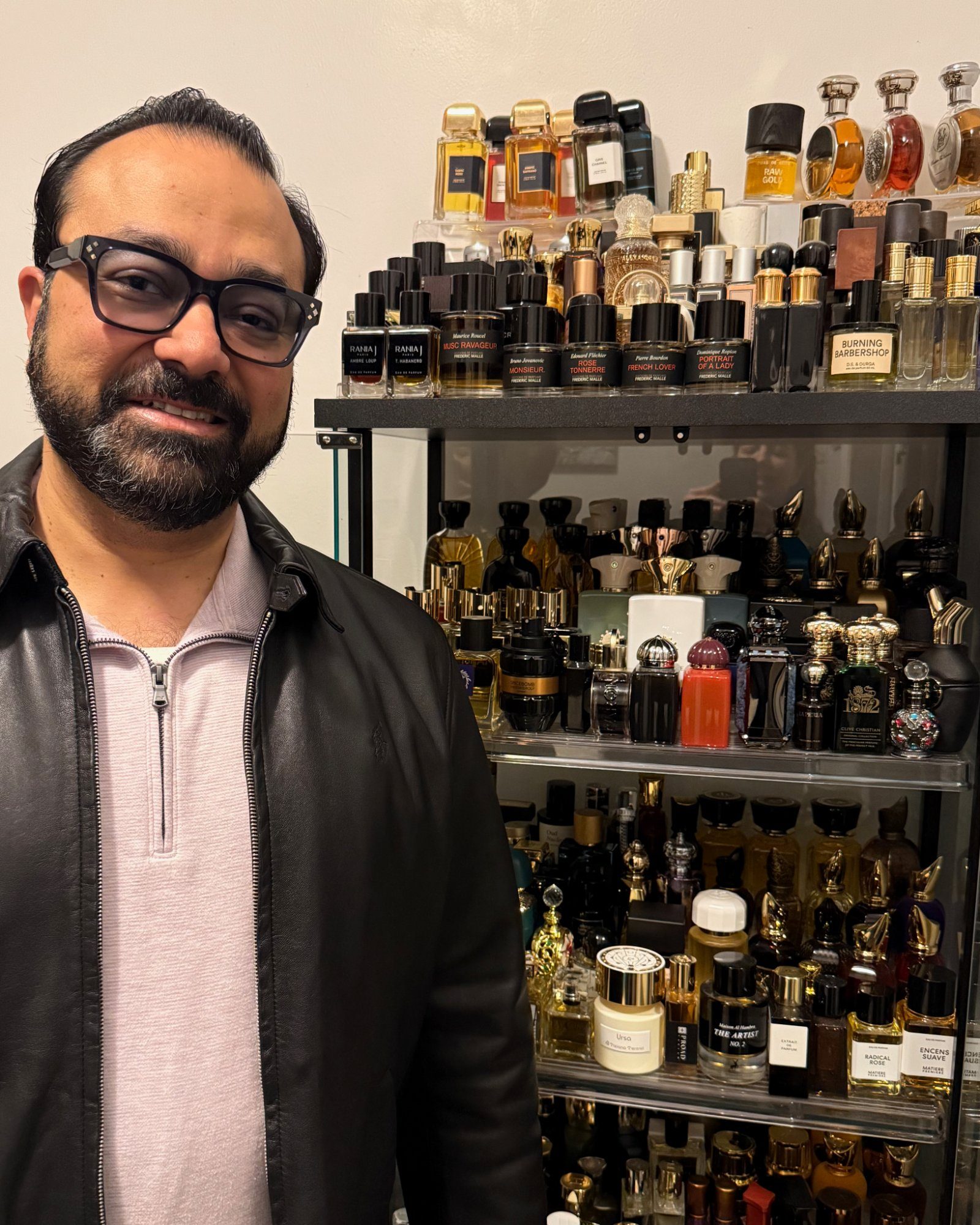
Perfumery's first recorded practitioner wasn't French, and wasn't a man. She was Tapputi-Belatekallim, a Babylonian chemist who distilled oils and recorded her formulas on cuneiform tablets around 1200 BCE. Part 1 carries that four-thousand-year history forward: Tamil-rooted words behind vetiver and patchouli, and Ibn Sina's steam distillation breakthrough around 1000 CE, a method still barely changed today. Read it for the real origin story behind every bottle on your shelf.
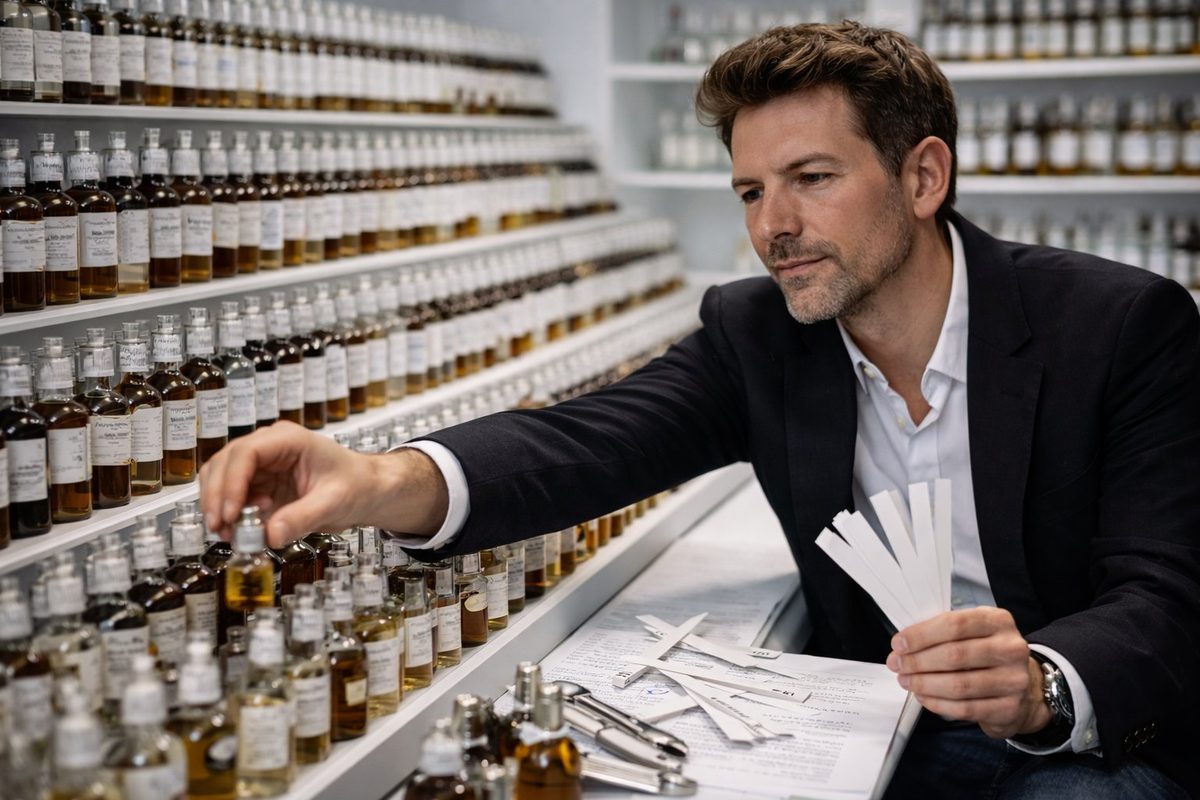
The word fougere means fern in French, and fern doesn't actually smell like anything. Part 2 unpacks the built accords behind that family and chypre, then breaks down concentration: why an Eau de Toilette fades by lunch while an Extrait de Parfum survives dinner. It also covers the Elixir trend that Dior's Sauvage Elixir helped kick off in 2021, and the Dubai clone houses now selling $25 versions of $400 department store bottles. Skip this part and the label on your own bottle stays a mystery.
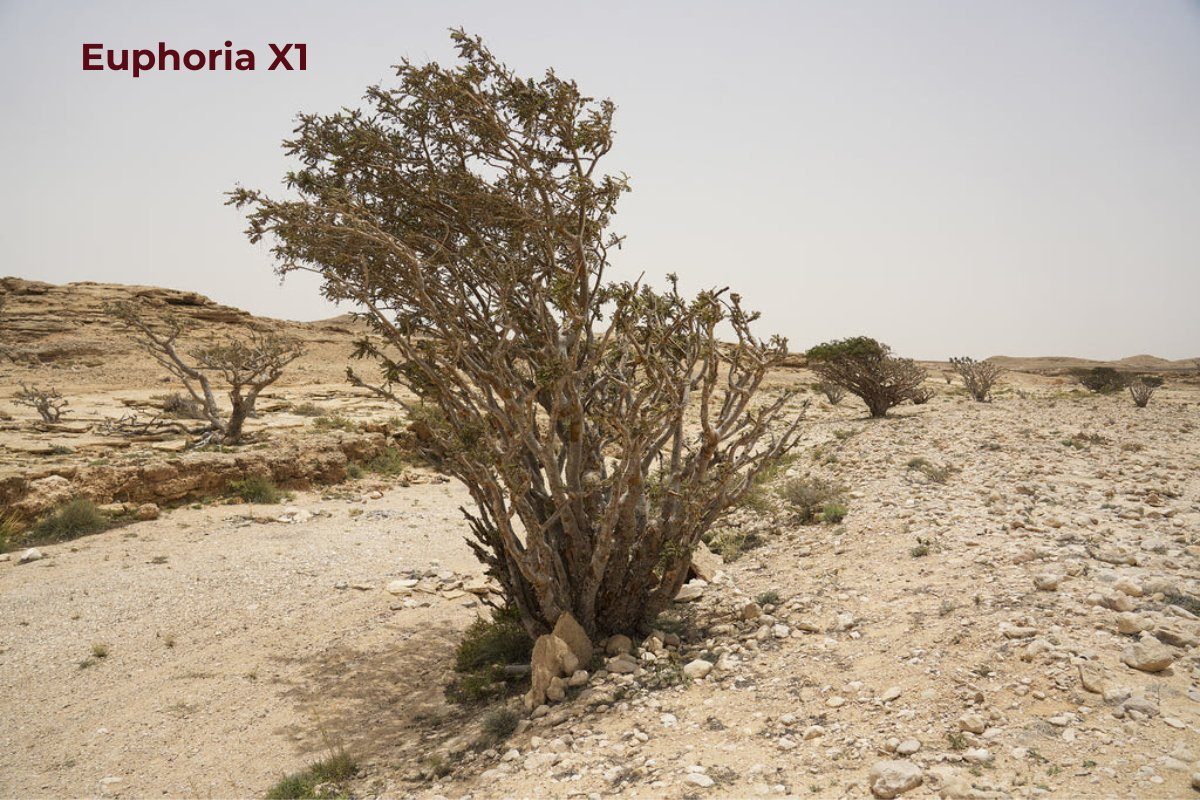
There's a frankincense tree in Oman with a name on it, sponsored personally as part of Amouage's custodianship of Wadi Dawkah since 2022. Part 3 zooms out from that tree to the bigger picture, a fragrance industry worth roughly $60 billion in 2025 and tracking toward $100 billion within a decade. It also explains why scent lands so hard emotionally: it connects straight to the hippocampus and amygdala, a route no other sense takes. This is the part that explains why one spray can put you back in a room you haven't stood in for twenty years.

A glass of peated Ardbeg and a spray of Tom Ford Tobacco Oud are chasing the exact same smoke, and Part 4 proves it bottle by bottle. Six real pairings from the collection match Xerjoff Naxos with an aged Ron Zacapa 23 and Guerlain Habit Rouge with a sherry-cask Aberlour A'Bunadh. It closes with a full glossary running from accord to top notes, worth bookmarking for the rest of the series. This is the part where fragrance turns into something you can actually pour.
Want the full story?
Start the Four-Part Series →