This is the complete single-page version of the America’s 250th series. Use your browser’s print function (Ctrl+P / Cmd+P) to save or print.
Contents
Part 1
America turns 250 today. Its spirits industry goes back nearly that far. Its perfume industry is much younger. This is the first of five installments covering both, plus tiki, the rest of America’s spirits, and cigars.

A 1930s postcard, “Making Moonshine in Great Smoky Mountains National Park, Tenn.” The practice flourished in the remote valleys of the Smokies before the park existed, and stayed part of its lore long after the stills were gone. Courtesy of University of Tennessee, Knoxville, Special Collections.
1. A Nation Built While Someone Was Distilling
The country’s oldest spirit started as a way to use up a surplus. Hard cider, not rum or whiskey, was the default drink at most colonial tables, since water was often unsafe and apple trees grew easily without the grain or equipment spirits required. William Laird, a Scottish immigrant, began distilling that surplus cider into apple brandy in colonial New Jersey in 1698. His great-grandson Robert incorporated Laird & Company in 1780, seven years before the Constitution existed. George Washington liked what the Lairds were making enough to write and personally request their recipe. Robert Laird served under Washington in the Revolutionary Army and supplied his troops with applejack at the Battle of Monmouth. Laird & Company still operates today, the oldest licensed distillery in the United States, and it was making apple brandy before there was a state of Kentucky, let alone a bourbon industry.
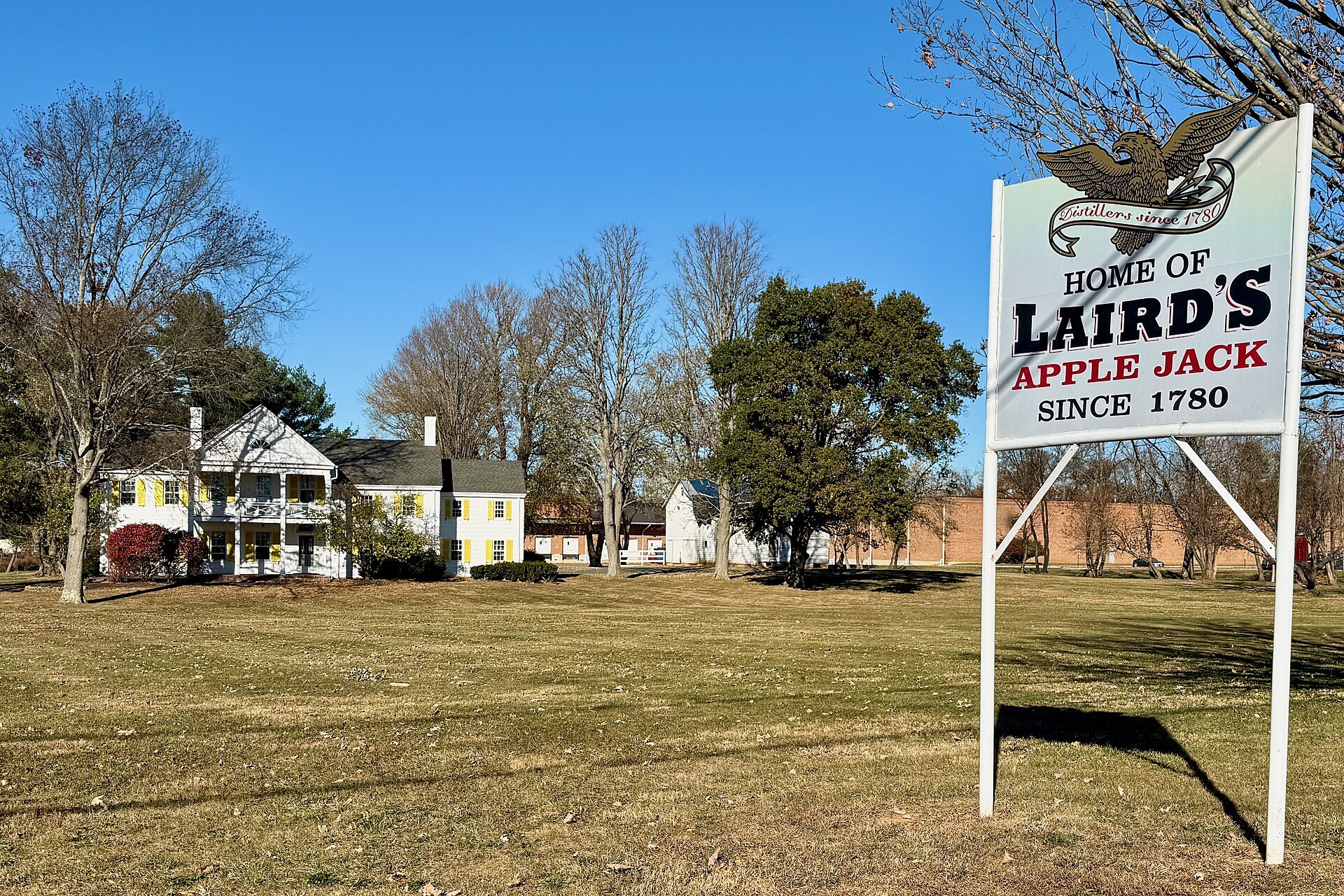
Laird & Company’s grounds in Scobeyville, New Jersey. Distillers since 1780.
Applejack was not the only spirit in the room. Rum was the dominant drink of colonial America. Historians estimate colonists consumed something like 3.7 gallons of it per person annually by the time of the Revolution, a figure Mount Vernon’s own history team cites but did not originate. That popularity came from a supply chain worth naming honestly: rum production was tied directly into the triangular trade, and the sugar and molasses behind it were produced by enslaved labor in the Caribbean. Rum’s place in early American life cannot be told as a purely charming colonial story, because it wasn’t one.
Bourbon, the spirit most people now think of as definitively American, is actually the newest arrival of the three. It doesn’t show up as a distinct regional identity until the 19th century, and its rise to prominence has a lot to do with what happens next.
2. The Whiskey Rebellion, Moonshine, and Taxation
Whiskey production spread fast on the American frontier after the Revolution. Corn grew easily, transporting it as grain was expensive, and converting it into whiskey solved both problems at once. Farmers used it as currency in places where cash was scarce.
In 1791, Treasury Secretary Alexander Hamilton pushed through an excise tax on domestically distilled spirits, aimed at paying down Revolutionary War debt. It was a reasonable idea on paper. In practice, it hit frontier farmers in western Pennsylvania hardest. These were small operators who used whiskey as currency because they rarely saw cash, and a cash-only tax on a product they didn’t sell for cash was, functionally, a tax they could not pay.
Resistance built for three years. Tax collectors were tarred and feathered. In July 1794, roughly 500 armed men attacked and burned the home of federal tax inspector John Neville outside Pittsburgh. Washington responded by personally leading a militia of nearly 13,000 men into western Pennsylvania, the only time a sitting president has commanded troops in the field. The rebels dispersed before any real fighting happened. Two men were convicted of treason. Washington pardoned both of them.
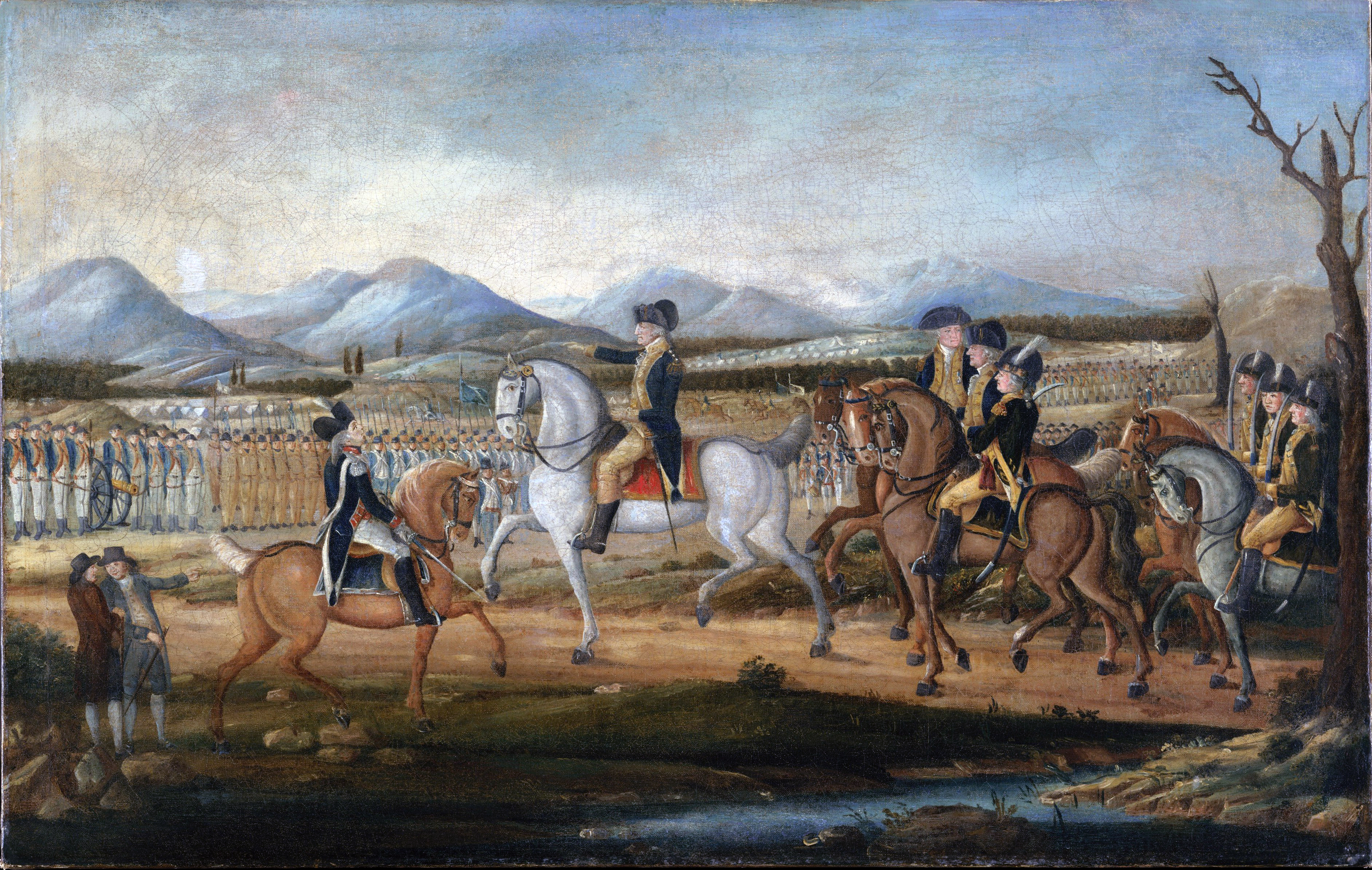
Washington reviewing the militia before marching into western Pennsylvania. Frederick Kemmelmeyer, circa 1795.
Jefferson repealed the tax in 1802, the moment he had the votes to do it. That repeal didn’t end illegal distilling. It just pushed it further underground and further west.
Many of the frontier distillers behind the rebellion, most of them Scots-Irish immigrants, moved into Kentucky and Tennessee, specifically to get beyond federal reach. Appalachian terrain made stills hard for tax agents to find, and corn was worth far more as whiskey than as raw grain, one horse could carry ten times the value in liquor that it could in corn. That migration is a real, documented reason bourbon took root where it did. Virginia sweetened the deal, too. The state had granted land bounties to its Revolutionary War veterans in what became Kentucky, so many of these same distillers weren’t just running from tax agents, they already had a legal claim waiting on land that grew good corn.
The tax came back with the Civil War. The Revenue Act of 1862 funded the war and revived the standoff between moonshiners and the agents sent after them, known as revenuers. That standoff lasted for decades and hardened into a distinct Appalachian culture built around evading federal reach, the same instinct Hamilton’s original tax provoked in 1791.
By the 1880s, legal whiskey had its own problem. Rectifiers blended neutral grain spirits with iodine, tobacco, prune juice, and sometimes worse, to fake the color and taste of properly aged bourbon. Consumers had no way to know what was actually in the bottle. Honest distillers were losing customers to cheaper, adulterated competitors.
Colonel E.H. Taylor Jr., a Kentucky distiller, led the public fight against rectifiers, though the bill itself came together through Congressman Walter Evans and Treasury Secretary John G. Carlisle. The Bottled-in-Bond Act passed on March 3, 1897, the first federal consumer protection law in American history, nine years before the Pure Food and Drug Act.
The law ran on the same tax infrastructure Hamilton had built in 1791. To carry the bonded label, whiskey had to come from one distiller, at one distillery, in one distillation season, aged at least four years in a federally supervised warehouse. Producers got a tax deferral for participating. Consumers got a government guarantee that what was in the bottle matched the label.
Prohibition turned moonshining into a national business. Bootleggers modified cars to outrun revenue agents on mountain roads, mostly Ford V8s with reinforced suspension and bored-out engines. Junior Johnson started running moonshine at 13, later won 50 NASCAR races, and became one of the sport’s first stars. NASCAR’s origin traces directly back to those chases.
Tennessee legalized regulated distilleries outside a handful of counties in 2009. Unlicensed moonshine was and still is a federal felony everywhere, that part never changed, what changed was where a license could be legally issued. Ole Smoky opened the first federally licensed moonshine distillery in Gatlinburg on July 4, 2010. Estimates for the legal moonshine industry’s size vary widely depending on what gets counted, but figures in the billions of dollars show up consistently.
The same legal principle, not sentiment, still separates a licensed craft distillery today from an illegal one. Unlicensed distilling remains a federal felony, and the federal excise tax on distilled spirits sits at $13.50 per proof gallon, Hamilton’s 1791 idea, still on the books, 235 years later.
3. Founding Fathers Actually Drank a Lot
Not many people know the Founding Fathers drank this much.
On September 14, 1787, three days before the Constitution was signed, Washington hosted the First Troop Philadelphia City Cavalry, his longtime Light Horse escort, for dinner at City Tavern. The surviving bill lists 55 gentlemen’s dinners, 54 bottles of Madeira, 60 of claret, 8 of Old Stock whiskey, 22 of porter, 8 of cider, 12 of beer, and 7 bowls of punch. That’s roughly two bottles of wine per person before anyone touched the whiskey or the punch. Adjusted for inflation, the bill runs to something like $15,600.
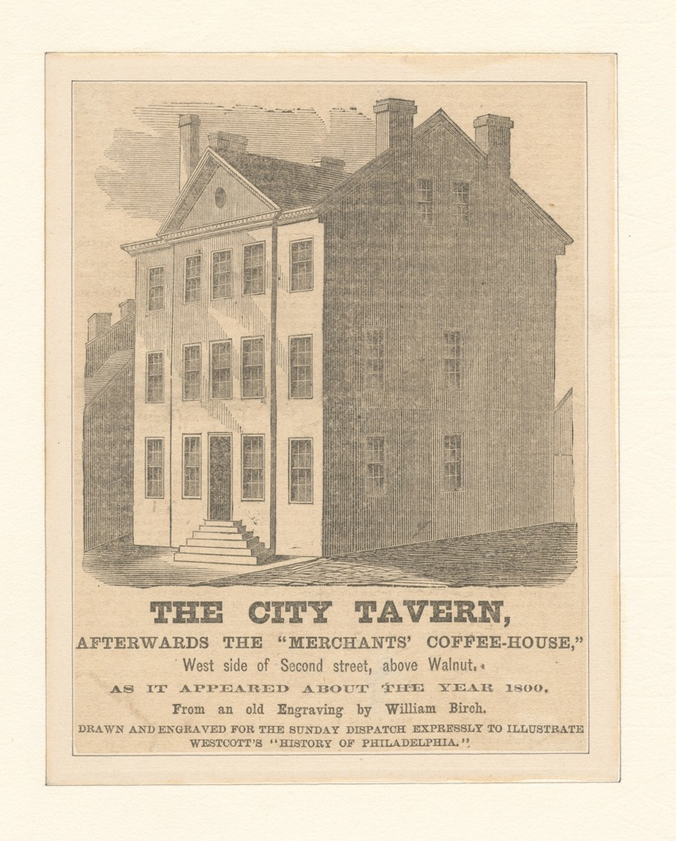
City Tavern as it appeared around 1800, from an engraving by William Birch.
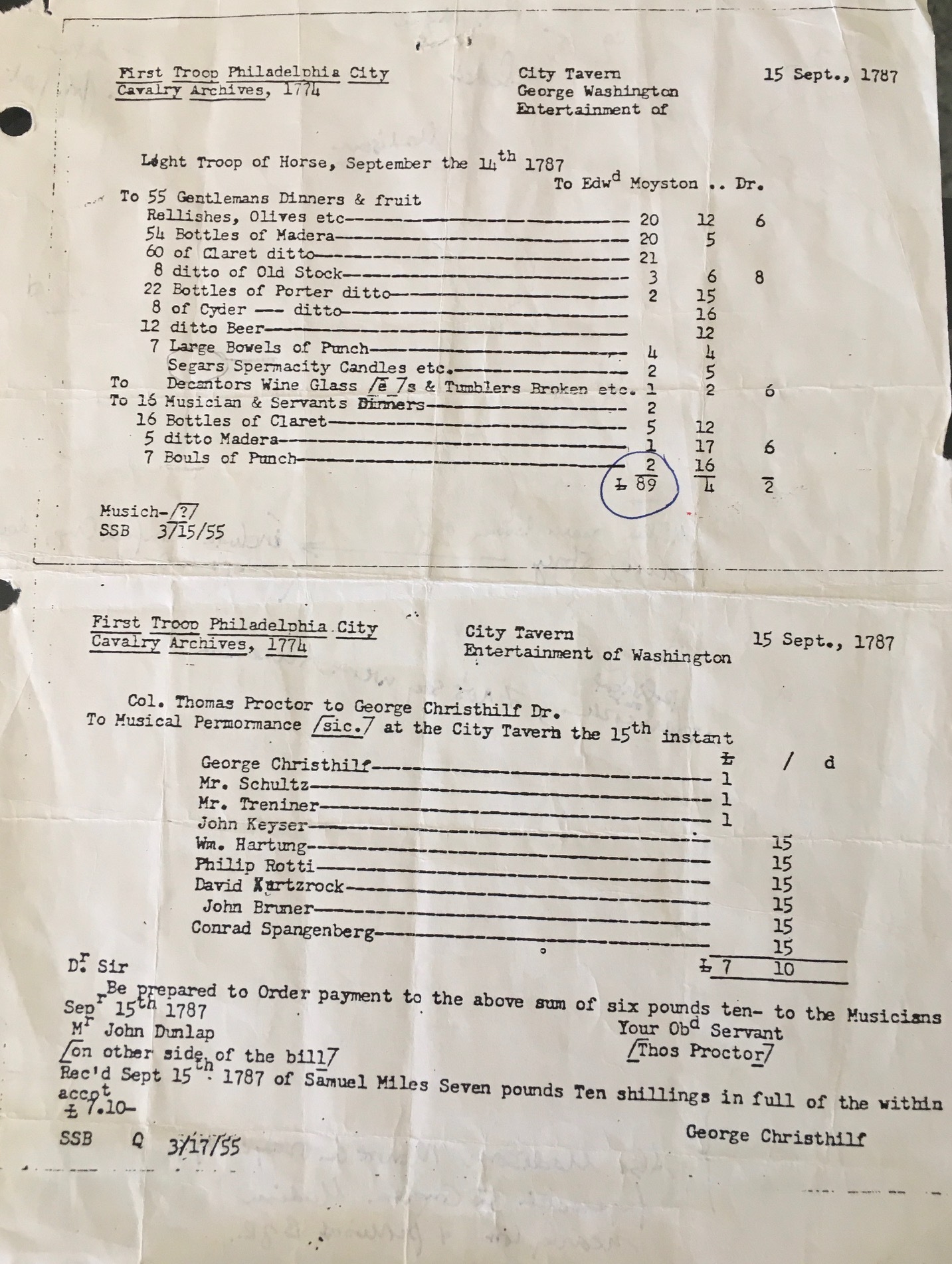
The actual bill from Washington’s September 14, 1787 dinner. Courtesy of Dr. Gordon Lloyd, Pepperdine University.
Washington’s own relationship with spirits went well past hosting. After his presidency, he built one of the largest whiskey distilleries in the country at Mount Vernon, producing around 11,000 gallons in 1799 alone. Mount Vernon picked July 4th to release its first bourbon, timed to America’s 250th anniversary. Spirit of ’76 Cask Strength, seven years old, about 350 bottles, sold only at the estate.

The reconstructed Distillery at Mount Vernon, marking its 1797 construction.
Two recipes survive from that era, and they take genuinely different approaches to entertaining.
Martha Washington’s Rum Punch
- 3 oz white rum
- 3 oz dark rum
- 3 oz orange curaçao
- 4 oz simple syrup
- 4 oz lemon juice
- 4 oz fresh orange juice
- 3 lemons, quartered
- 1 orange, quartered
- ½ tsp grated nutmeg
- 3 cinnamon sticks, broken
- 6 cloves
- 12 oz boiling water
Developed by Mount Vernon and the Distilled Spirits Council as an interpretation of what Martha likely served at the estate, not a literal 18th-century written recipe. Serves 6-10. Mash the orange, lemons, cinnamon, cloves, and nutmeg together in a container. Add the syrup, lemon juice, and orange juice. Pour the boiling water over the mixture and let it sit a few minutes so the spices open up. Once cool, stir in both rums and the curaçao. Strain well into a pitcher or punch bowl. Serve over ice, garnished with citrus wheels.
Benjamin Franklin’s Milk Punch is the more unusual of the two. This one isn’t folklore. Franklin wrote out the recipe himself and mailed it. On October 11, 1763, preparing to leave Boston for Philadelphia, Franklin sent a letter to his friend James Bowdoin enclosing a recipe “To make Milk Punch.” The original letter survives at the Massachusetts Historical Society. It’s a clarified punch, a technique where hot milk curdles on contact with citrus and alcohol, then gets strained until the liquid runs clear, closer to kitchen science than anything most people picture from the 1760s. Franklin’s original recipe made an enormous batch. What follows is the Historical Society’s own scaled-down version, at one quarter of his original proportions.
Benjamin Franklin’s Milk Punch
- 6 cups (3 pints) brandy
- 11 lemons, zested
- 2 cups fresh lemon juice
- 4 cups spring water
- 1 whole nutmeg, grated
- 1⅛ cups sugar
- 3 cups whole milk
Steep the lemon zest in the brandy for 24 hours, then strain it out. Add the water, lemon juice, sugar, and nutmeg to the brandy and stir until the sugar dissolves. Bring the milk to a boil and add it hot to the brandy mixture, it will curdle on contact. Let the punch stand for two hours, then strain through a jelly bag or cheesecloth until it runs clear. Serve cold.
Martha’s punch is warm and built for a crowd. Franklin’s is closer to kitchen science, producing something that looks nothing like what went into it. Both still worth making 250 years later.
4. Immigrants Built This
Immigration is the through-line across almost everything in this section.
William Laird brought Scottish distilling knowledge directly to New Jersey and created America’s first native spirit. The Scots-Irish farmers who resisted the whiskey tax and then relocated to Kentucky and Tennessee carried their stills and their distilling traditions with them, and that migration is a direct line to bourbon as it exists today.
Heaven Hill’s own founders were immigrants too. Five Shapira brothers, sons of a Lithuanian Jewish immigrant, bought out the original investors within two years of the 1935 founding. Descendants of the family still run it today.
Enslaved and free Black distillers are part of this story too, and it’s one this site has already told properly rather than compress into a paragraph here. Nathan “Nearest” Green taught Jack Daniel how to distill whiskey, and the Black distillers, perfumers, and blenders building on that legacy today are covered in full in Juneteenth Special: The Builders You Never Heard Of. That piece is the better place to go for that story, not a summary tacked onto this one.
5. A Few Dates Worth Knowing
- 1780: Laird & Company incorporated, oldest licensed distillery in the US
- 1791–1794: The Whiskey Rebellion
- 1862: The Revenue Act reinstates the federal liquor tax to fund the Civil War
- March 3, 1897: The Bottled-in-Bond Act, the first consumer protection law in US history
- 1920–1933: Prohibition, which nearly wiped out both bourbon and applejack, Laird’s survived on a medicinal production license
- 1984: Blanton’s, the world’s first single barrel bourbon, Elmer T. Lee, Buffalo Trace
- July 4, 2010: Ole Smoky opens the first federally licensed moonshine distillery
- January 19, 2025: American Single Malt Whiskey becomes an official TTB category, the first new whiskey classification added in over 50 years
6. Houses and Distilleries Worth Knowing
Laird & Company, the oldest licensed distillery in the country, still family-run, ten generations in. Laird & Company released a 13-Year Tribute in 2026, marking 328 years of family distilling. The Laird family started making apple brandy in New Jersey seventy-eight years before the country existed. Eighth, ninth, and tenth generation family members still run it today.

Laird’s America’s 250th Limited Release, 13 Years Old. Courtesy of Laird & Company.
Buffalo Trace, home of Blanton’s and Elmer T. Lee, a National Historic Landmark. The site burned down in 1882, when it was still called the O.F.C. Distillery, and was rebuilt shortly after.
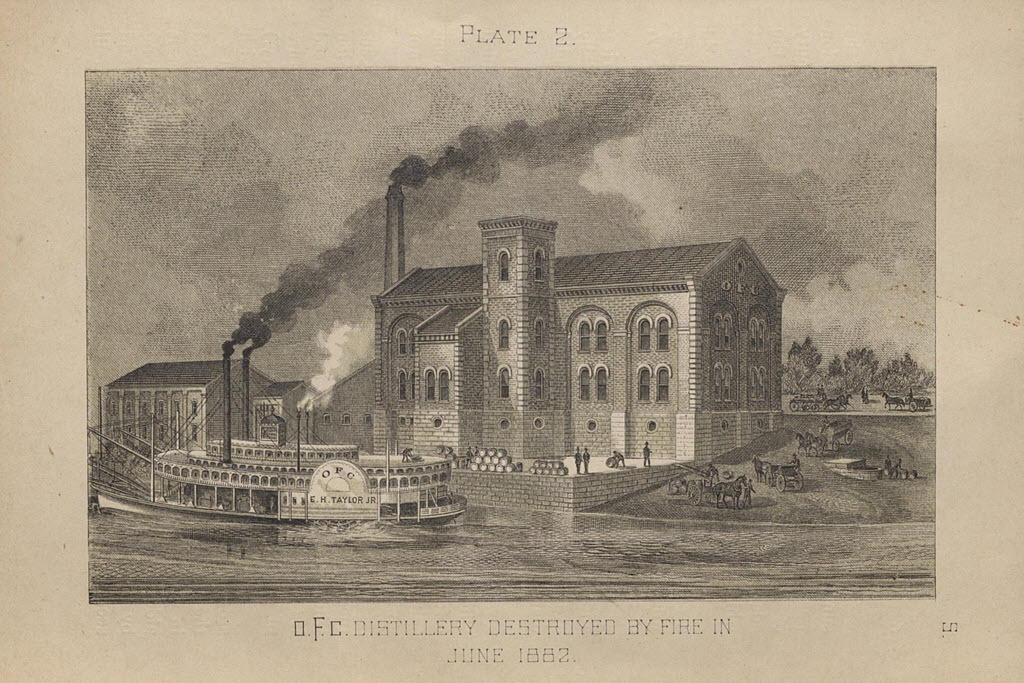
The O.F.C. Distillery, destroyed by fire in June 1882. Rebuilt on the same site, now Buffalo Trace.
Before 1984, bourbon brands blended barrels together for a consistent taste. Elmer T. Lee changed that at what’s now Buffalo Trace. He remembered Colonel Albert B. Blanton handpicking single barrels from Warehouse H to share with guests. Lee revived that practice and named the bourbon after him. Blanton’s launched in 1984 as the first commercially sold single barrel bourbon. Every bottle comes from one barrel instead of a blend, so no two taste exactly alike.
Heaven Hill, one of the few houses that kept Bottled-in-Bond alive through the deregulated 1980s when most of the industry dropped it.

The Heaven Hill Bourbon Experience in Bardstown, built as a replica of the original 1935 distillery.
Jack Daniel’s, whose real history runs through Nathan Green and is told properly in Juneteenth Special: The Builders You Never Heard Of rather than repeated here.
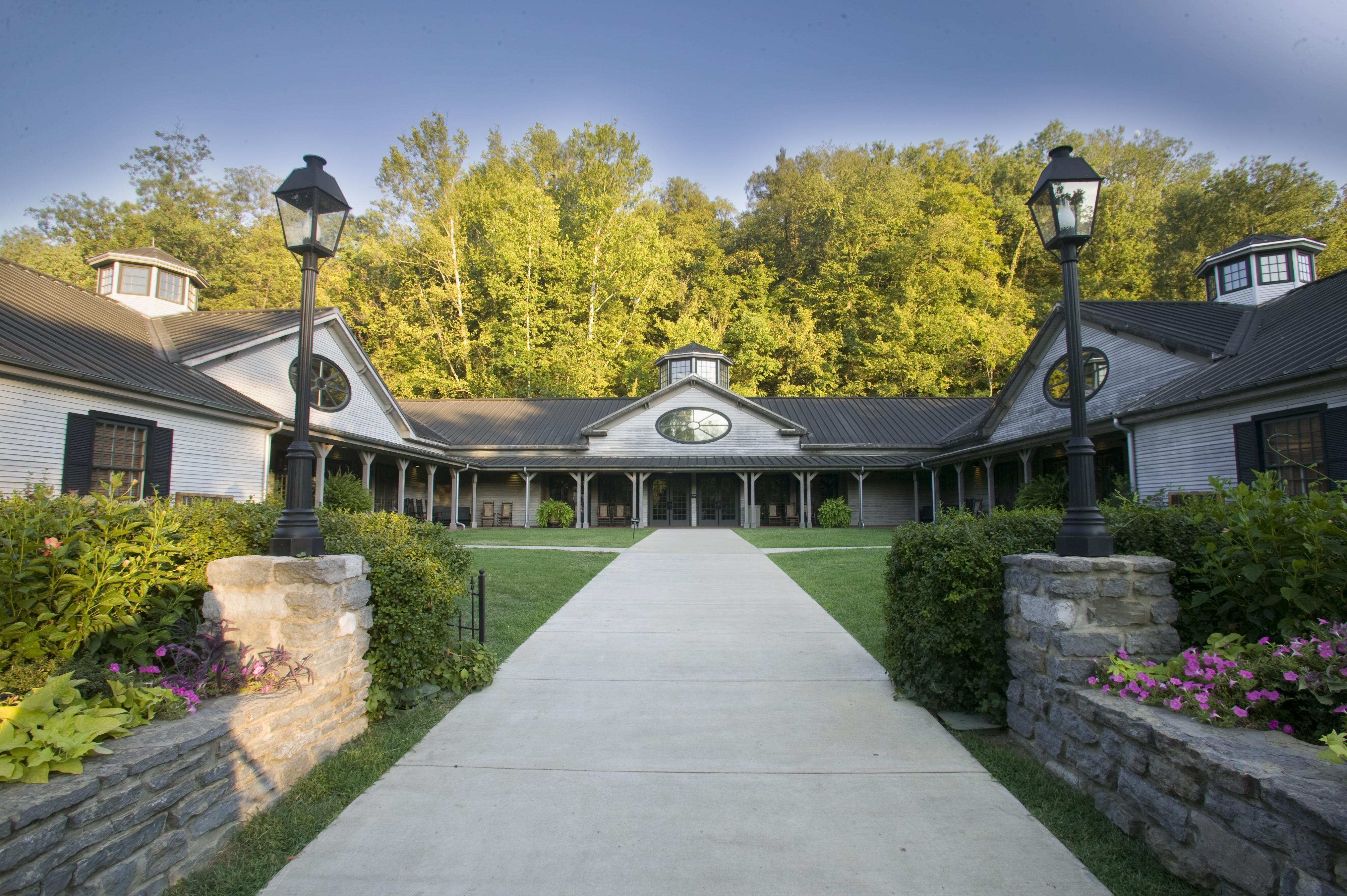
Jack Daniel’s Visitor Center, Lynchburg, Tennessee.
Part 2 picks up with American perfume, an industry that’s less than a century old, and the marketing machinery, books, theater, film, music, and platforms, that sells both spirits and perfume today.
Part 2
7. A Much Younger Story
American perfume as an industry doesn’t meaningfully exist until 1946. There’s no colonial-era equivalent to Laird’s on the fragrance side, no organized American perfume house, no 18th-century recipe worth reprinting. Washington did have a favorite scent, Dr. William Hunter’s Number 6, sold out of a Newport apothecary starting in 1752. That apothecary is still in business today as Caswell-Massey, and still sells the same cologne. He liked it enough to give it away as gifts. One preference isn’t an industry.
What America does have is Estée Lauder, and her own story is, fittingly, an immigrant story. She was born Josephine Esther Mentzer in Queens, the daughter of Hungarian Jewish immigrants. She and her husband Joseph founded Estée Lauder Cosmetic Co. in 1946 out of a former Manhattan restaurant, cooking up formulas on the restaurant’s old burners. The company’s real turning point came in 1953 with Youth-Dew, a bath oil doubling as a perfume. Lauder deliberately avoided calling it perfume at all, because at the time, women didn’t buy fragrance for themselves, they waited for it as a gift. Youth-Dew ignored that rule on purpose. It sold 50,000 bottles in its first year. By 1984, that number had grown to 150 million.
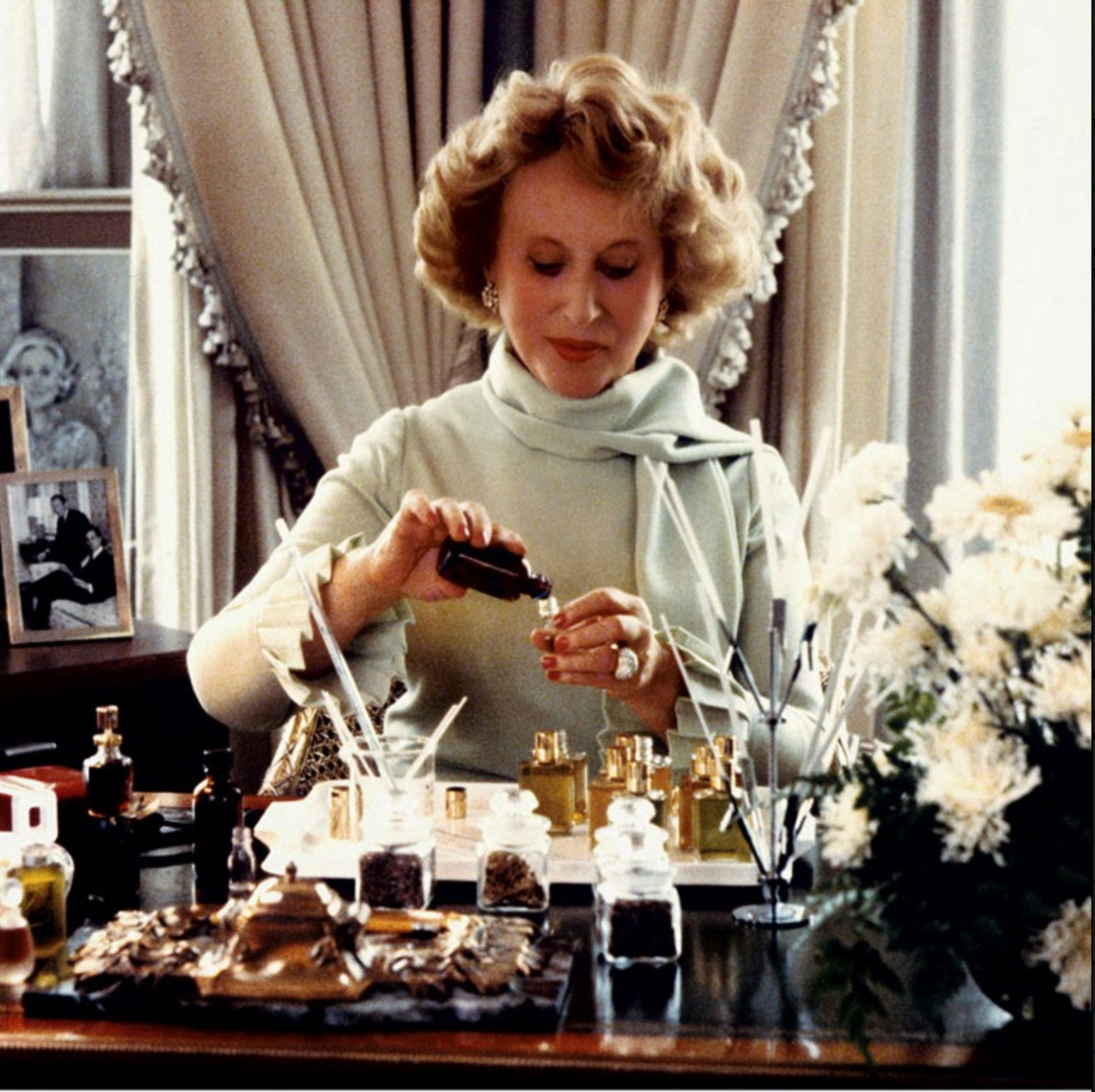
Estée Lauder at work, mixing formulas herself.
Aramis followed in 1964, Estée Lauder’s men’s line, another early and lasting piece of the American fragrance world. The brand is still active today. It launched Intuition in 2025, fronted by Dwyane Wade, and followed it with Intuition Intense in 2026.
Elizabeth Arden’s Blue Grass, launched in 1934, complicates the timeline further. It was a real, mass-marketed perfume with department store distribution, and some perfume historians call it a candidate for the first American perfume outright. It didn’t build an industry around itself the way Lauder’s company did. One successful product line is closer to an industry than one man’s cologne preference, but it’s still not the same as what Estée Lauder built starting in 1946.
Ralph Lauren has an immigrant story too, a first-generation version instead of Lauder’s founding one. Ralph Lifshitz grew up in the Bronx, the son of Jewish immigrants from Belarus. He changed his name at sixteen after years of being teased for it. He built Polo from a single drawer in the Empire State Building, delivering ties to department stores himself. His first fragrances, Lauren for women and Polo for men, launched two weeks apart in March 1978, the first time any designer released both genders at once.
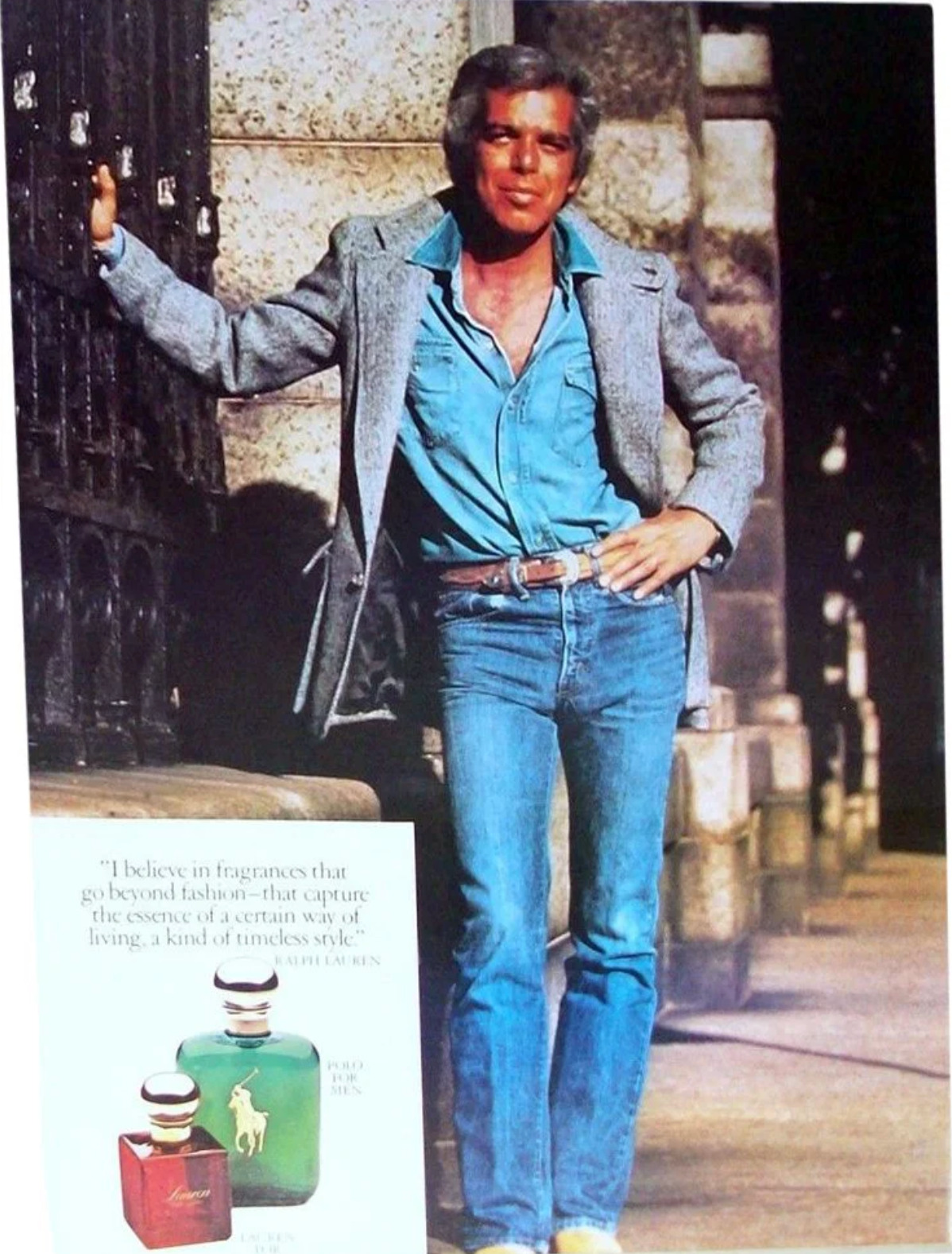
Ralph Lauren, 1978.
Not every part of this story is about growth. American perfume has a diversity problem it hasn’t fixed, and the industry has its own uncomfortable number to show for it. According to career-data firm Zippia, 68.6% of American perfumers are white, and a training pipeline running mostly through French perfumery schools has kept it that way for decades. That gap runs deeper than this piece has room for.
8. Covered Properly, Elsewhere
Rather than compress African ingredient sourcing or the American perfumers building past that gap into a few lines here, both are already covered properly:
- Africa’s Ingredients: What the Continent Gives Perfumery and Who Actually Benefits covers where the raw materials behind global perfumery actually come from.
- Juneteenth Special: The Builders You Never Heard Of covers Moodeaux, Kimberly New York, Qhue, Harlem Perfume Co., and La Boticá, five American perfumers building real houses today.
9. The American Niche Wave
American perfume splits into two business models today. One chases the department store counter. The other doesn’t.
Ralph Lauren and Calvin Klein both stayed in the first camp. Ralph Lauren’s fragrance business moved from Warner-Lauren to a license with L’Oréal. Calvin Klein followed with Obsession in 1985, now licensed to Coty. Both were built for scale from day one, sold everywhere, designed to be mass market.
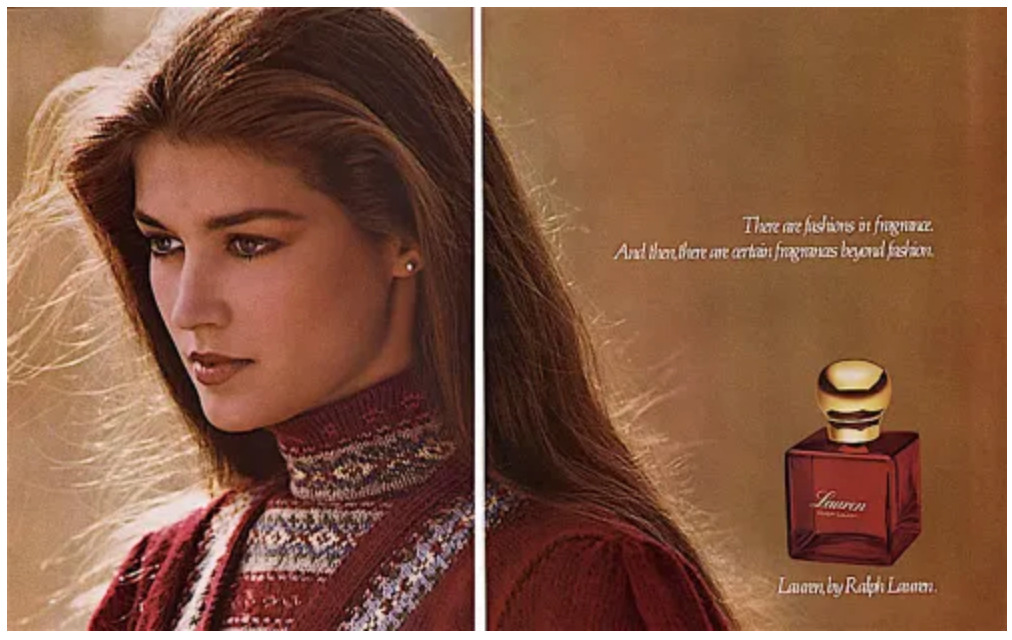
Lauren, launched in 1978.
Estée Lauder’s own empire owns a genuinely startling share of prestige perfume globally today, Le Labo, Jo Malone, and Tom Ford Beauty among its brands. But a separate wave of independent American houses built something different over the last two decades: Le Labo itself (New York, 2006), D.S. & Durga (Brooklyn), Imaginary Authors (Portland), and CB I Hate Perfume (Christopher Brosius, Brooklyn). None of them chased the department store model. All of them found an audience directly.
10. Houses Worth Knowing
Estée Lauder, the empire that started this whole industry in 1946, still the largest name in American prestige perfume.
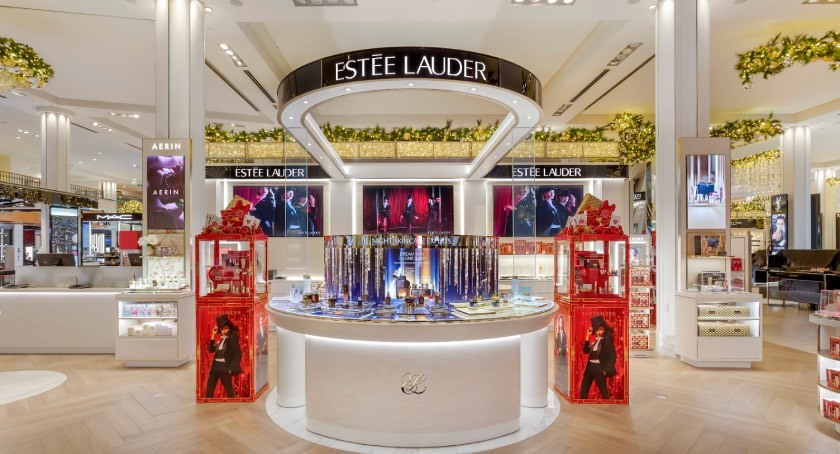
Aramis, Estée Lauder’s men’s line since 1964, still releasing new fragrances sixty years later.

Ralph Lauren, mass market by design since 1978, now made under license by L’Oréal.
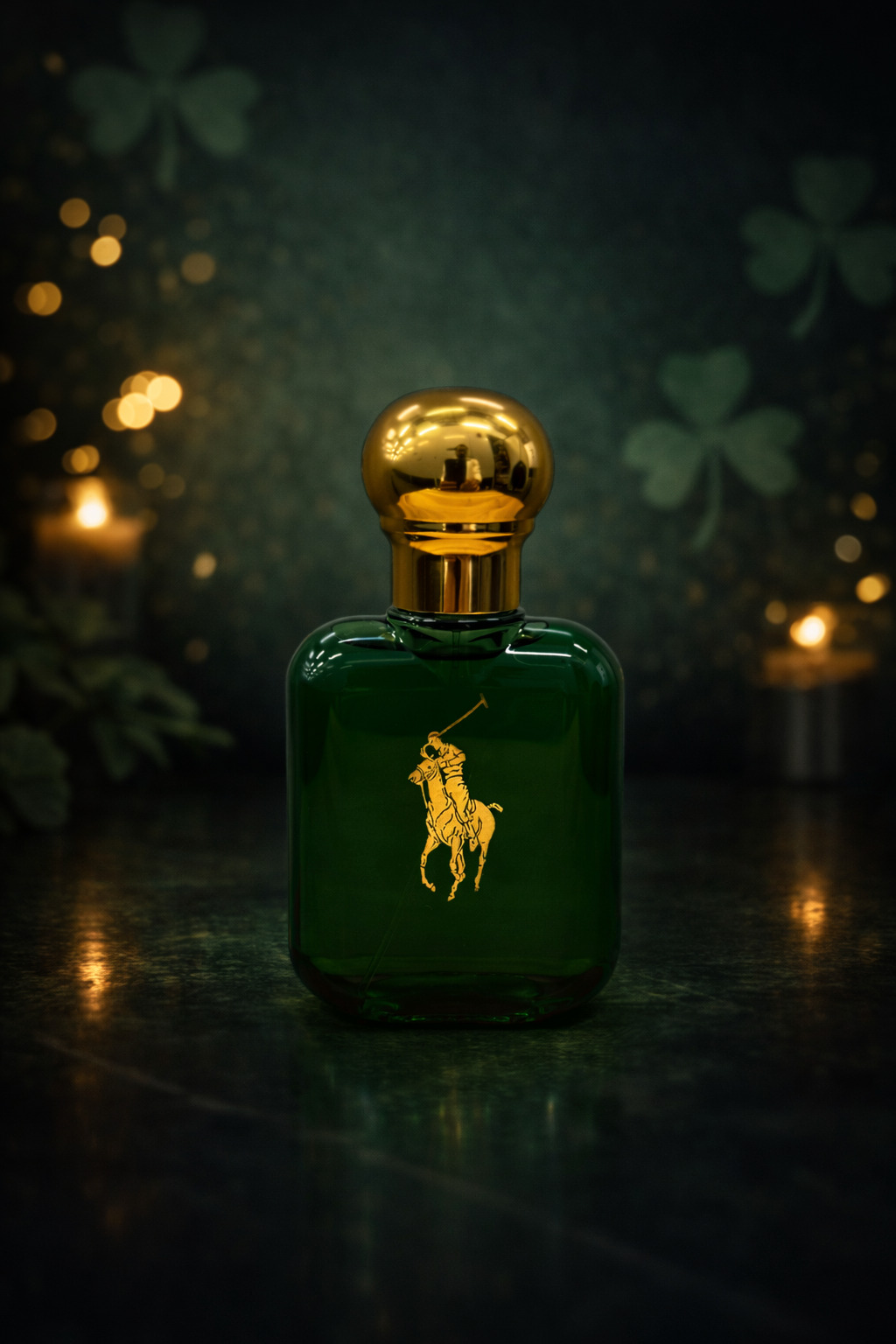
Calvin Klein, Obsession launched the brand into fragrance in 1985, now licensed to Coty.

Le Labo, New York, 2006, the house that helped define what American niche perfume even is.
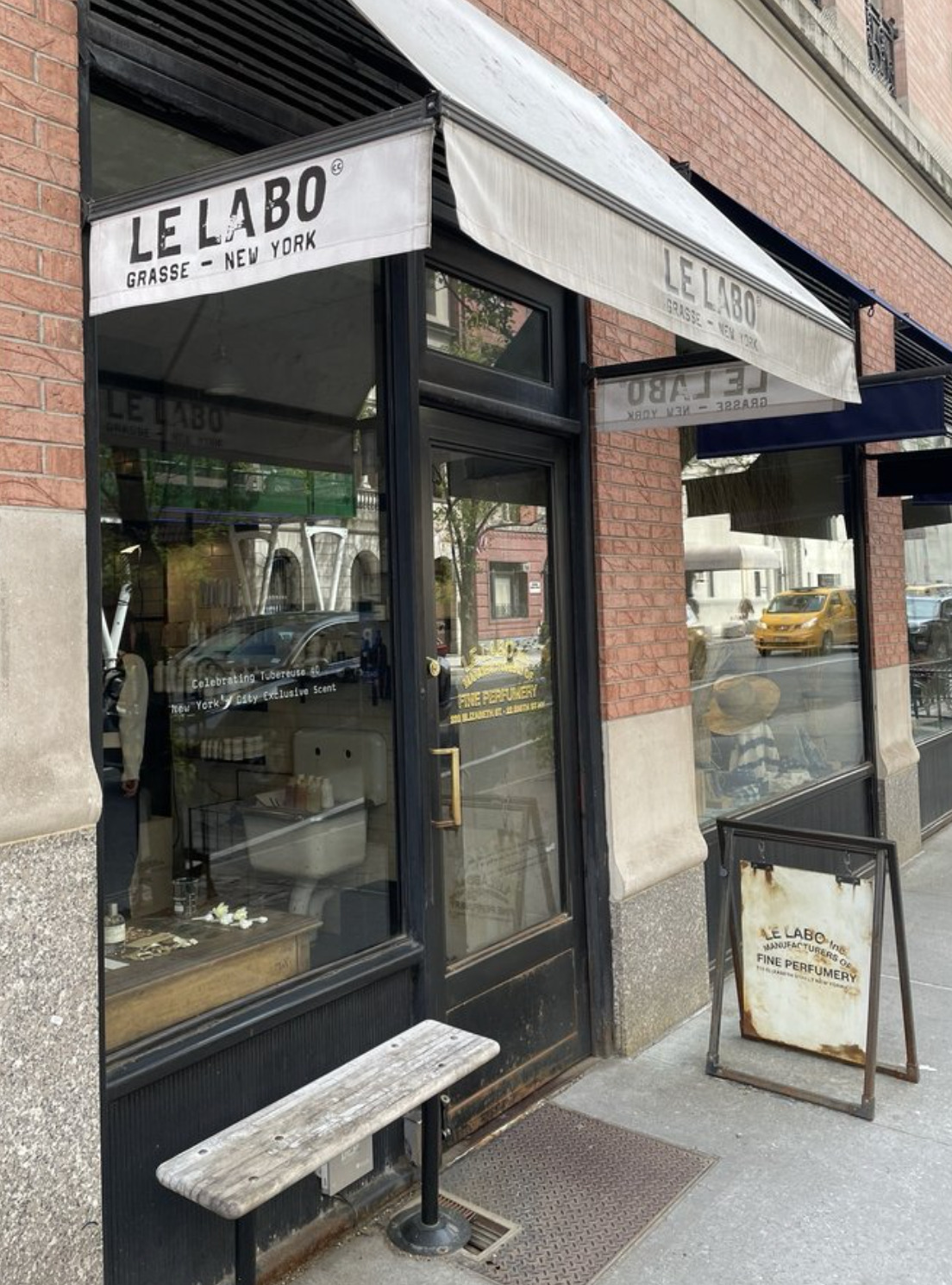
D.S. & Durga, Brooklyn, built a following without a department store deal.
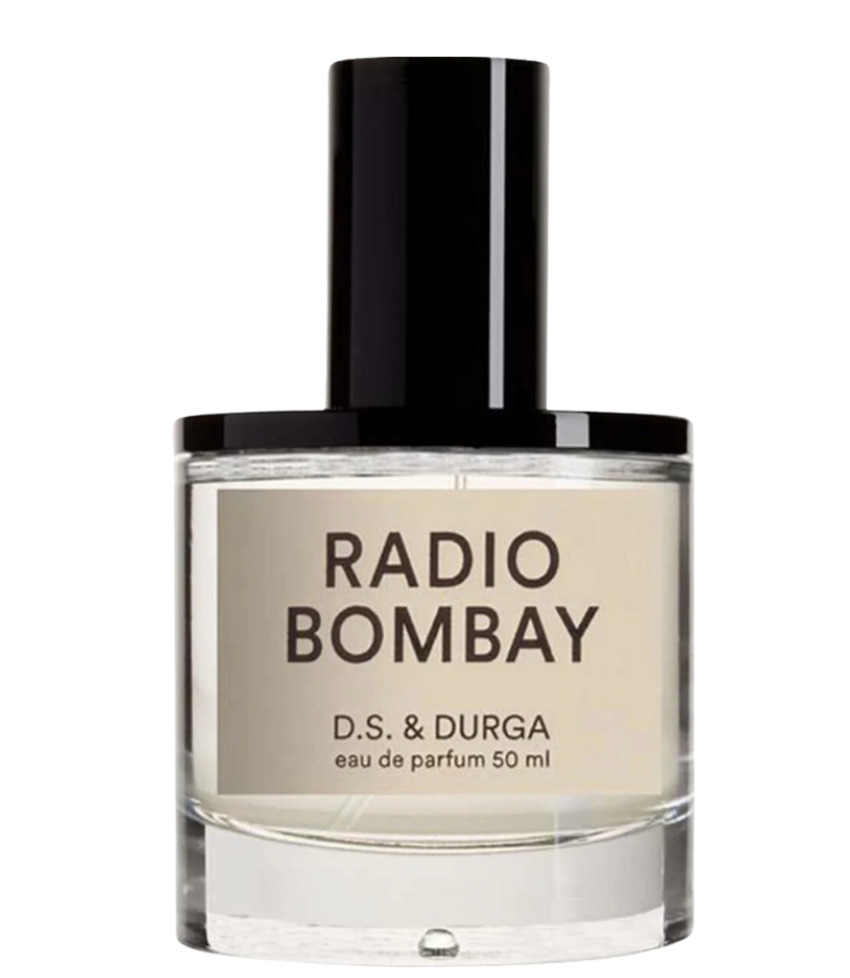
Imaginary Authors, Portland, storytelling-driven niche perfume outside the coastal centers.

CB I Hate Perfume, Christopher Brosius, Brooklyn, one of the originators of American conceptual perfumery.
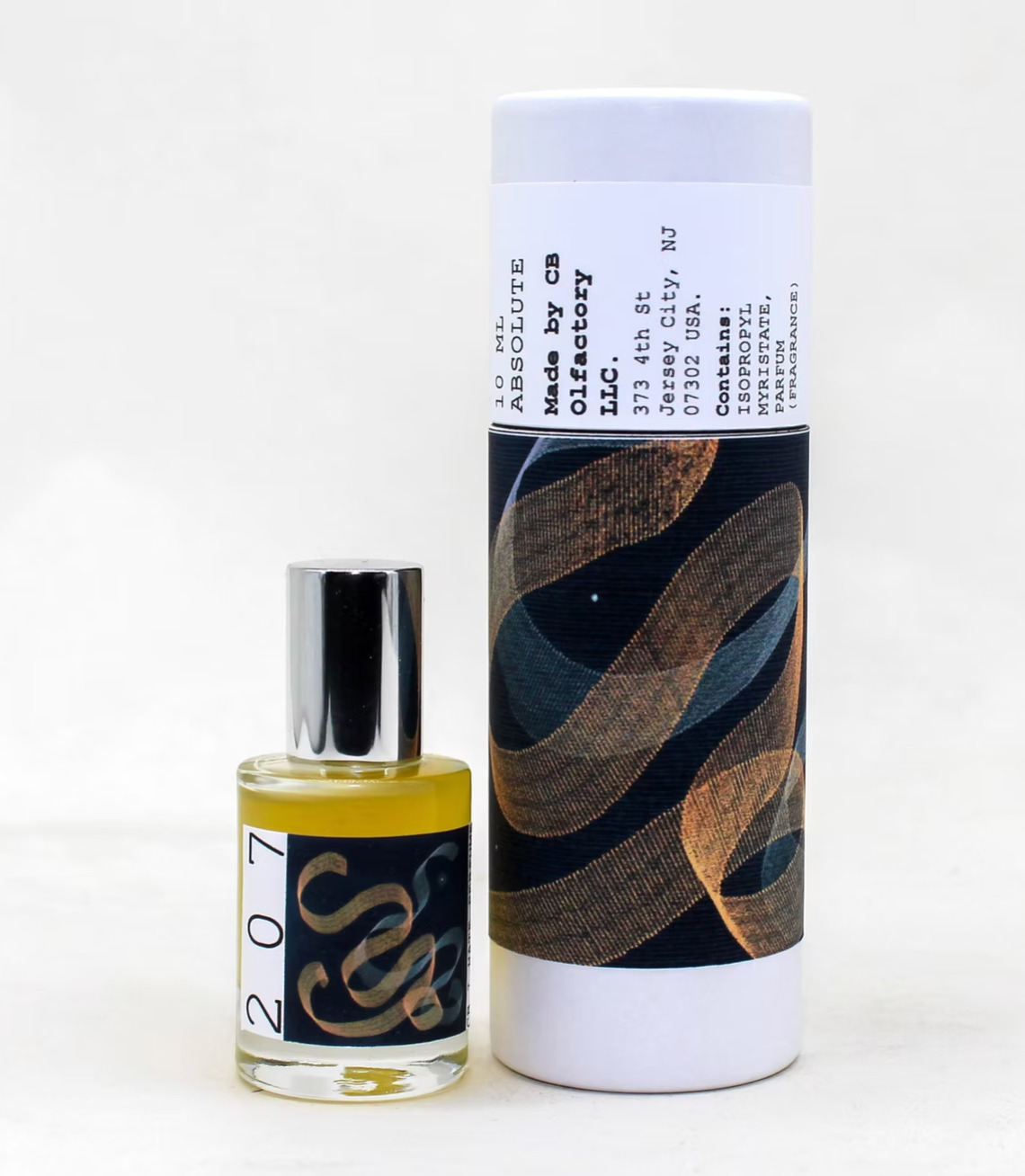
11. American Culture as Marketing
America’s real export in this whole story isn’t a spirit or a scent. It’s the marketing machinery around both, and that machinery runs through books, theater, film, and now platforms that didn’t exist twenty years ago.
Books
The Great Gatsby did more to mythologize bootlegging than any advertising campaign of its era managed. Gatsby’s fortune is implied, and eventually confirmed, to come from illegal liquor sales, and Fitzgerald reportedly drew partial inspiration for the character from George Remus, a real Cincinnati bootlegger known at the time as the “King of the Bootleggers.” A novel that is, at its core, about the emptiness of that wealth still managed to make Prohibition-era excess look glamorous to generations of readers who came after it.
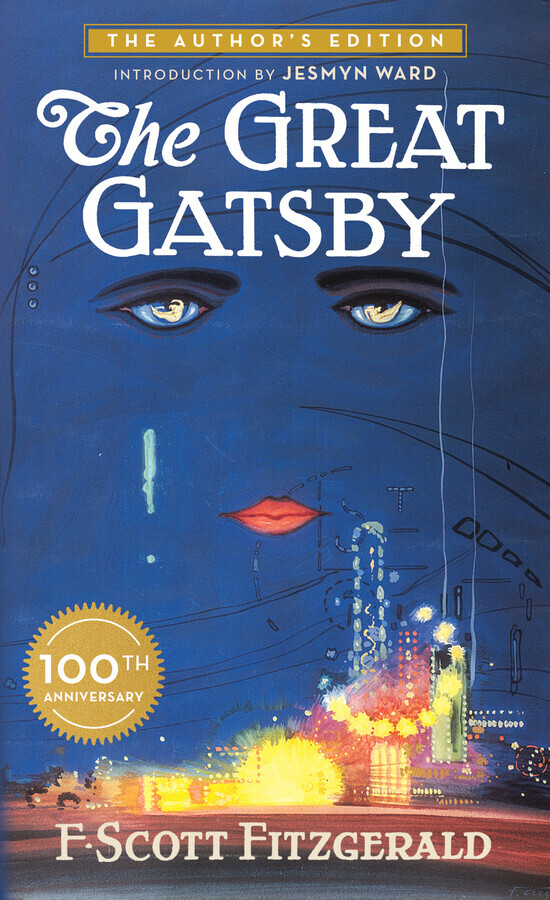
The Great Gatsby, 1925.
Perfume got its own novel too, just a much darker one. Bret Easton Ellis put a real cologne on Patrick Bateman in American Psycho, PS Fine Cologne by Paul Sebastian. Decades later, that scene turned it into a cult item among fragrance collectors, entirely on the strength of one fictional serial killer’s grooming routine, not anything the brand itself ever did.
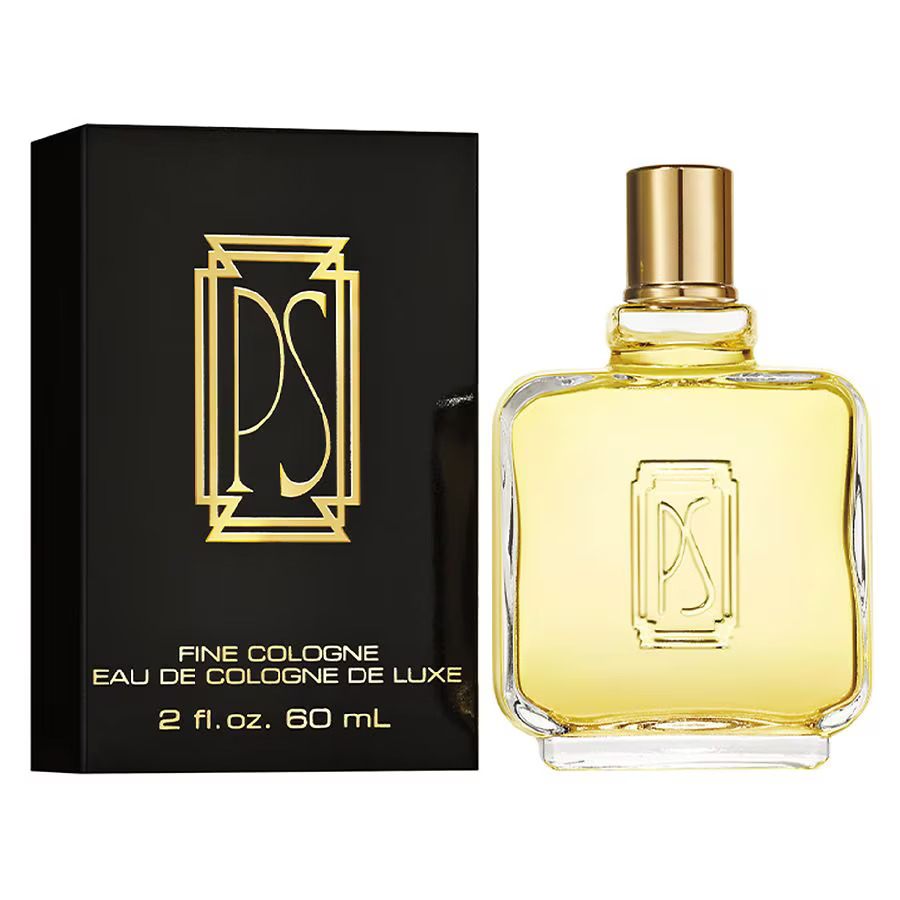
PS Fine Cologne, Patrick Bateman’s cologne in American Psycho.
A newer example skipped fiction and went straight to the source. Heretic Parfum licensed the estate of writer and illustrator Edward Gorey for a 2025 holiday collection of room sprays, including scents named Sumptuous Afternoon and The Haunted Tea Cosy. Heretic’s founder got the deal by sending the estate a cold email.

Sumptuous Afternoon, from Heretic’s Edward Gorey collection.
Theater
American theater took the opposite approach. Where Gatsby glamorized, the stage tended toward tragedy. Eugene O’Neill’s Long Day’s Journey Into Night and Tennessee Williams’ Cat on a Hot Tin Roof both build entire character studies around alcoholism, not celebration of it. Theater used the same subject fiction did, for the opposite purpose.
Perfume’s relationship with theater runs warmer. Harlem Perfume Co. partnered with Lincoln Center Theater on a candle honoring its 2026 revival of Ragtime, sold as a companion piece to the show rather than a souvenir.

The Ragtime candle, made with Lincoln Center Theater.
Film
Elizabeth Taylor’s White Diamonds, launched in 1991, is the moment American celebrity fragrance marketing became something else entirely. The campaign cost $20 million and centered on a short film, White Diamonds Starring Elizabeth Taylor, screened in department stores with popcorn served to shoppers as though it were a theatrical release. It worked. By 2018, the fragrance had generated a reported $1.5 billion in lifetime sales, more than she earned from any Hollywood role. Since 2011, Taylor directed 20% of those sales in perpetuity to the Elizabeth Taylor AIDS Foundation.
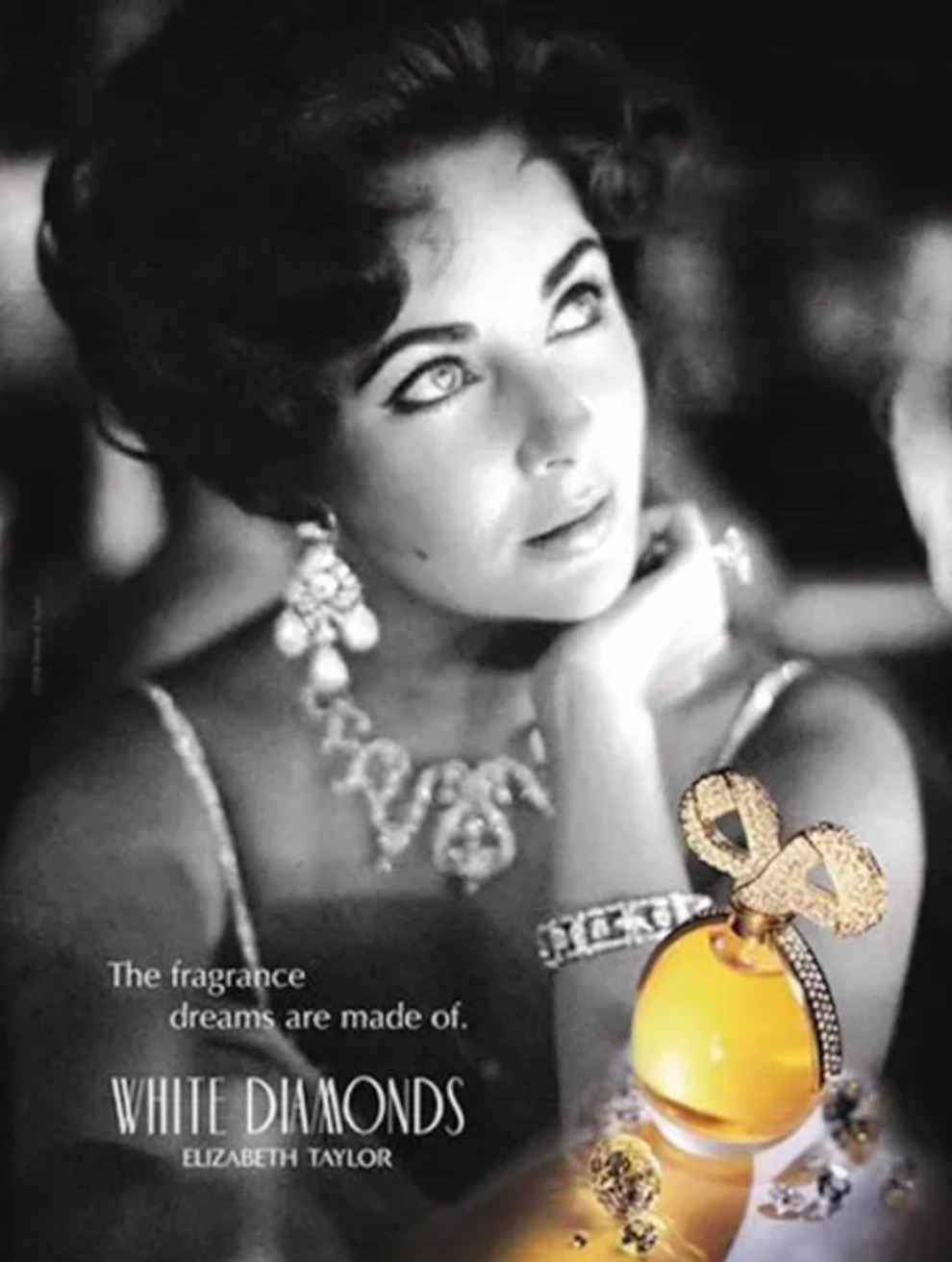
The original White Diamonds campaign.
A newer film tie-in shows the same instinct at indie scale. Heretic Parfum partnered directly with Focus Features on a fragrance for Robert Eggers’ 2024 Nosferatu, timed to the film’s Christmas release. It sold out in two weeks, built an 80,000-person waitlist, and has sold a unit every four minutes since restocking. Company revenue grew 150% in 2025, driven by that collaboration and the one that followed it.
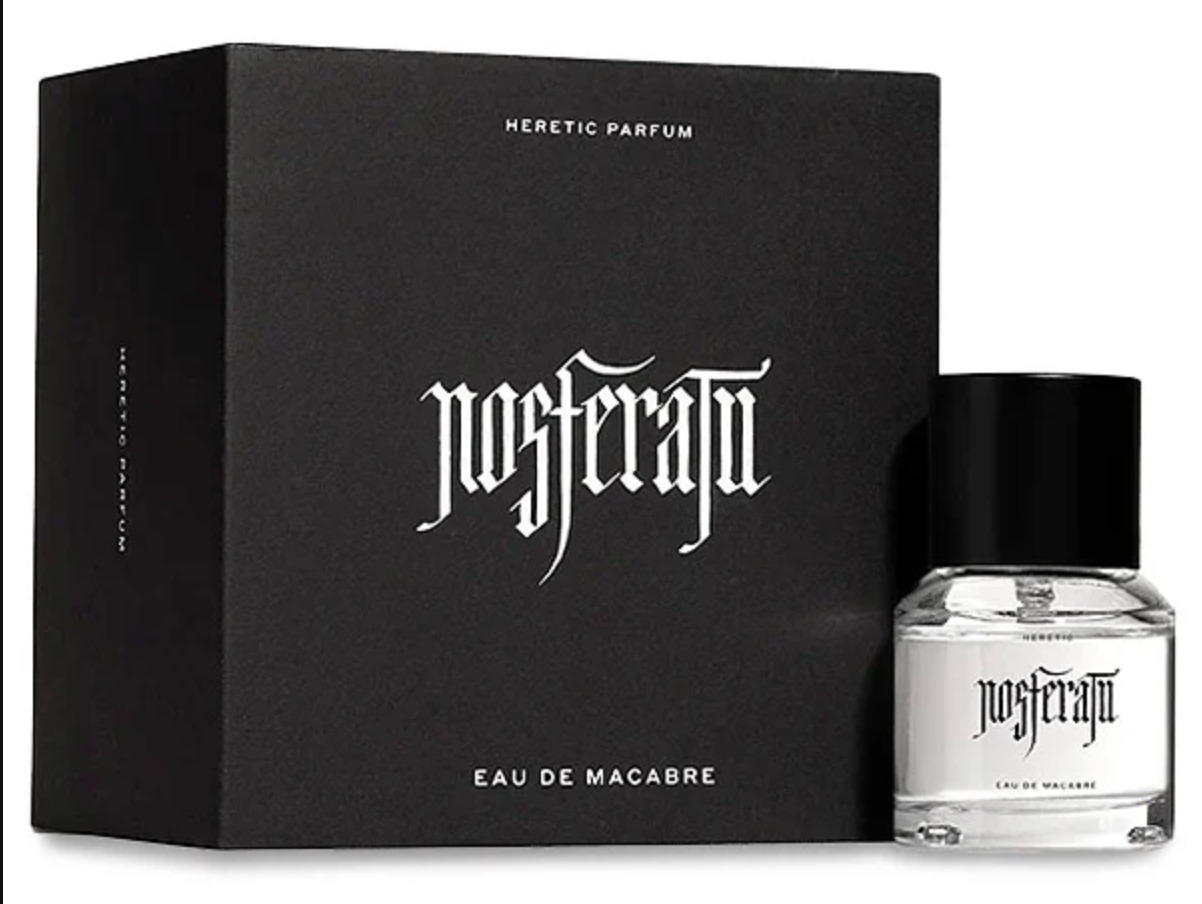
Nosferatu Eau de Macabre, Heretic Parfum’s collaboration with Focus Features.
Television did something quieter but just as real, at least abroad. Roy Morgan Research tracked whiskey drinking among 25-34 year olds in Australia climbing from 8.6% in 2006 to 13% by 2013, a jump that started the year after Mad Men premiered in 2007. No equivalent US figure is as cleanly documented, but the timing lines up with the same show driving the same kind of shift here.
Music
Busta Rhymes named Courvoisier in “Pass the Courvoisier” in 2002. The cognac brand saw a real sales bump before he was ever paid to promote it, the endorsement deal came after the song did the work. That freebie became a real business model. Jay-Z built on it directly: he backed Armand de Brignac starting in 2006, featured it in his own music videos, bought the brand outright by 2014, and later sold half of it to LVMH.
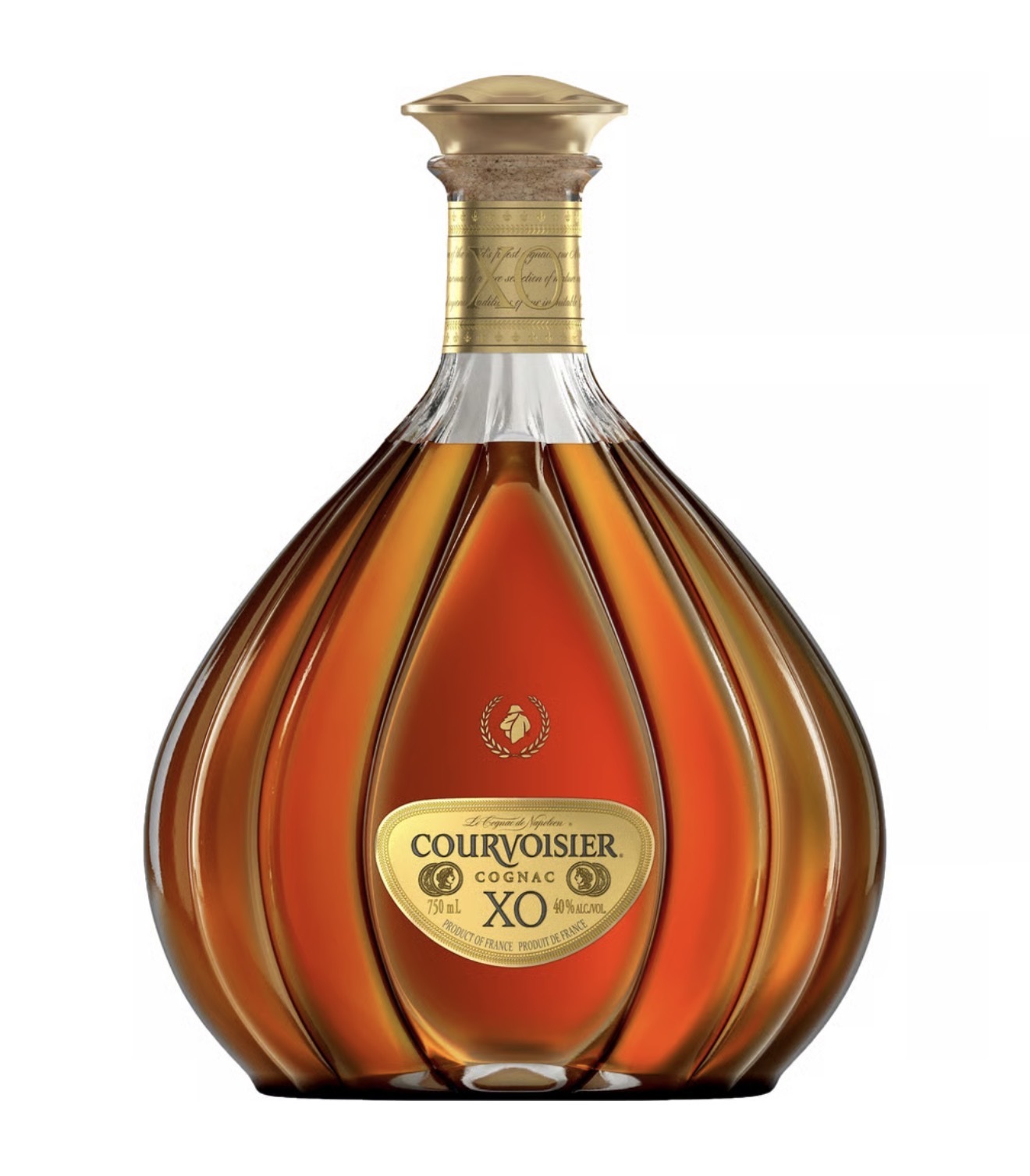
Courvoisier, named in Busta Rhymes’ 2002 single.
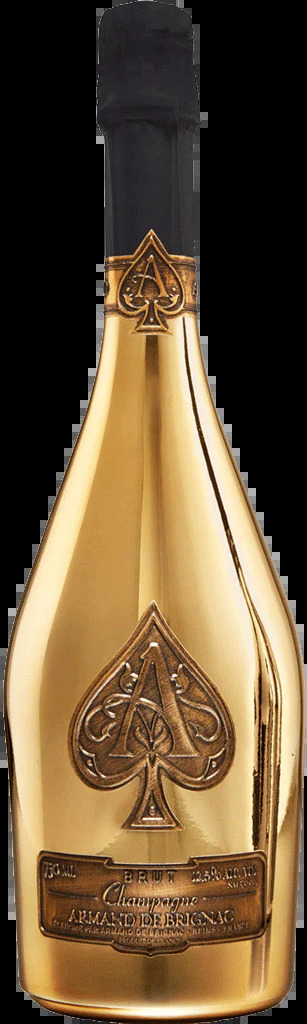
Armand de Brignac, Jay-Z’s champagne.
Perfume got its own version of that story from a different direction. Beyoncé launched Heat in February 2010, and it sold 72,000 bottles in its first hour at Macy’s alone. By 2013, the line had done $400 million globally, one of the best-selling celebrity fragrances ever released. Music didn’t just endorse a scent this time. It built one from scratch and outsold most of the industry doing it.
Metallica took a different approach entirely. In 2018, the band partnered with master distiller Dave Pickerell to launch Blackened American Whiskey, finished with a patented process called Black Noise: barrels blasted with low-frequency sound waves from the band’s own music to force deeper interaction with the wood. The inaugural batch, labeled 081 for the year Metallica formed, takes its soundwave graphic from the song “Blackened” itself. Every batch since has shipped with its own curated playlist. This wasn’t an endorsement or an ownership stake. It was the band manufacturing the product.

Blackened American Whiskey, finished with Metallica’s own Black Noise process.
What America Actually Contributes, Financially
American celebrities haven’t just endorsed these products lately. Increasingly, they’re making them.
Matthew McConaughey became Wild Turkey’s creative director in 2016. He spent two years with master distillers Jimmy and Eddie Russell developing Longbranch, a bourbon finished through Texas mesquite charcoal. It launched in 2018. Bob Dylan co-founded Heaven’s Door that same year, named after his own song, and helps select barrels and blend the whiskey himself.
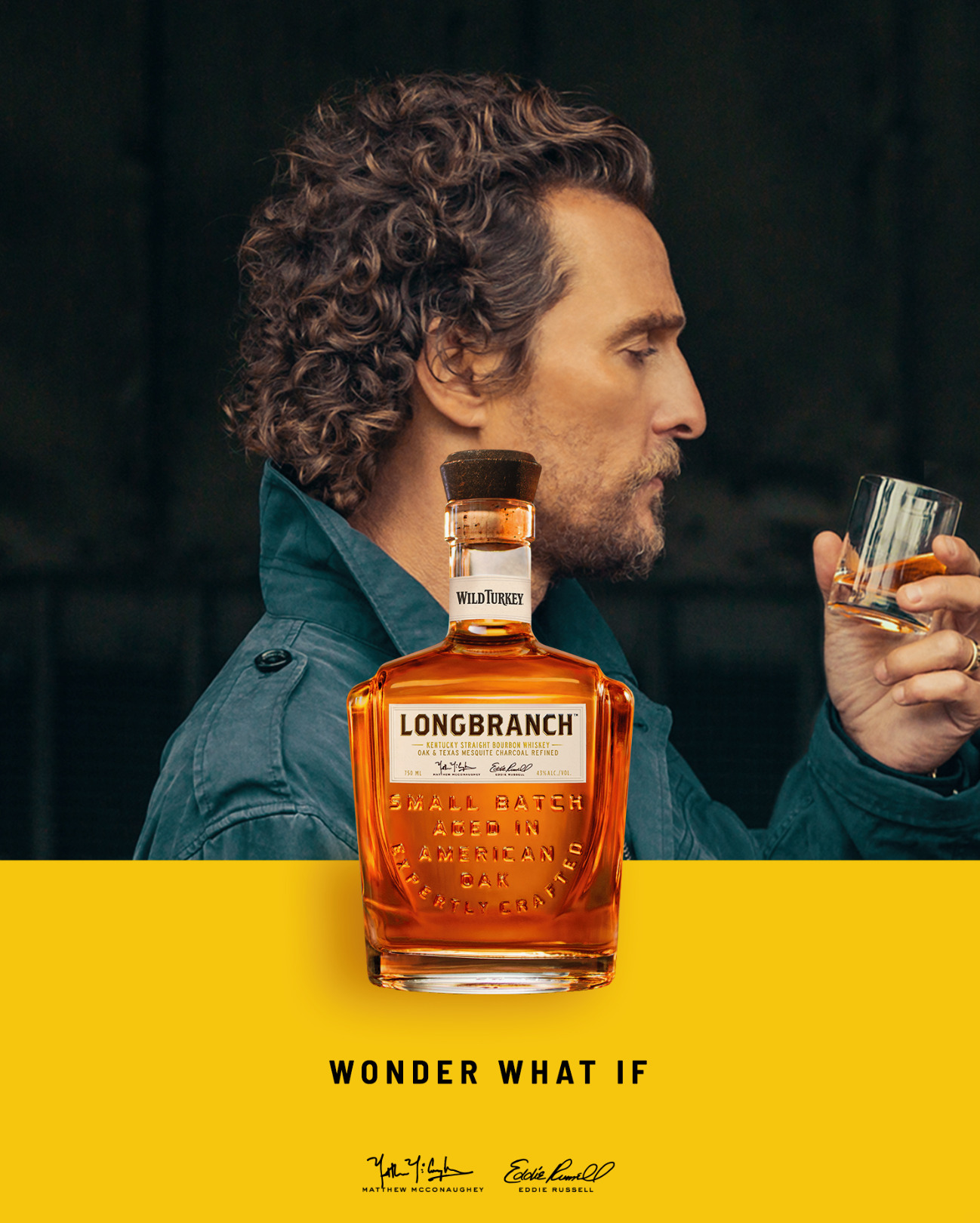
Wild Turkey Longbranch.
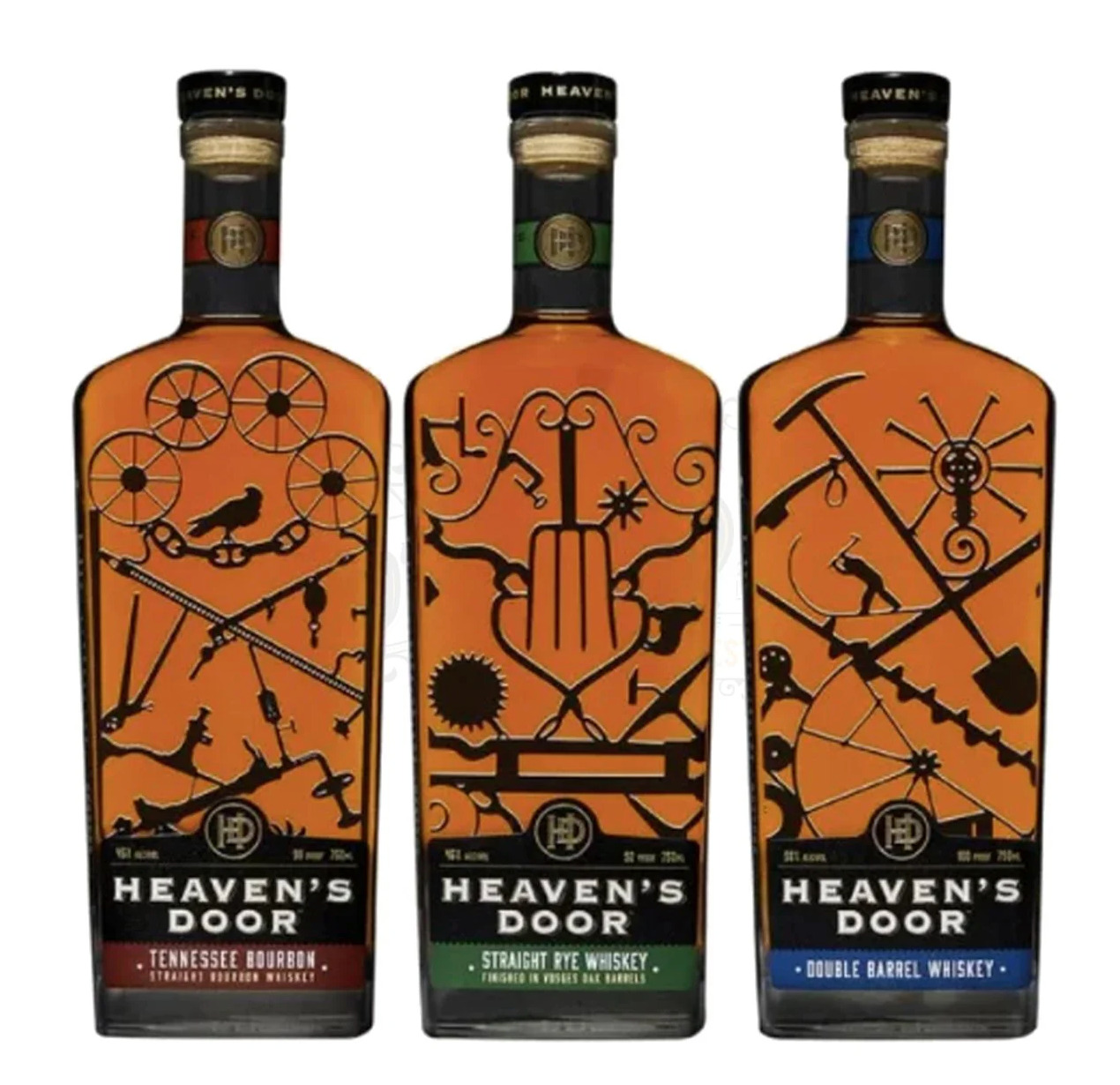
Heaven’s Door, co-founded by Bob Dylan.
Perfume runs on endorsement more than ownership. Johnny Depp has been the face of Dior Sauvage since 2015. He re-signed in 2023 for a three-year deal reportedly worth more than $20 million, the most lucrative men’s fragrance endorsement in history. Bernard Arnault, CEO of Dior’s parent company LVMH, credited Depp’s image directly for the fragrance’s category-leading sales during a January 2023 presentation of the company’s 2022 results. Brad Pitt became the first-ever male face of Chanel No. 5 in 2012 for $7 million. Zendaya has fronted Lancôme’s Idôle since 2019, joining a roster that’s included Julia Roberts for over two decades.

Zendaya, the face of Lancôme’s Idôle since 2019.
Wild Turkey is owned by Campari, an Italian company. Dior and Chanel are French. Heaven’s Door and Blackened are two of the few names on this list that Americans actually own outright.
Platforms
The newest layer of this is distribution itself. YouTube, Meta, and X are all American companies, built by a mix of immigrants and native-born founders alike: Steve Chen (Taiwan) and Jawed Karim (born in East Germany to a Bangladeshi father and German mother) co-founded YouTube alongside Chad Hurley, born in Pennsylvania. Meta and X trace back to founders born across the country. A craft distillery or a niche perfume house no longer needs a department store campaign or a studio deal to build a global audience. They need a following, built directly, one post at a time.
Part 3 picks up next, covering tiki, the strangest and most invented corner of American drinking culture.
Part 3
Parts 1 and 2 covered spirits and perfume. This installment covers the strangest, most invented corner of American drinking culture: an entire tropical fantasy built almost entirely in a converted Hollywood storefront.
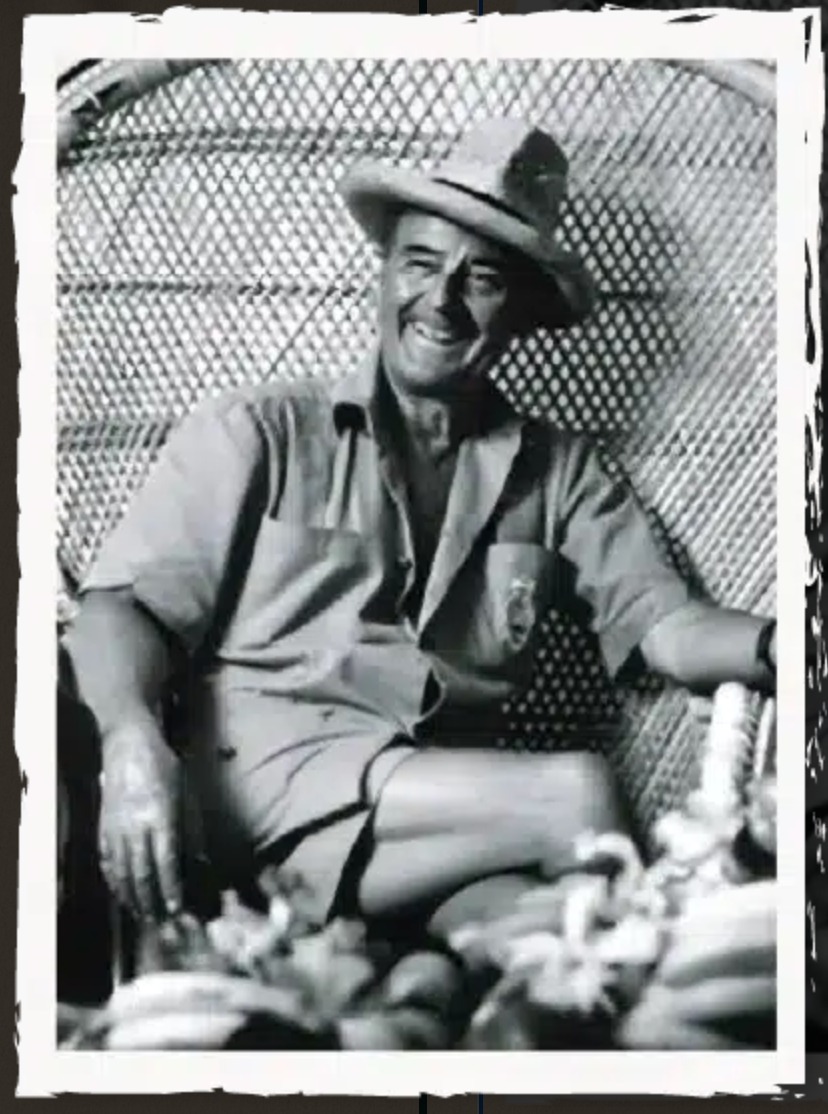
Ernest “Donn” Beach, who built the entire tiki aesthetic around a persona and a bar most of his customers assumed was more authentic than it was.
My own first tiki bar was Otto’s Shrunken Head in the East Village, back in 2006. I went in because it was gritty and a little punk rock, not because I knew anything about tiki, and the drinks caught me off guard. I ordered a piña colada first, mostly because of the song, and loved it. Then a Painkiller, and loved that too. By the time I got to a Mai Tai, I was hooked. I still think about what else I can build around coconut.
12. Two Bartenders and a Made-Up Paradise
Tiki did not come from the Pacific. It came from Prohibition-era Los Angeles, invented almost entirely by a man who had barely lived in Polynesia and had a talent for making people believe otherwise.
Ernest Raymond Beaumont Gantt grew up bouncing between Texas and Louisiana, then spent his twenties sailing through the Caribbean and the South Pacific as a merchant seaman, picking up a little bit of small-time bootlegging along the way. When Prohibition ended in December 1933, he opened a tiny bar on McCadden Place in Hollywood and called it Don’s Beachcomber. He packed it with real driftwood, ship’s lanterns, and tikis and nautical junk he had actually collected on his travels, and he built the drink menu around rum, since almost none of it was distilled domestically and Prohibition had barely touched the supply.
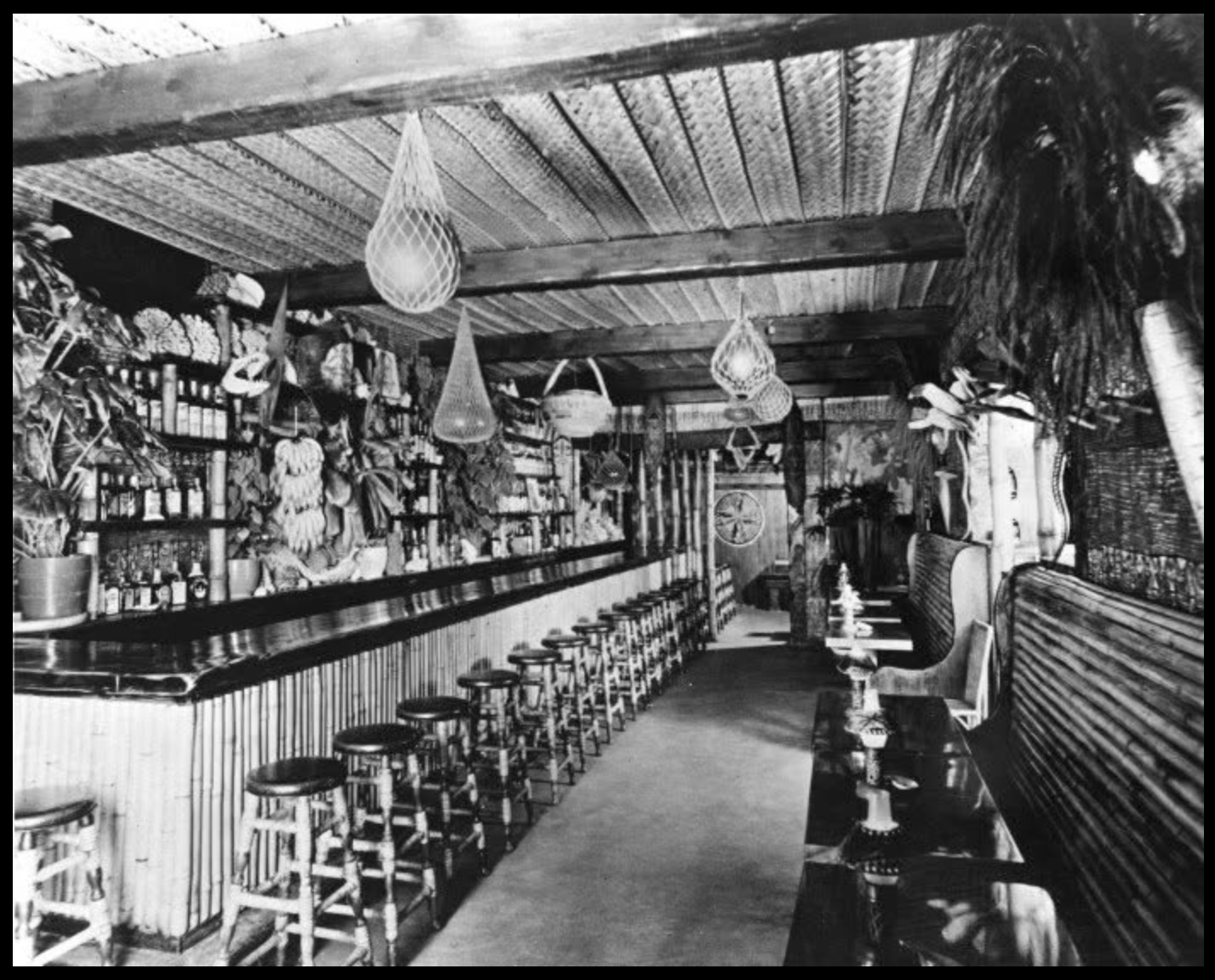
The bar’s interior, built from real driftwood and nautical salvage Beach had collected on his own travels.
He started calling himself Don the Beachcomber, then legally changed his name to Donn Beach. His signature drink was the Zombie, a multi-rum, high-proof cocktail he limited to two per customer, allegedly to stop people from getting too drunk to pay the bill. It became a national sensation after an imitator served a version of it to thousands of people at the 1939 New York World’s Fair.
By 1937 the bar had expanded across the street, added a full restaurant serving what he marketed as exotic Cantonese-Polynesian cuisine (mostly good Cantonese food with a new name attached), and started spinning off locations around the country. At its peak the chain ran to roughly two dozen restaurants.
13. The Mai Tai War
Victor Bergeron opened a small saloon called Hinky Dinks in Oakland in November 1934, on a $500 loan, mostly selling cheap sandwiches and drinks to Depression-era customers. In 1937 he visited Don the Beachcomber in Hollywood and came home converted. He tore out the hunting-lodge decor, put up bamboo and tropical paraphernalia, and renamed the place Trader Vic’s.
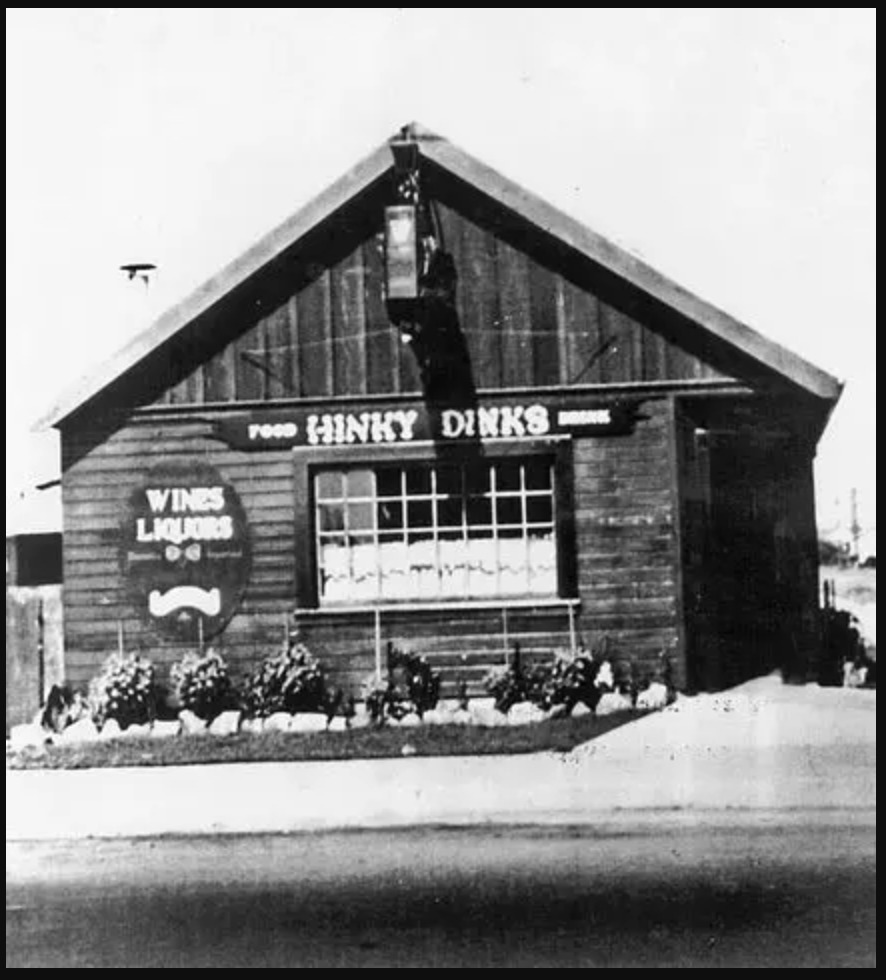
The original Oakland location, before it became Trader Vic’s.
In 1944, Bergeron mixed 17-year-old Jamaican rum with lime juice, orange curaçao, orgeat, and rock candy syrup for two friends visiting from Tahiti. One of them tasted it and said, roughly, “Mai tai roa ae,” Tahitian for something close to “out of this world, the best.” Bergeron named the drink after that.
Beach and Bergeron spent decades publicly insisting they had invented the Mai Tai first, and the argument never really got settled. Most cocktail historians side with Bergeron on this particular drink, though Beach had been serving equally strong rum cocktails under other names for years before. It does not really matter who is right. The rivalry sharpened both men’s work, and the argument itself became part of tiki’s mythology, repeated in bars to this day.
Bergeron told customers a shark took his leg, and would sometimes jab a fork into the wooden leg to prove it. He had actually lost it to a childhood illness. The Mai Tai was far from the only story he was willing to improve on.
14. Escapism Sells
Context matters here. This started in the Depression and grew through a world war. A tiki bar offered a cheap, fully controlled vacation to a place that existed mostly in a set designer’s imagination, no passport or plane ticket required.
World War Two mattered even more than the Depression did. Hundreds of thousands of American servicemen passed through the actual Pacific theater and came home with a real hunger for anything that reminded them of it, even a sanitized, invented version safely located in Hollywood or Oakland. Postwar prosperity did the rest. Commercial air travel to Hawaii was not yet common or cheap, so tiki bars did the traveling for people. A family could get dressed up on a Saturday, order a pupu platter, and feel like they had been somewhere.
James Michener served with the Navy’s construction battalions, the Seabees, in the Pacific during the war. His 1947 story collection Tales of the South Pacific, drawn directly from that service, won the Pulitzer Prize the following year and became the Rodgers and Hammerstein musical, then the 1958 film covered later in this piece. Tiki bars and Broadway were selling the same postwar fantasy at almost the same moment.
The chains grew fast. Don the Beachcomber pushed into the double digits. Trader Vic’s licensed its name to Hilton Hotels in 1957 for $2 million, putting tiki bars inside Hilton properties across the country and eventually overseas.
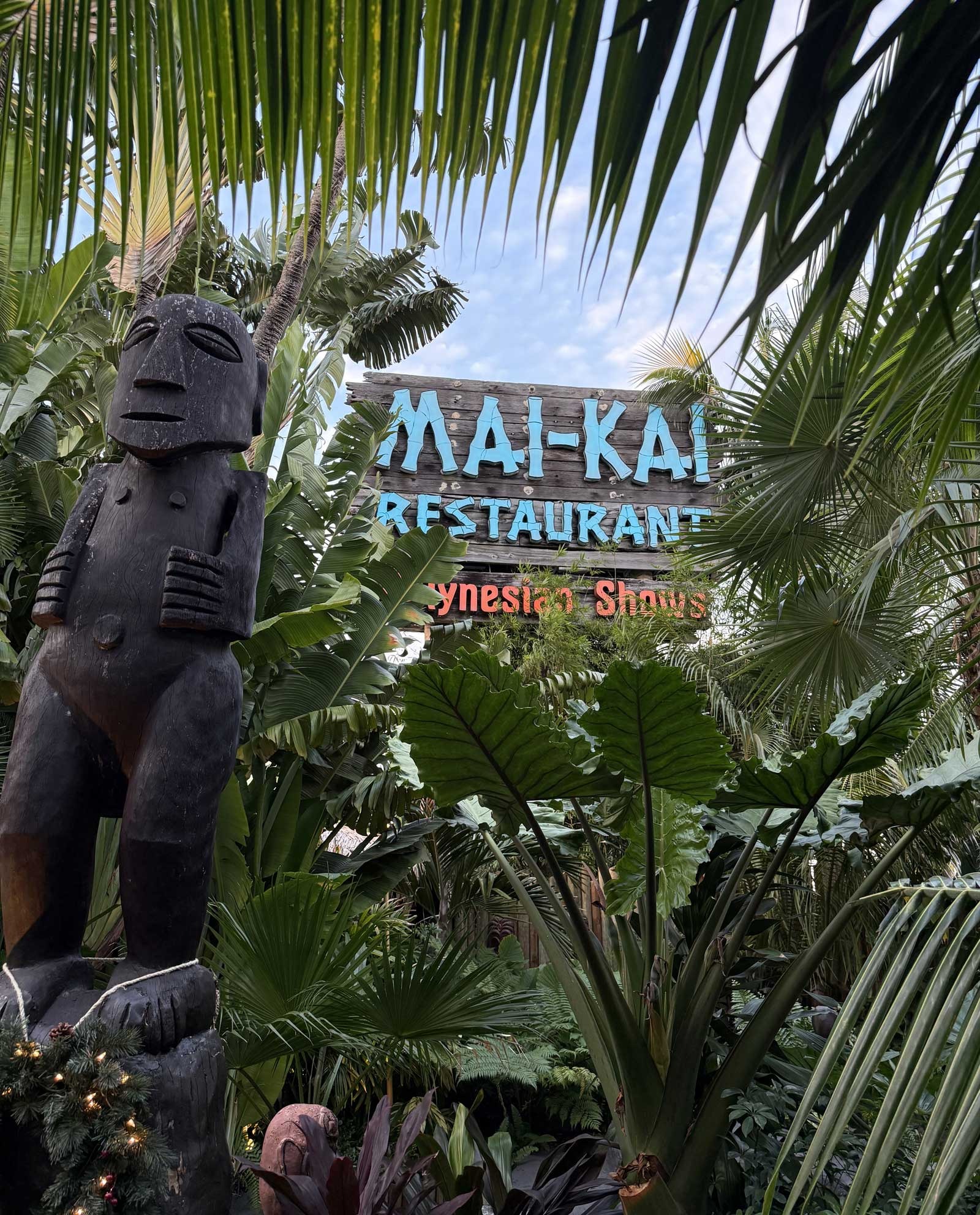
The Mai-Kai’s sign, largely unchanged since 1956.
The Mai-Kai opened on December 28, 1956, in Fort Lauderdale, built by brothers Bob and Jack Thornton for roughly $350,000, close to $4 million today. It grew to eight dining rooms and more than 600 seats, still runs many of the original cocktail recipes developed by its first head bartender, Mariano Licudine, and is now listed on the National Register of Historic Places, one of the very few grand tiki palaces from that era still standing and operating.
15. What Tiki Actually Borrowed
This is worth being honest about, the same way Part 1 was honest about rum and the slave trade.
Tiki was never Polynesian culture. It was a collage: Cantonese restaurant food, Hawaiian and Tahitian words and imagery, carved masks and design elements pulled from across the Pacific and sometimes Africa, assembled by American businessmen who had traveled through the region but were not from it and did not consult the cultures they were borrowing from.
This isn't a new criticism invented by modern audiences; it's now discussed openly inside the tiki community itself, not just by outside critics. Martin Cate, whose Smuggler’s Cove helped drive the current revival, has written and spoken about which parts of the old aesthetic are worth keeping, which need to be dropped or reframed, and how to credit the real cultures involved instead of presenting the whole thing as authentic Polynesian tradition. That conversation is ongoing and doesn’t have a tidy conclusion, but it deserves to be named directly, not skipped past.
16. The Crash and the Comeback
By the 1970s, tastes had shifted toward minimalism, and tiki started reading as dated kitsch rather than sophisticated escape. Most of the original bars closed, including the majority of Don the Beachcomber locations. Beach himself had sold his interest in the brand back in the 1950s, well before the decline set in. The original Hollywood location closed in 1985 and was demolished in 1987.
The revival started quietly in the 1990s, driven by a small group of researchers and enthusiasts. Jeff “Beachbum” Berry did the most important early work, tracking down surviving original bartenders, including Ray Buhen, who had worked the bar at the original Don the Beachcomber and later opened his own place, Tiki-Ti, in Los Angeles, to reconstruct recipes that Beach had deliberately kept secret through a system of code names and pre-mixed syrups.
Martin Cate opened Forbidden Island in Alameda in 2006, then Smuggler’s Cove in San Francisco in late 2009, applying the same rigor the wider craft cocktail movement was bringing to whiskey and gin. Smuggler’s Cove built one of the largest rum collections in the country, close to 700 bottles at last count, and has been repeatedly named one of the best bars in the world since it opened. This time the drinks got sharper even as the aesthetic became more self-aware about where it came from.
17. Tiki Goes Global
Modern tiki spread well beyond the United States, and it did so early enough that some of the most historically important tiki rooms left in the world are no longer American.
Trader Vic’s itself opened in Munich in 1971, in the basement of the Hotel Bayerischer Hof, and in Tokyo in 1974, on the fourth floor of the Hotel New Otani. The Munich location is the second-oldest Trader Vic’s still operating anywhere, after London. The Tokyo location still mixes drinks off Bergeron’s original recipes, the only Trader Vic’s left that does, and functions today as something close to a working museum of the brand’s golden age.
Berlin got its own tiki bar in 1976, Rum Trader, founded by a bartender who had worked at Trader Vic’s after the war and brought the rum-forward cocktail style home with him. It kept the drinks and dropped the coconut-and-grass-skirt decor entirely, closer in feel to a dark, formal cocktail den than a tropical fantasy.
London built the largest concentration of tiki bars outside the US, including its own Trader Vic’s, Trailer Happiness in Notting Hill, and Mahiki in Green Park, which built a reputation as a favorite of Prince Harry’s in the 2000s. When a panel of the field’s leading historians, Sven Kirsten, Jeff Berry, and Martin Cate among them, ranked the fifteen most important tiki bars in the world in 2017, four of the fifteen were in London and one each in Munich, Tokyo, and Barcelona.
Conventions keep the modern scene connected across all these cities. Tiki Oasis in San Diego and the Hukilau, hosted at the Mai-Kai, draw thousands of enthusiasts every year, part costume party, part cocktail seminar, part living history museum. Exotica music, Martin Denny, Les Baxter, Arthur Lyman, provided the original soundtrack in the 1950s and still gets played in the current wave of bars, a genre that only exists because tiki needed something to play in the background.
Tiki’s one constant ingredient, through all of this, was rum. Which is a good place to pick up the rest of America’s spirits story, in Part 4.
Dates Worth Knowing
- December 1933: Don’s Beachcomber opens on McCadden Place, Hollywood
- November 17, 1934: Victor Bergeron opens Hinky Dinks in Oakland on a $500 loan
- 1937: Bergeron visits Don the Beachcomber, renames his bar Trader Vic’s
- 1939: The Zombie is served at the New York World’s Fair by an imitator
- 1944: The Mai Tai is created at Trader Vic’s in Oakland
- December 28, 1956: The Mai-Kai opens in Fort Lauderdale
- 1957: Trader Vic’s is licensed to Hilton Hotels worldwide for $2 million
- 1985: The original Don the Beachcomber closes; demolished 1987
- 2006: Martin Cate opens Forbidden Island in Alameda
- Late 2009: Smuggler’s Cove opens in San Francisco, launching the modern tiki revival in earnest
Bars Worth Knowing
Don the Beachcomber, the original invented tiki bar. At its peak the brand ran 16 locations before ownership changes shrank it, with the last one closing in 2018. Current owner 23 Restaurant Services revived it in Madeira Beach, Florida, in February 2024, then closed that location for good after Hurricane Helene flooded the space nine months later. The true comeback is a ground-up flagship planned for Hamlin, Florida, near Walt Disney World, still targeting 2026. In the meantime, the brand is opening smaller bars under a new label, the Gantt Reserve Collection, starting with Morgan’s Cove in Tampa in mid-2024, with a further location planned for Plantation, Florida.
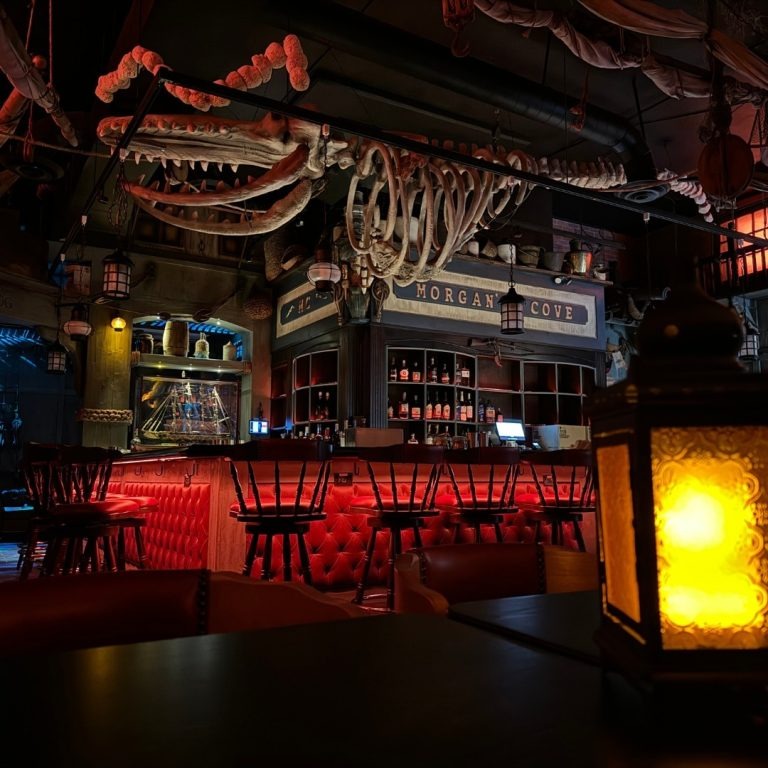
Morgan’s Cove, Tampa, the first bar under the new Gantt Reserve Collection label.
Trader Vic’s, headquartered in Martinez, California, still operating worldwide, with more locations today across the Middle East and Asia than in the US.
The Mai-Kai, Fort Lauderdale, Florida, on the National Register of Historic Places, one of the last places still serving original Don the Beachcomber-era recipes.
Tiki-Ti, Los Angeles, opened by original Don the Beachcomber bartender Ray Buhen, still family-run by his descendants. The bar has sold exactly one beer since the 1960s, sitting on a shelf with a sign reading “The Last Beer,” its price climbing every year, for whoever’s desperate enough, or in on the joke, to buy it.
Smuggler’s Cove, San Francisco, the flagship of the modern tiki and rum revival, opened by Martin Cate in 2009.
The Kahiki Supper Club, Columbus, Ohio, once the largest tiki restaurant in the country, seated 500-plus guests behind two flame-headed Moai statues. Closed and demolished in 2000; the brand lives on as a frozen food line.
The Tonga Room, in the basement of San Francisco’s Fairmont Hotel, operating continuously since 1945, complete with an indoor lagoon and a floating band on a raft.
Trader Vic’s Munich (1971, Hotel Bayerischer Hof) and Trader Vic’s Tokyo (1974, Hotel New Otani), the second- and among the oldest surviving Trader Vic’s locations anywhere. Tokyo still pours from Bergeron’s original recipes.
Rum Trader, Berlin, founded 1976 by a bartender who trained at Trader Vic’s, still one of the city’s most respected cocktail bars.
Books and Screen Moments Worth Knowing
Tiki and Hollywood grew up together, not one from the other. Bird of Paradise, a South Seas romance, came out in 1932, a year before Don’s Beachcomber opened. The movie wave and the bar wave fed each other for the next three decades.
Pagan Love Song (1950), an MGM musical shot in Hawaii and set in Tahiti, starring Esther Williams and Howard Keel, with a young Rita Moreno in her first major role. Widely considered one of the weaker Esther Williams vehicles, but a clean snapshot of how the studios sold the South Seas fantasy.
South Pacific (1958), the film version of the Rodgers and Hammerstein musical, adapted from James Michener’s Tales of the South Pacific. The clearest big-studio version of the same escapism Don the Beachcomber was selling in a bar.
Blue Hawaii (1961), Elvis Presley’s tropical vehicle, arriving right as tiki’s golden age hit its commercial peak.
Walt Disney’s Enchanted Tiki Room, Disneyland, opened June 23, 1963. The first Audio-Animatronics attraction ever built, and the clearest sign of how far tiki had penetrated mainstream American culture by the early 1960s. It later ran in Florida and Tokyo as well.
Kon-Tiki, a real 1947 expedition, not a movie first. Norwegian explorer Thor Heyerdahl sailed a balsa raft 4,300 miles from Peru to Polynesia to test his theory that Polynesia had been settled from South America rather than Southeast Asia. The 1950 documentary of the voyage won the Academy Award for Best Documentary Feature. A 2012 dramatized version was nominated for Best Foreign Language Film. Heyerdahl’s theory itself has since been mostly overturned. Genetic and linguistic evidence points to Polynesia being settled from Southeast Asia, not South America. What the expedition proved was that the crossing was physically possible, not that it happened. The name still made its way straight into tiki bar culture: Sheraton hired tiki designer Stephen Crane to build a Kon-Tiki restaurant chain in the 1950s specifically to compete with Hilton’s Trader Vic’s.
I read a comic book about the Kon-Tiki expedition as a kid and it completely took me over. Years later, walking into Otto’s Shrunken Head for the first time, it threw me straight back to that book. A tiki drink can still do that to me now, pull up that same expedition, that same feeling, out of nowhere.
The Book of Tiki (Sven Kirsten, 2000), the foundational modern history of the aesthetic, written by the person most responsible for turning tiki into a serious subject of design history rather than a joke.
Beachbum Berry’s Sippin’ Safari (Jeff Berry), the reconstructed-recipe bible for the genre, the direct source for most of the historically accurate versions of Beach’s and Bergeron’s drinks that bars pour today.
Smuggler’s Cove: Exotic Cocktails, Rum, and the Cult of Tiki (Martin and Rebecca Cate, 2016), winner of the 2017 James Beard Award for a beverage book, the current generation’s answer to Kirsten and Berry.
Tikimentary: In Search of the Lost Paradise (2010), a documentary that follows the modern tiki subculture, tikiphiles, through Tiki Oasis in San Diego and the Hukilau at the Mai-Kai. A good snapshot of who keeps this scene alive today, decades after the original bars closed.
Recipes Worth Keeping
The Zombie (Don the Beachcomber, reconstructed)
- ½ oz fresh lime juice
- ½ oz fresh grapefruit juice
- ½ oz falernum
- ½ oz cinnamon syrup
- 1 oz gold Puerto Rican rum
- 1 oz Jamaican rum
- 1 oz Demerara rum (151 proof, use carefully)
- 1 tsp grenadine
- 1 dash Pernod or absinthe
- 6 drops Angostura bitters
- crushed ice, mint sprig to garnish
Method: Shake all ingredients hard with crushed ice. Pour unstrained into a tall glass. Top with more crushed ice if needed. Garnish with mint. Limit yourself to two, per house rules.
Editorial note: this is a widely published reconstruction of Beach’s secret original (Beachbum Berry’s version is the standard reference). Verify exact proportions against Berry’s published recipe before this goes live, since Beach’s actual formula was never public. Gautam’s preference: Jamaican rum for the funk it brings. A white Puerto Rican rum works as a lighter substitute.
The Mai Tai (Trader Vic’s, 1944 original)
- 2 oz aged Jamaican rum (Bergeron used a 17-year-old; 8–10 year works today)
- ½ oz orange curaçao
- ¼ oz orgeat syrup
- ¼ oz rock candy syrup (or simple syrup)
- juice of 1 lime, shell reserved
Method: Shake hard with crushed ice. Pour unstrained into a rocks glass. Garnish with a mint sprig and the spent lime shell.
Editorial note: matches Bergeron’s own published account of the original recipe. Modern bars often substitute a rum blend since the original 17-year Jamaican rum he used is no longer produced in that form. Gautam’s preference: Appleton Estate 17-Year Legend, if you can find and afford it, said to be the closest clone of the original Wray & Nephew 17. Otherwise split Appleton Estate 12 with an agricole-style rhum from Martinique or Guadeloupe.
Part 4
Rum leads this installment since it ties directly back to the colonial story in Part 1, before whiskey ever entered the picture. Tequila, gin, vodka, and liqueurs each get their own section after it.
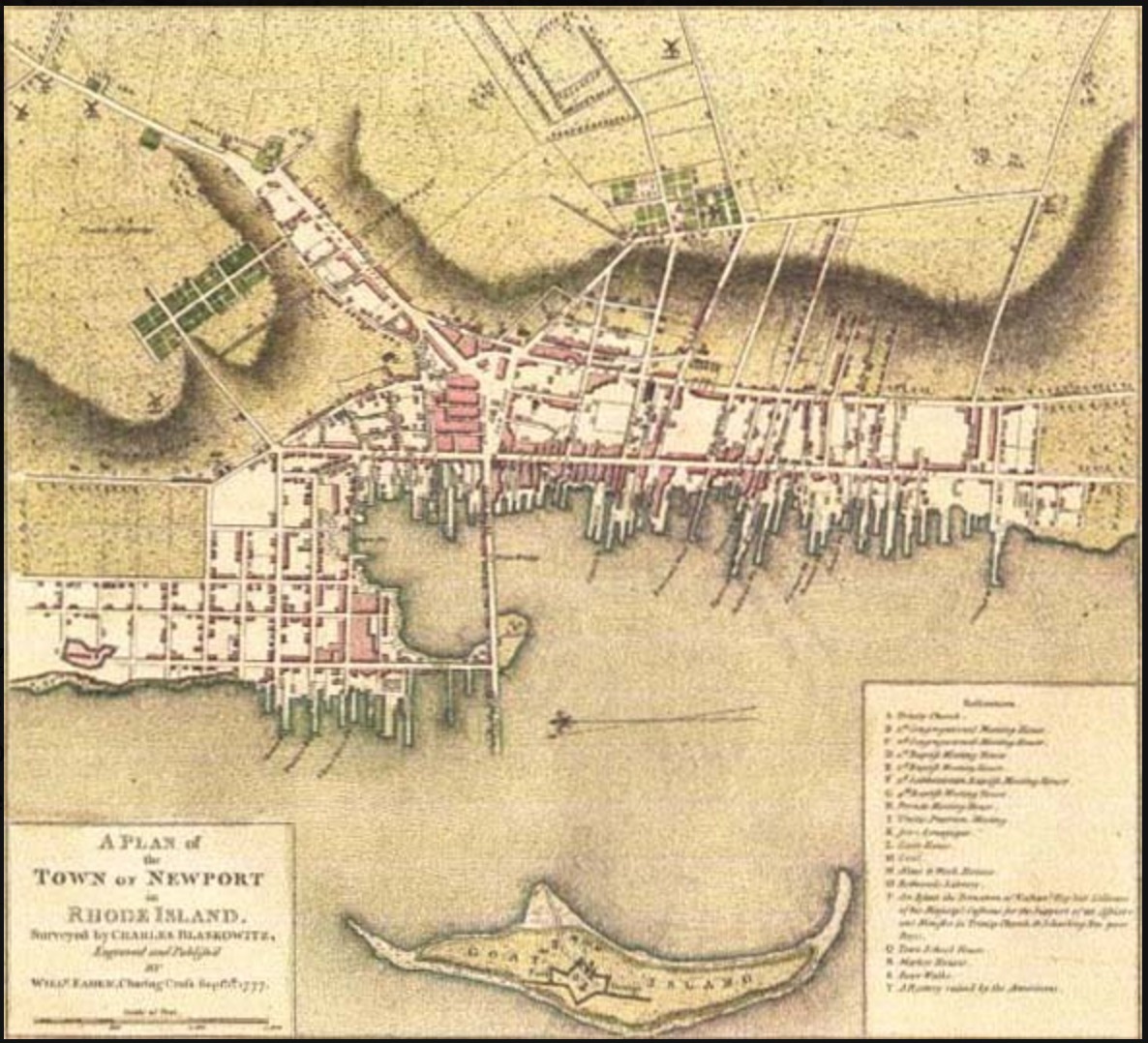
Newport, Rhode Island, once home to 22 rum distilleries at its colonial-era peak.
18. Rum Came First
Part 1 already mentioned that colonists drank an estimated 3.7 gallons of rum a year per person by the time of the Revolution. This section goes deeper, because rum was not a side note to early America. For most of the 1700s, it was the industry.
New England became one of the largest rum-producing regions in the world before the country existed. By the mid-1700s, Massachusetts supported more than 60 distilleries, and Newport, Rhode Island alone had 22 running at its peak. Massachusetts and Rhode Island together accounted for roughly three-quarters of all mainland rum exports by the end of the colonial period.
The trade ran on Caribbean molasses, and this is not a footnote, it is the actual foundation of the industry. Ships carried New England rum to West Africa to trade for enslaved people. Those ships carried enslaved people to the Caribbean to trade for more molasses. The molasses came back to New England to be distilled into more rum. That is the triangular trade, and Rhode Island in particular controlled a large share of the entire North American slave trade on the strength of it.
The Molasses Act of 1733 taxed molasses imported from non-British sources, an attempt to protect British Caribbean planters. New England largely ignored it and smuggled French molasses instead, since it ran up to 40 percent cheaper. The Sugar Act of 1764, which actually tried to enforce collection, hit Rhode Island’s economy hard enough that the colony formally protested it to Parliament, and it became one of the direct sparks toward the Revolution, a straight line from rum taxation to independence, a full generation before Hamilton’s whiskey tax caused the same kind of trouble.
The industry did not survive much past 1810 or so. Once the international slave trade was outlawed and French Caribbean rum production expanded, New England’s distilleries lost their supply chain and their market at the same time. By the War of 1812, most of them were gone, and America’s drinking habits shifted west into corn and whiskey instead, the handoff Part 1 already covered from the whiskey side.
What exists today is a different industry with no connection to that supply chain. Prichard’s Distillery in Tennessee, launched in 1997, is generally credited as an early mover in the modern American rum revival. Privateer Rum, founded in Ipswich, Massachusetts in 2011, set out specifically to revive the old New England style: long, cool fermentation, dry finish, heavy oak influence, closer to a whiskey drinker’s palate than a Caribbean one. Richland Rum in Georgia is the only American producer growing its own sugarcane specifically to distill rum, and its founders prefer the term “single estate rum” to “American rum,” a distinction that matters more to them than the flag on the label.
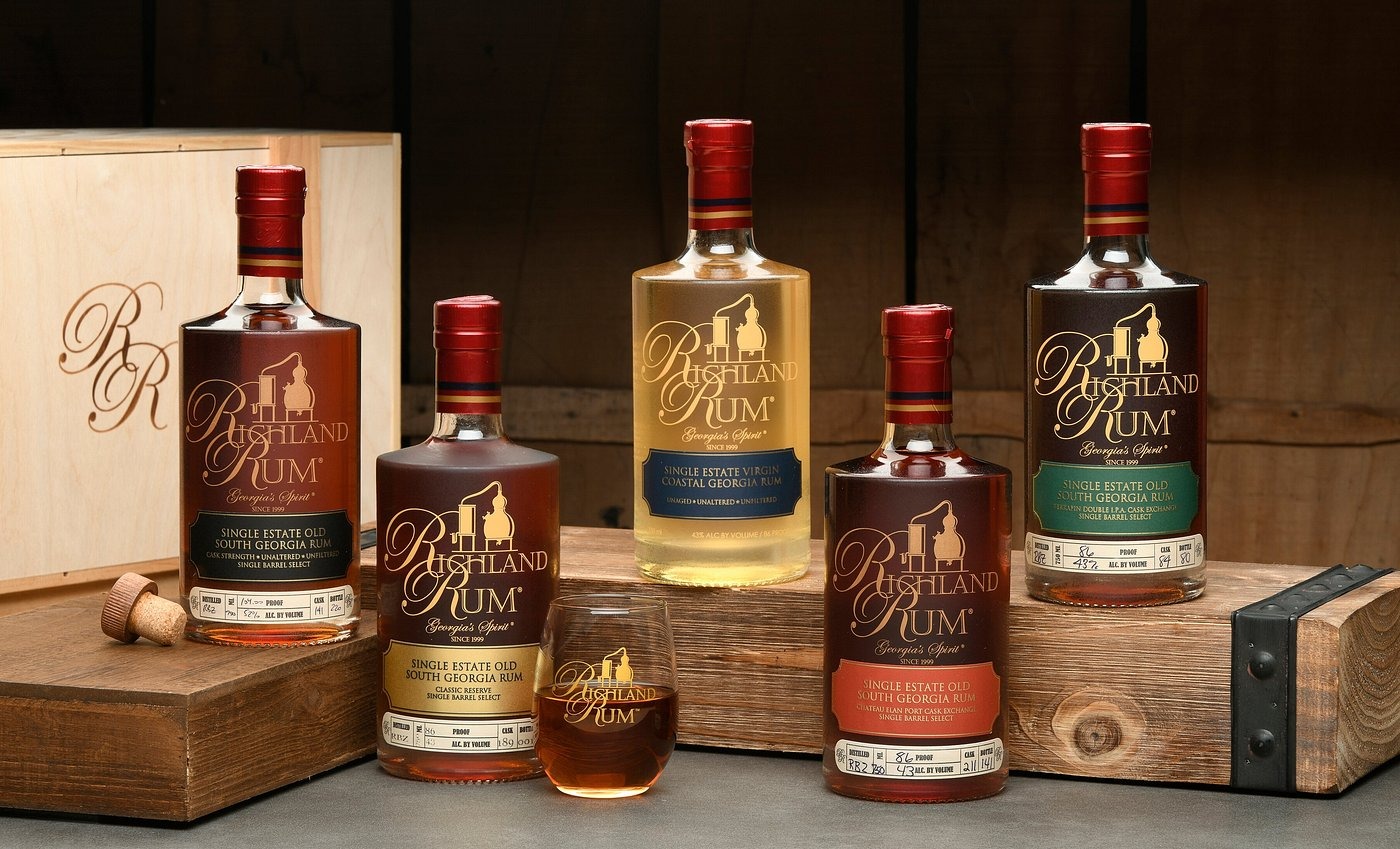
Richland Rum’s lineup, distilled from sugarcane grown on its own Georgia estate.
19. Tequila, American by Consumption, Not by Law
Tequila is the one spirit in this piece that cannot legally be made in America. That deserves a direct explanation, right up front.
Since 1974, the Mexican government has owned tequila as protected intellectual property, a Denomination of Origin. A 1994 NAFTA provision, carried forward into the USMCA, means the United States and Canada cannot legally sell anything as “tequila” unless it is produced in Mexico, specifically in Jalisco and small designated parts of four other states, from at least 51 percent blue Weber agave.
So every American tequila brand, celebrity-backed or otherwise, is a marketing and distribution company, not a producer. Casamigos makes the point most directly. George Clooney, Rande Gerber, and Mike Meldman started it in 2013 as a private tequila for their own use while building neighboring vacation homes in Cabo San Lucas, made to their specifications by a distillery in Jalisco. Demand from friends eventually forced them to go commercial, and Diageo bought the brand in 2017 for up to a billion dollars. It is a fully American company built entirely around a spirit that, by law, has to stay Mexican from start to finish.
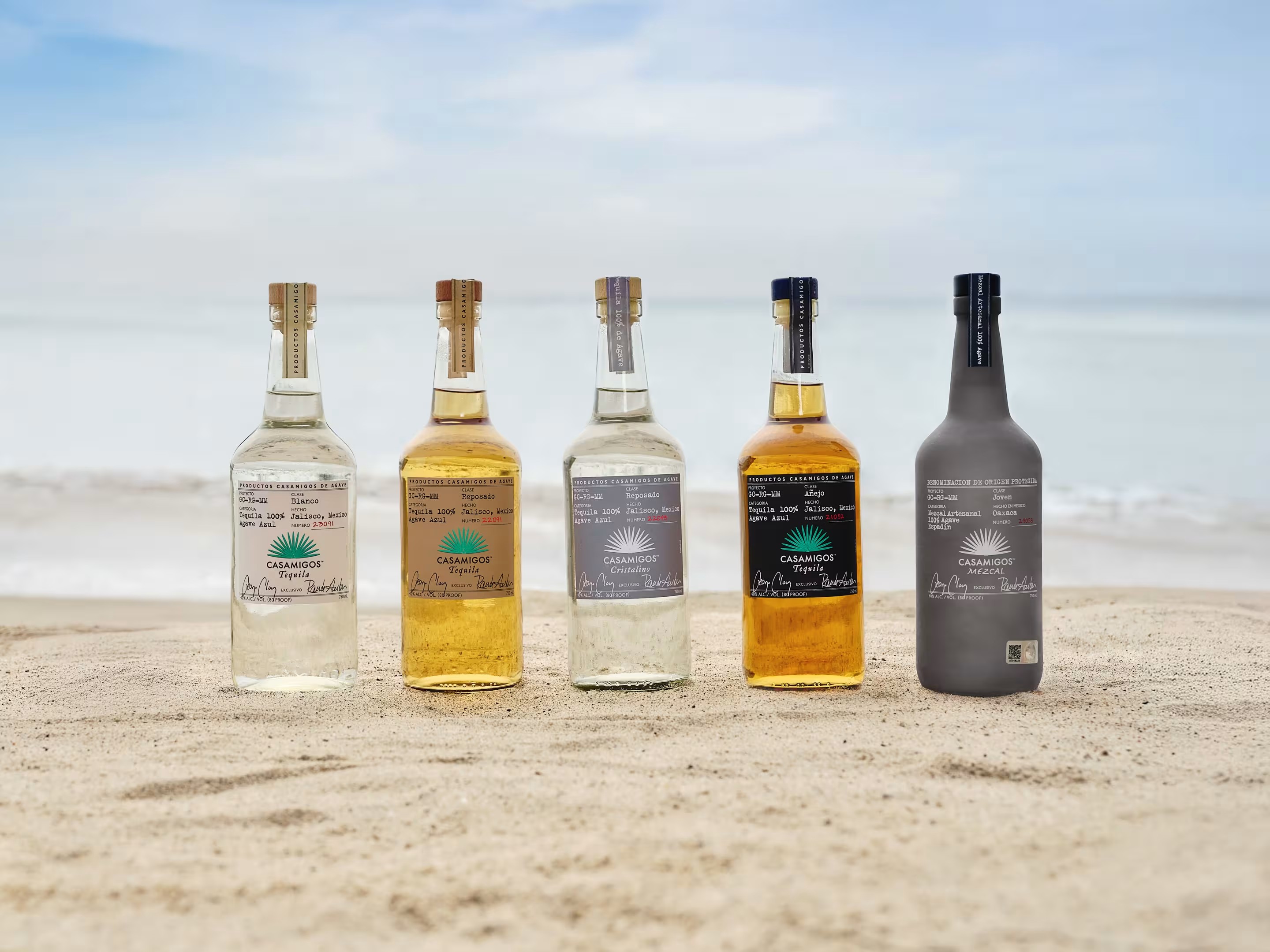
Casamigos, marketed by an American company, distilled entirely in Jalisco under Mexican law.
Every legal bottle of tequila carries a four-digit NOM number on the label, the Mexican government’s registration number for the specific licensed distillery that actually made it. The Consejo Regulador del Tequila, or CRT, is the body that actually issues and audits those NOM numbers, inspecting and certifying every registered producer against Mexico’s official tequila standard. American brands aren’t purely a marketing exercise layered on top of someone else’s product. Many lease production time at a named NOM-registered facility or contract a specific master distiller there, a real production relationship, just not an ownership one.
What America has instead is a real, separate legal category: agave spirits. The US Alcohol and Tobacco Tax and Trade Bureau formally recognizes it, distilled from at least 51 percent agave but made anywhere, mostly in California, Texas, Arizona, and Hawaii, using agave grown domestically or piñas and syrup imported from Mexico. These cannot legally be labeled tequila or mezcal, so producers use language like “American agave spirit” instead.
California has seen real growth here, partly because agave needs very little water, appealing during years of drought. Growers formed the California Agave Council, and the state passed a law requiring anything labeled “California agave spirit” to use only state-grown plants with no additives.
The bigger cultural point is this: America drinks far more tequila by volume than Mexico’s own domestic market does, and has built an entire industry of ownership, marketing, and money around a spirit it is legally barred from actually producing. That is an unusual kind of American relationship with a foreign spirit, enthusiastic consumption paired with real respect for the legal line around who gets to make it.
20. Gin, From Bathtub to Terroir
Prohibition gave American gin its reputation problem. Homemade batches were quickly redistilled grain alcohol cut with juniper oil and glycerin, mixed in whatever was on hand, sometimes literally in a bathtub because the tub’s faucet was the only one tall enough to fill a jug with water for cutting the alcohol.
After repeal, gin never fully recovered its domestic reputation the way whiskey and vodka eventually did. For decades it sat in a slightly old-fashioned corner of the bar, tied to 1950s dry martinis and not much else.
In 1982, Jörg Rupf founded St. George Spirits in Alameda, California, generally credited as the first small American craft distillery since Prohibition. It started with eau de vie, not gin, but became a genuine pioneer of what is now called New Western or International style gin: still built on juniper, but built around a wider, often local botanical bill instead of the classic London Dry formula.
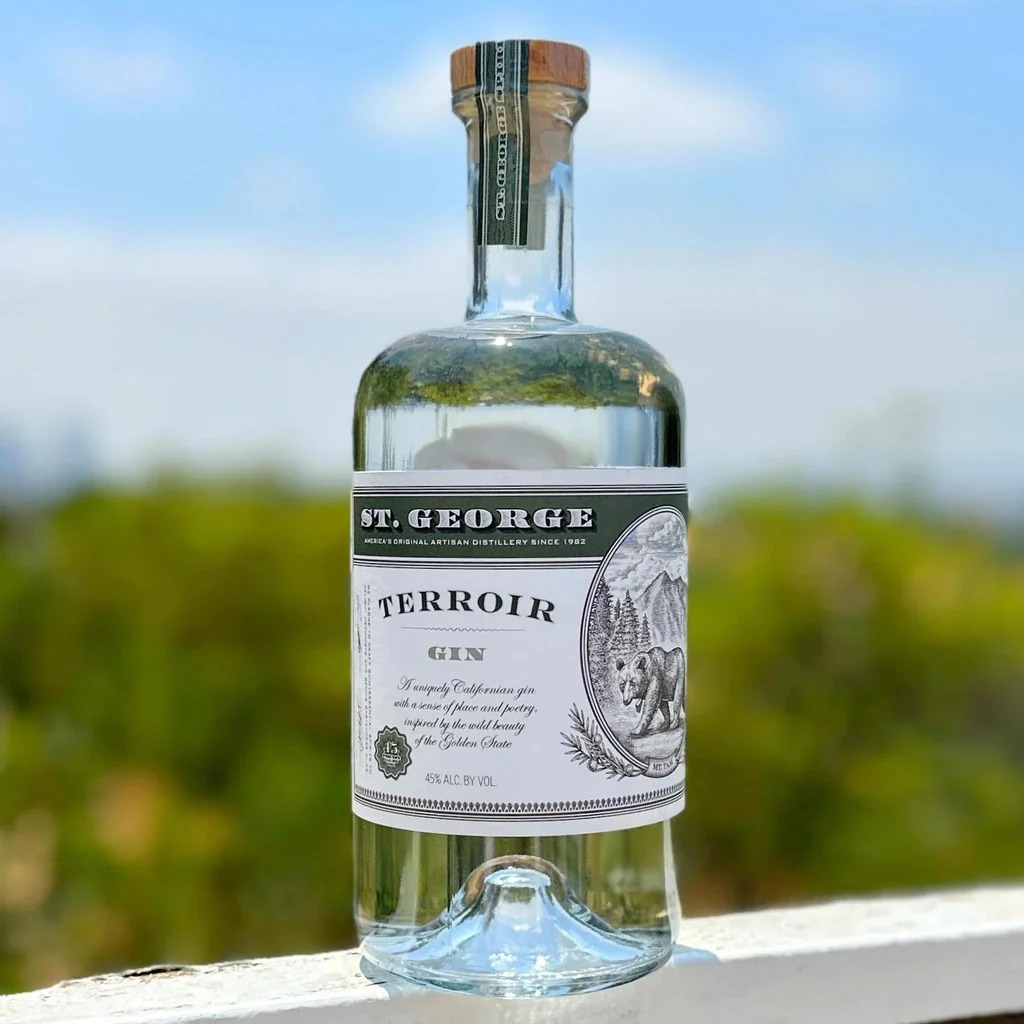
St. George’s Terroir Gin, built around Douglas fir, bay laurel, and coastal sage.
St. George’s Terroir Gin is a good example of the idea in practice. It is built around Douglas fir, California bay laurel, and coastal sage, a gin engineered to taste like a specific Northern California forest instead of a specific London recipe. That approach opened space for the wider American craft gin movement that followed over the next few decades, distilleries treating gin as a genuinely creative category rather than a fixed 18th-century formula.
21. Vodka, the Spirit Nobody Wanted, Then Everybody Did
Before 1940, vodka barely registered in American drinking, under 1 percent of total spirits consumption, mostly limited to Eastern European immigrant communities.
Smirnoff’s American story starts with the Smirnov family fleeing Russia after the 1917 Revolution. They spent decades failing to reestablish the brand in Europe, eventually sold US rights to a fellow Russian emigre, Rudolph Kunett, who also failed to make it work and sold the license in 1938 to John Martin of G.F. Heublein and Brothers for roughly $14,000.
In 1941, at the Cock ’n’ Bull restaurant in Hollywood, Martin had a warehouse full of Smirnoff nobody wanted. His friend Jack Morgan, who owned the Cock ’n’ Bull, had a warehouse full of unsellable house-brand ginger beer. A Russian immigrant named Sophie Berezinski showed up separately trying to unload 2,000 copper mugs made at her family’s factory back home. Between three unrelated surplus problems, the Moscow Mule got invented, credited variously to bartender Wes Price or to Martin and Morgan directly, depending on which account you believe.
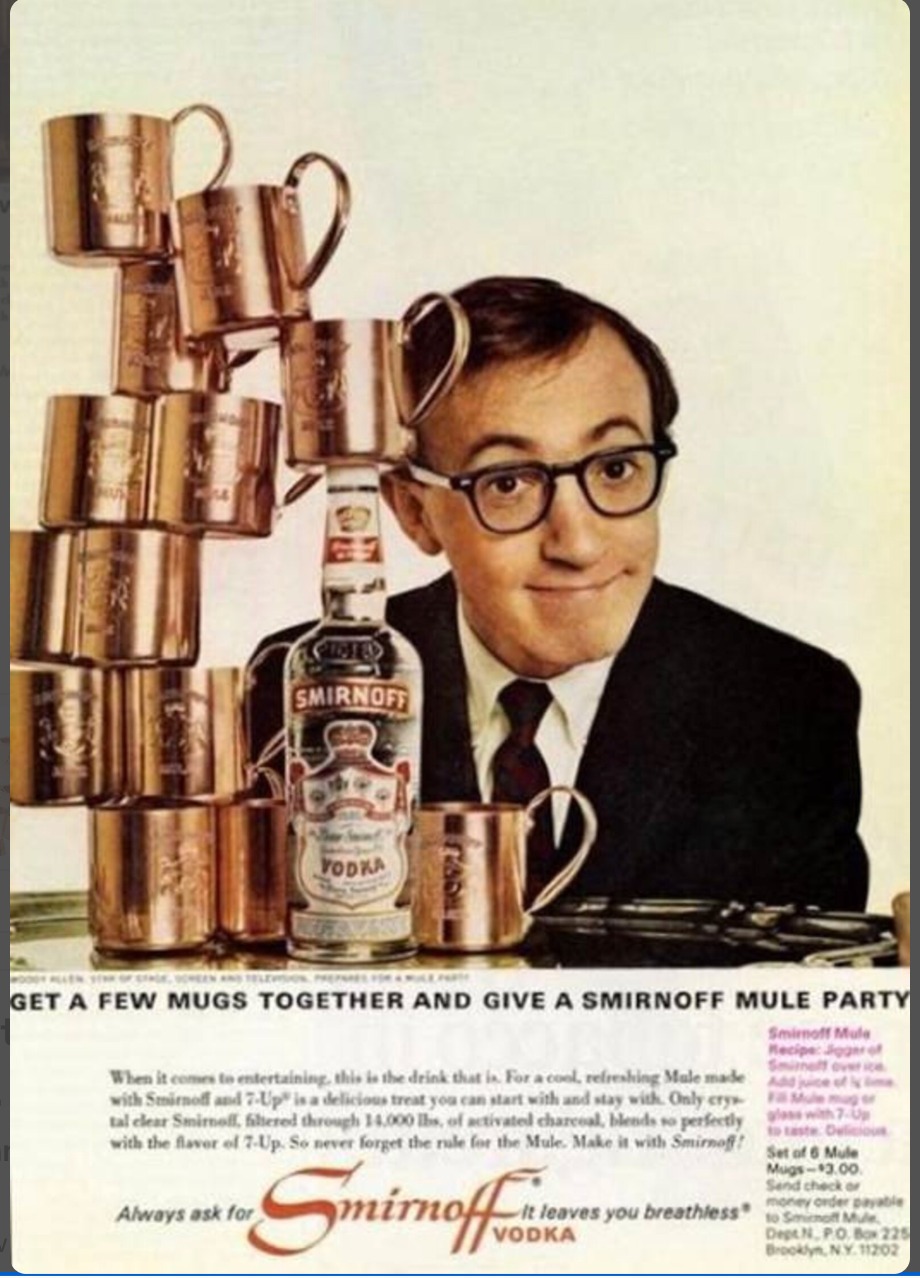
A vintage Smirnoff advertisement, pairing the bottle with the copper mug that helped launch it.
Martin then spent years driving around the country in person, photographing people drinking Moscow Mules in one city’s bars with a Polaroid camera, then showing that photo to the next bar as proof the drink was already catching on elsewhere. It worked. Smirnoff sales tripled between 1947 and 1950, then doubled again by 1951.
The bigger marketing move came a few years later. Smirnoff’s “It Leaves You Breathless” campaign, launched in the early 1950s, sold vodka on what it didn’t do: leave a smell on your breath. That pitch was aimed squarely at people who wanted a lunchtime drink their boss wouldn’t notice, and it did more to normalize daytime vodka drinking than the Moscow Mule ever did.
The Cold War hit the brand hard through the 1950s. A Russian-sounding name became a liability, and a New York bartenders’ union publicly boycotted it, even though Smirnoff had been distilled in Hartford, Connecticut the entire time, an irony that mostly got lost in the politics of the moment.
Vodka’s larger rise in America from there ran mostly on the fact that it carries almost no flavor of its own and mixes into anything, which made it the easiest spirit in the bar to build a marketing campaign around rather than a drinking tradition. It has been the best-selling spirits category in the US for decades since.
22. Liqueurs, the Supporting Cast
This category gets less space here on purpose, but there is more going on in it than one bottle.
The earliest American entries were not cocktail ingredients at all. Colonial-era bartenders and apothecaries steeped roots, bark, and bitter botanicals in alcohol and sold the result as medicinal tonics, the same impulse behind bitters generally. The shift toward liqueurs as cocktail components rather than tonics happened later, alongside the rise of American bartending itself.
Southern Comfort is the clearest entry from that shift. New Orleans bartender Martin Wilkes Heron created it in 1874 at McCauley’s Tavern, originally called Cuffs and Buttons, a whiskey base cut with peach, orange, cinnamon, and other spices to smooth out rough frontier-era whiskey. He patented the formula in 1889, and it won a gold medal at the 1900 Paris Exposition. It is technically a liqueur, not a whiskey, despite sitting on the shelf next to Jim Beam and Jack Daniel’s for a century and a half. For much of the mid-to-late 20th century, it quietly swapped its whiskey base for cheaper neutral grain spirit. The Sazerac Company, which bought the brand in 2016, restored an actual whiskey base in 2017, arguably closer to Heron’s original intention than the bottle had been in decades.
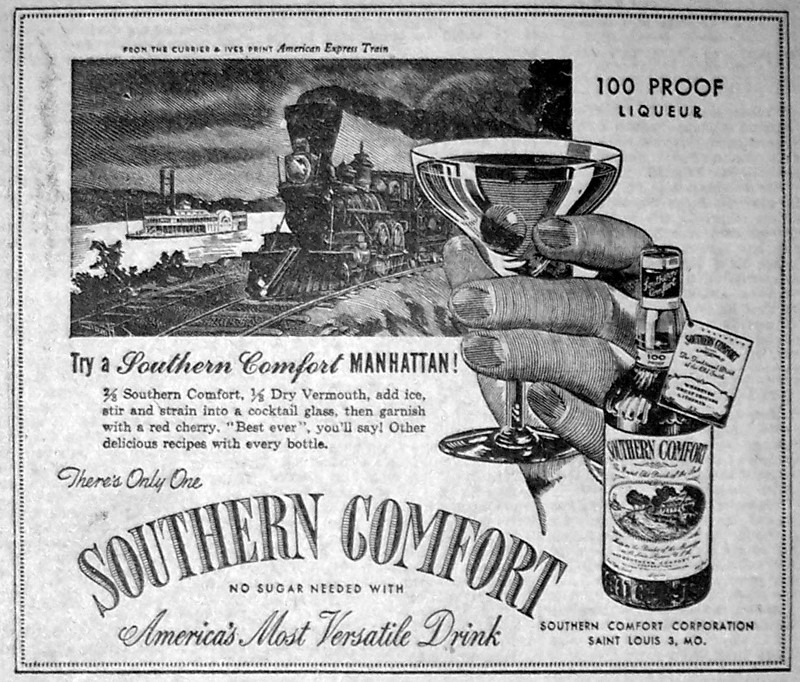
A vintage Southern Comfort advertisement, New Orleans era.
A handful of newer entries round out the picture, each solving a different regional problem. RumChata came out of a home kitchen in Wisconsin: Tom Maas developed his rum, dairy cream, cinnamon, and vanilla blend in 2007 and launched it in 2009 out of Pewaukee. It is now the second-best-selling cream liqueur in the country behind Baileys, built on Wisconsin dairy instead of Irish whiskey.
St. Elder took a different approach: a Massachusetts-made elderflower liqueur built as a domestic, lower-priced answer to St-Germain, the French elderflower liqueur that had already taken over American cocktail menus by the time St. Elder arrived.
Malort is the strangest entry and the one with the deepest immigrant roots. Swedish immigrant Carl Jeppson brought a bitter, wormwood-based bask brannvin recipe to Chicago in the 1920s and sold it door to door as a stomach tonic to get around Prohibition. The brand changed hands repeatedly over the following decades, and production actually left Chicago for Kentucky and then Florida for more than thirty years. Chicago’s own CH Distillery bought the brand in 2018 and brought production back to the city in 2019. It remains an overwhelmingly regional habit, a dare more than a drink, concentrated almost entirely in Illinois and the Midwest.
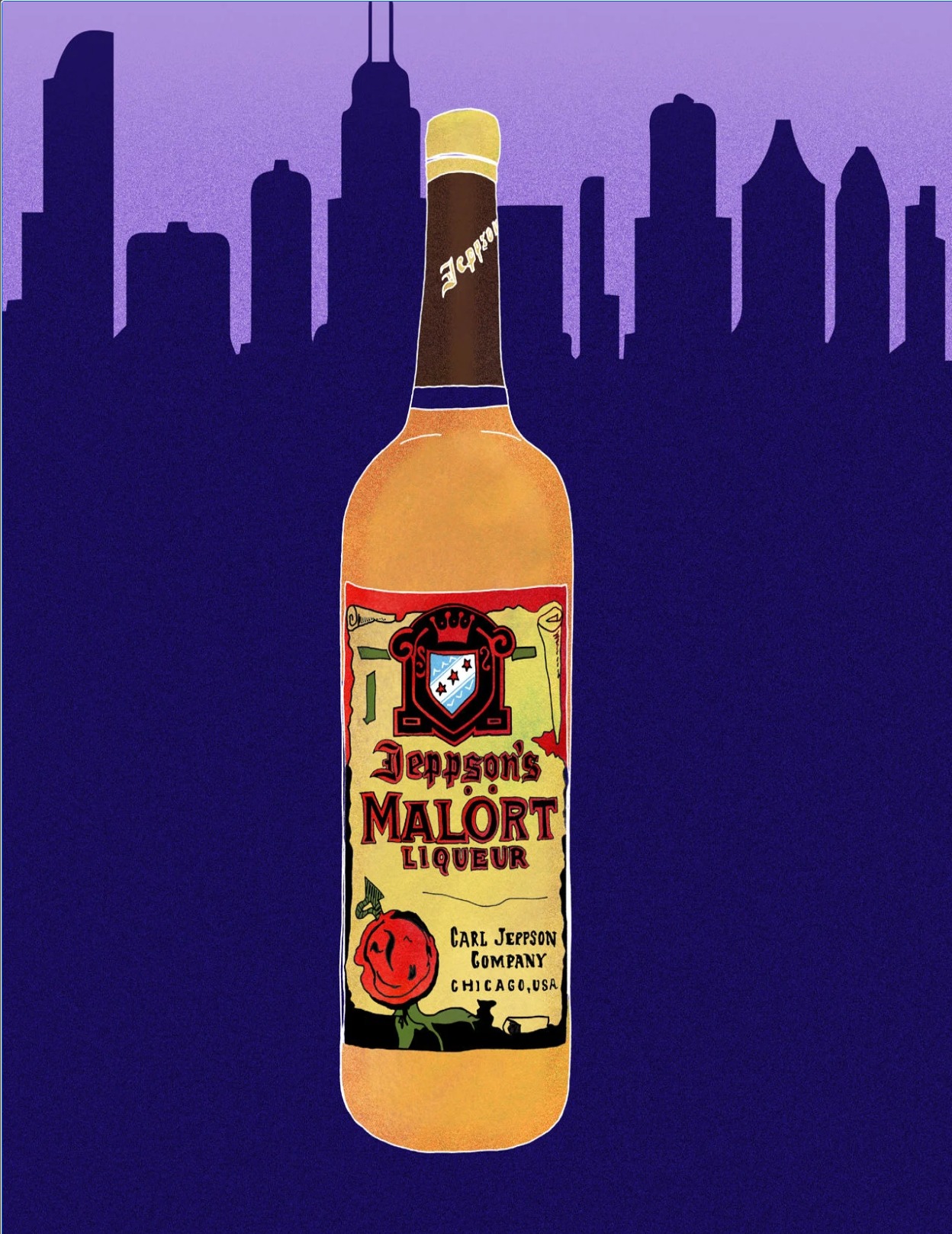
Jeppson’s Malort, still concentrated almost entirely in Chicago and the Midwest.
Sorel is a hibiscus liqueur out of Brooklyn, and it goes the other direction entirely from RumChata and St. Elder, reviving something old rather than inventing something new. Jackie Summers built it under the label Jack from Brooklyn, based on a Barbadian sorrel recipe his own grandparents carried to Harlem in the 1920s. It is a modern liqueur built on a genuine, generations-old Caribbean tradition rather than a new idea looking for a backstory.
Brooklyn has also become the center of an American amaro movement, small distillers making Italian-style bitter liqueurs with American ingredients and branding. St. Agrestis and Faccia Brutto, both based in Greenpoint, are the two most established names in that scene, alongside Forthave Spirits in Williamsburg.
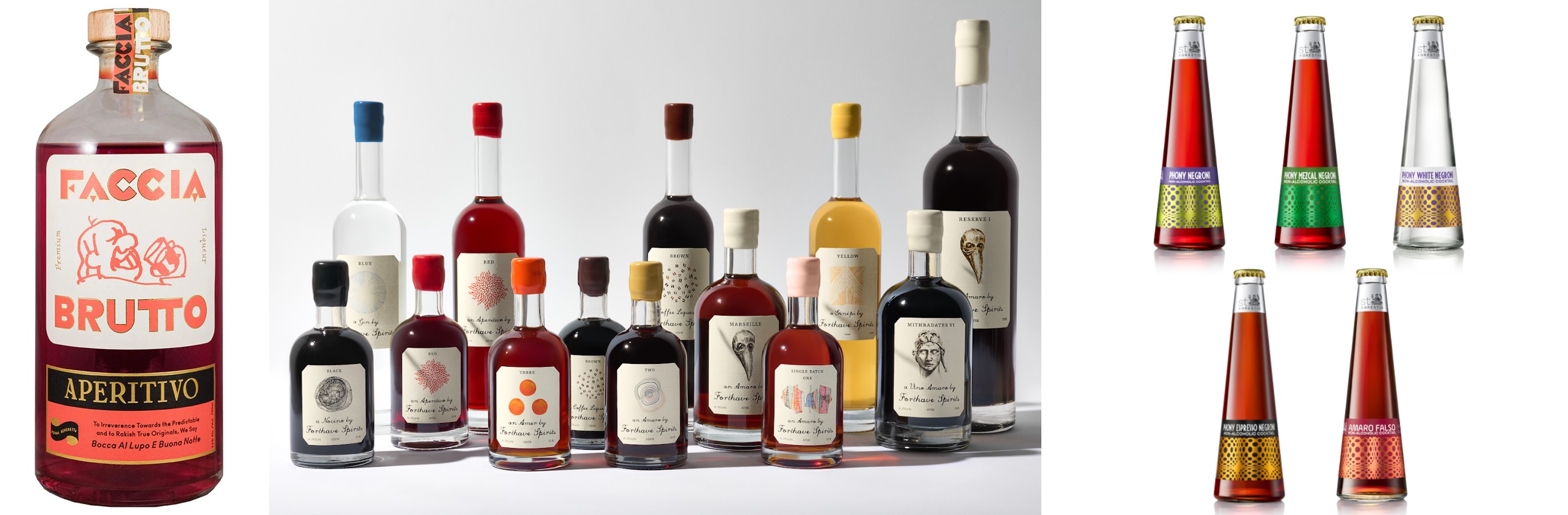
Brooklyn’s American amaro scene: St. Agrestis, Faccia Brutto, and Forthave Spirits.
None of this adds up to a founding myth the way rum or gin gets one. It is steady, regional demand solved differently depending on what was already on hand: Wisconsin dairy country, a Chicago immigrant neighborhood, a Barbadian family recipe carried to Harlem, a cluster of Brooklyn distillers chasing an Italian tradition. Each one grew out of a local market, not a founding story.
23. Native Distilling, Two Centuries Late
Every spirit in this piece so far was made legally, or illegally, by settlers and immigrants. Native nations were shut out of the industry entirely, and not by custom or lack of interest. It was federal law.
The Indian Intercourse Act of 1834 banned distilling on tribal land outright, part of a broader Jackson-era push framed as protecting Native communities from alcohol-related harm. In practice it also meant tribes could never legally build the same kind of spirits business that immigrant and settler communities were building right next door. The ban stood for 184 years.
Congress repealed it in 2018, after the Confederated Tribes of the Chehalis Reservation in Washington State pushed for the change. The Chehalis opened Talking Cedar Brewery and Distillery in 2020, the first distillery built on tribal land under the new law. Its Kayak Gin uses yarrow and fir tips, botanicals with a documented history in Native use in the region, alongside more conventional juniper.
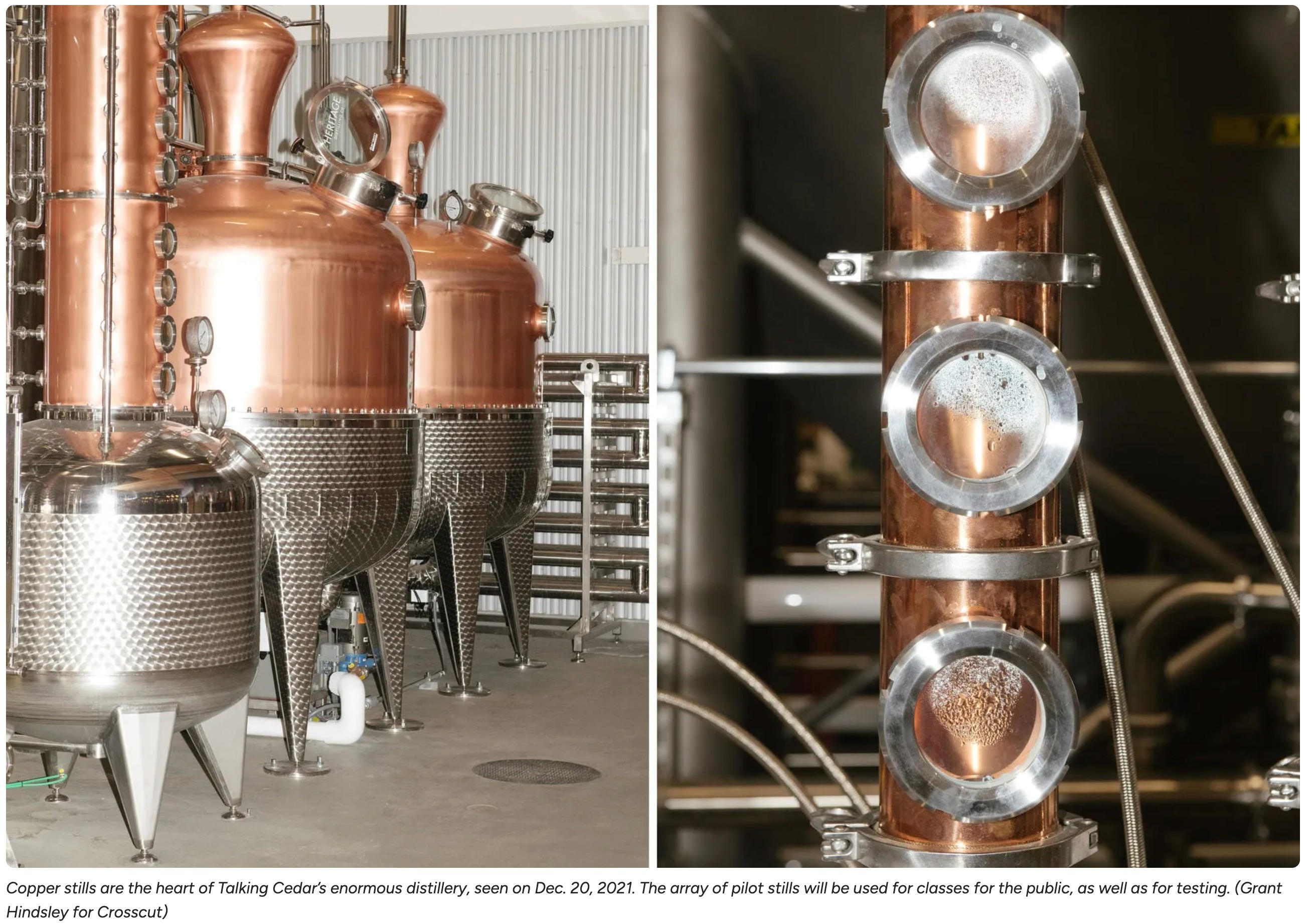
Stills at Talking Cedar, the first distillery built on tribal land since the 1834 ban was repealed.
Copper Crow Distillery, opened in 2017 by Curt and Linda Basina of the Red Cliff Band of Lake Superior Chippewa in Wisconsin, is generally credited as the first Native American-owned distillery in the country. It predates the 2018 repeal, though, and isn’t built on reservation trust land the way Talking Cedar is. Copper Crow makes a whey-based gin and vodka using dairy byproduct from a nearby Wisconsin creamery, along with rum and maple- and birch-sweetened spirits, maple sugaring itself being a technique colonists learned from Native communities centuries earlier. Heritage Distilling, a non-Native company based in Washington, has since built a network of partnerships with tribes across the Pacific Northwest and Midwest to help more of them enter the industry now that the door is legally open.
This is a young, small part of the American spirits story, a handful of distilleries a few years old, built on a door that stayed locked for nearly two centuries. It deserves its own chapter, not a mention folded into someone else’s.
Part 5 picks up with cigars, the oldest cash crop in this whole series and, in its own way, the most imported American industry of them all.
Dates Worth Knowing
- 1733: The Molasses Act taxes non-British Caribbean molasses
- 1750s: Massachusetts and Rhode Island distilleries together account for roughly three-quarters of colonial rum exports
- 1764: The Sugar Act attempts real enforcement, becomes a spark toward Revolution
- 1834: The Indian Intercourse Act bans distilling on tribal land
- 1874: Martin Wilkes Heron creates Southern Comfort in New Orleans
- 1917: The Russian Revolution forces the Smirnov family out of Moscow
- 1938: John Martin buys the US rights to Smirnoff for roughly $14,000
- 1941: The Moscow Mule is invented at the Cock ’n’ Bull in Hollywood
- 1974: Mexico establishes the Denomination of Origin for tequila
- 1982: Jörg Rupf founds St. George Spirits, the first modern American craft distillery
- 1994: NAFTA locks in the US and Canada’s legal ban on domestically made “tequila”
- 1997: Prichard’s Distillery in Tennessee becomes an early mover in the modern American rum revival
- 2011: Privateer Rum opens in Ipswich, Massachusetts, reviving the New England style
- 2013: Casamigos launches as a private tequila before demand forces it into commercial release
- 2017: Copper Crow Distillery opens in Wisconsin, generally credited as the first Native American-owned distillery
- 2018: Congress repeals the 1834 ban on distilling on tribal land
- 2020: Talking Cedar opens on the Chehalis Reservation, the first distillery built on tribal land under the new law
Houses and Brands Worth Knowing
Privateer Rum, Ipswich, Massachusetts, built specifically to revive the old New England distilling style.
Richland Rum, Georgia, the only American rum producer growing its own sugarcane on-site for distilling.
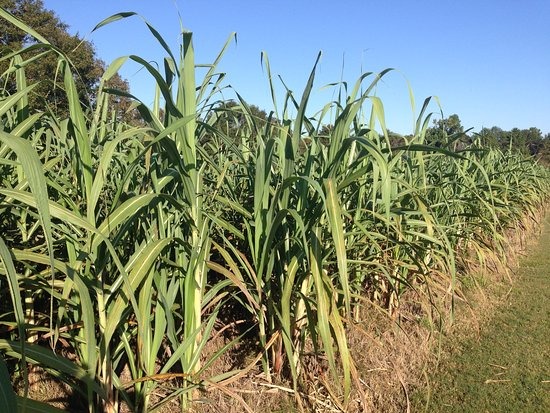
Richland Rum’s own sugarcane fields, the only American rum producer growing its own cane.
St. George Spirits, Alameda, California, the first modern American craft distillery, founded 1982.
Casamigos, distilled in Jalisco, Mexico, owned and marketed by an American company since 2013.
Southern Comfort, born in New Orleans in 1874, now produced in Kentucky by the Sazerac Company.
Talking Cedar, Chehalis Reservation, Washington, the first distillery built on tribal land after the 2018 repeal.
Copper Crow, Red Cliff Band of Lake Superior Chippewa, Wisconsin, generally credited as the first Native American-owned distillery in the country.
Recipes Worth Keeping
Scarlett O’Hara (Southern Comfort)
- 2 oz Southern Comfort
- 1 oz cranberry juice
- juice of ½ lime
- lime wedge to garnish
Method: Shake with ice. Strain into a highball glass over fresh ice. Garnish with a lime wedge.
Editorial note: commonly credited to 1939, timed to the premiere of Gone with the Wind. The origin story is widely repeated, not independently documented.
Alabama Slammer (Southern Comfort, amaretto, sloe gin)
- 1 oz Southern Comfort
- 1 oz amaretto
- 1 oz sloe gin
- 2 oz orange juice
- orange slice and cherry to garnish
Method: Shake hard with ice. Strain into a highball glass over fresh ice. Garnish with an orange slice and a cherry. Often served as a shot instead, without the ice.
Editorial note: credited to the University of Alabama, late 1960s to early 1970s. First appeared in print in the 1971 Playboy Bartender’s Guide as simply “Alabama,” made with lemon juice instead of orange juice. No single inventor is documented.
Chicago Handshake (Malort)
- 1 shot Jeppson’s Malort
- 1 Old Style beer
Method: Shoot the Malort. Chase with the beer. That’s the whole drink.
Editorial note: a boilermaker, not a mixed cocktail. Included because it’s the single most common way Malort is actually consumed in Chicago bars today.
Cinnamon Toast Crunch Shot (RumChata)
- 1 oz RumChata
- 1 oz Fireball Cinnamon Whisky
Method: Shake with ice or layer straight into a shot glass. Serve cold.
Editorial note: a modern bar invention, not historic, but the single most-ordered RumChata drink in the country and worth including for that reason alone.
Part 5
Tobacco is the oldest cash crop in this whole series, older than rum, older than the country itself. America’s role in cigars was never really about inventing the leaf. It was about growing a piece of it, housing the people who rolled it, and then, with one signature, cutting the whole industry off from its own source.
24. Tobacco Before Anything Else
Indigenous people across the Americas grew and smoked tobacco for centuries before any European ship arrived. English colonist John Rolfe planted a sweeter Trinidadian strain of it at Jamestown around 1612, after the colony had nearly starved to death trying to find something, anything, to sell back to England.
It worked. By 1617 Virginia was exporting 20,000 pounds of tobacco a year. That figure doubled the next year. Tobacco became Virginia’s currency in the most literal sense: colonial taxes, court fines, and government expenses were all paid in pounds of leaf. The crop exhausted soil fast and demanded constant labor, which is a direct line to why the Chesapeake became a plantation economy built on indentured servitude and then slavery, decades before rum’s version of the same story played out in New England.
None of that early Virginia leaf was cigar tobacco in the modern sense. It was pipe and chewing tobacco, grown for volume. The cigar-specific story starts somewhere else entirely: Cuba.
25. Ybor City, and the Cigars That Weren’t Quite Cuban
Cuban cigar manufacturing moved to American soil for the same reason a lot of industries relocate: tariffs and politics. Vicente Martinez Ybor ran a successful cigar factory in Havana, but Cuba’s war for independence and Spain’s tariffs on his own product made staying impossible. He shifted operations to Key West in the 1860s, then to a patch of undeveloped land outside Tampa in 1885, a company town that became known as Ybor City.
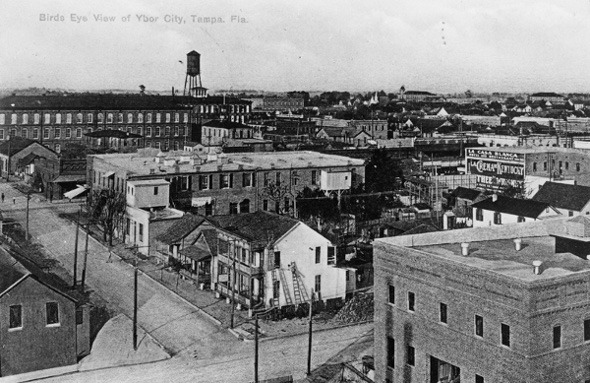
Ybor City, outside Tampa, around 1900, at the height of its cigar-manufacturing boom.
Thousands of Cuban, Spanish, and Italian immigrants followed the work. By 1910, more than two hundred factories in the Tampa area were rolling over a million cigars a day, entirely by hand, using leaf imported straight from Cuba. Tampa was, by any honest measure, a Cuban industry operating on American soil, not an American invention.
The legal name for what Tampa was making mattered too. Cigars rolled in the US from genuine Cuban leaf were sold as Clear Havanas, taxed as a domestic product purely because of where they were rolled, even though the tobacco inside and the flavor were entirely Cuban.
The most distinctive part of factory life, in Tampa and back in Havana itself, was the lector, a reader elected and paid by the workers to read aloud while they rolled. Lectors read newspapers, revolutionary tracts, and novels, all chosen by the workers, not the owners. Lectors reading radical labor material helped drive Ybor City’s major cigar strikes of 1920 and 1931, and Tampa’s factory owners banned the practice for good after the 1931 strike, replacing readers with radios. It was, in its own way, tiki’s cultural-borrowing question turned around: an imported Cuban tradition that shaped American labor history before American industry shut it down.
Havana’s own lector tradition produced a more famous footnote, and it belongs to Cuba, not Tampa. Rollers at Havana’s Particulares factory reportedly loved hearing Alexandre Dumas’s The Count of Monte Cristo read aloud. When Alonso Menendez bought that factory and launched a new brand in 1935, he named it after the novel: Montecristo. Two years later he bought Havana’s H. Upmann factory, founded in 1844 by a German banker named Hermann Dietrich Upmann, and moved Montecristo production there. Both names are still among the most recognized in cigars today, and neither one started as American. They are Cuban brands, split since 1960 between state-run production in Havana and exile-founded production in the Dominican Republic.
26. The One Leaf America Actually Grows
Cigar tobacco does have one genuinely American chapter, and it comes from an unlikely place: the Connecticut River Valley, a few hundred miles north of anywhere a cigar is usually associated with.
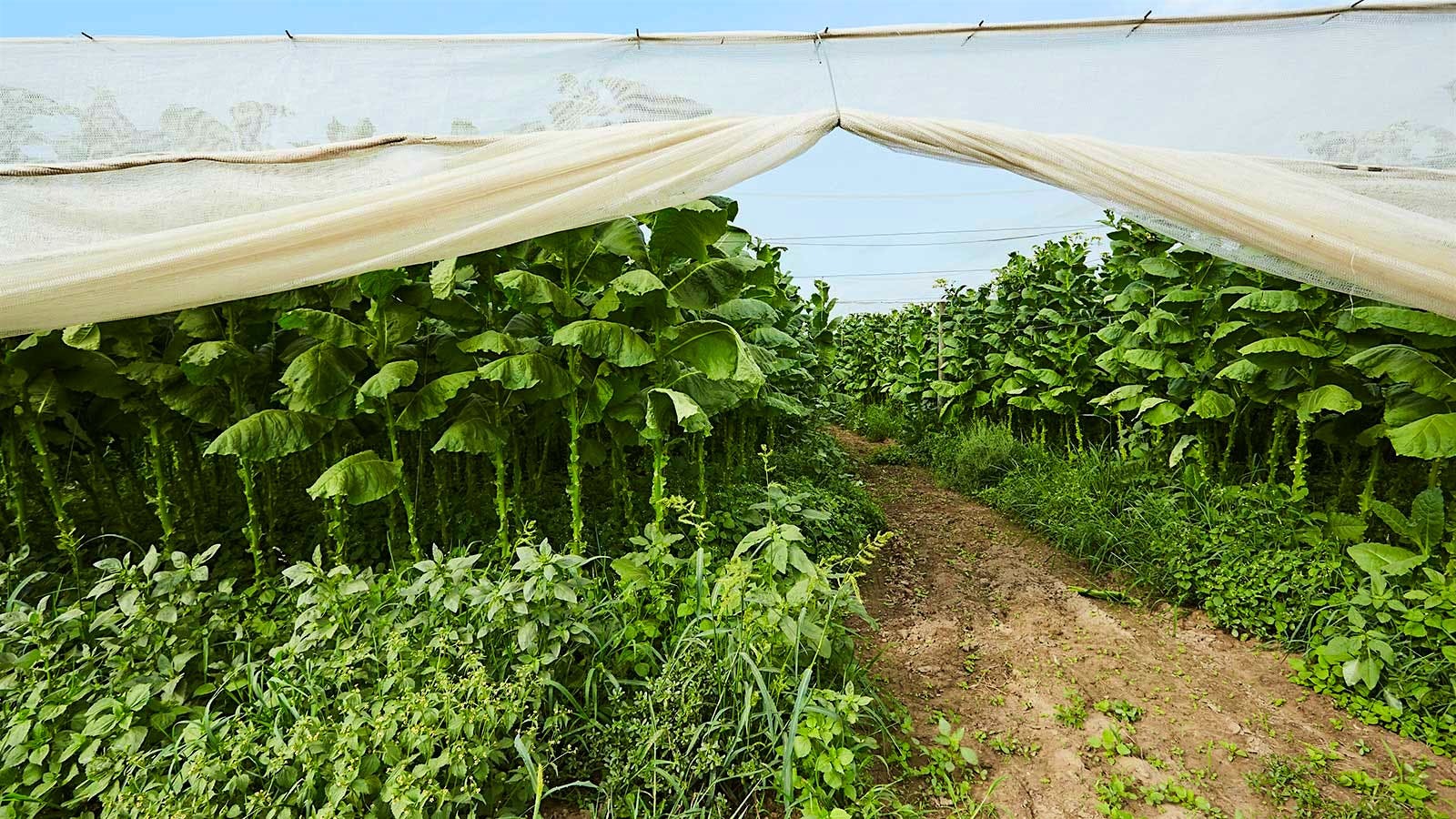
Connecticut shade tobacco growing under cheesecloth netting, mimicking Sumatra’s filtered light.
Farmers there had grown tobacco since the 1630s, originally for pipes. By the 1820s they’d shifted to cigar wrapper leaf, and by the early 1900s they were stretching cheesecloth tents over entire fields to grow tobacco in filtered shade, mimicking the growing conditions of Sumatra. The result, Connecticut Shade, became one of the most prized cigar wrappers in the world, mild and golden, wrapped around brands like Macanudo, Ashton, and the Dominican-made Montecristo line sold in the US today.
At its peak in the 1920s and 1930s, more than 20,000 acres of the Connecticut Valley were under cultivation. By 2025, true Connecticut Shade was down to 35 acres, all on a single farm in Massachusetts. Broadleaf, a related but different variety grown in full sun rather than under cloth, is a separate story: Connecticut and Massachusetts together still had roughly 3,000 acres of tobacco in cultivation as of the 2022 USDA Census of Agriculture, almost all of it broadleaf. Cheaper labor in Ecuador and Central America, using Connecticut seed but not Connecticut soil, took over most of the shade market specifically. The genuine article still exists, still commands a premium, and still can’t legally be grown anywhere else and called Connecticut Shade.
27. One Signature, One Industry, Overnight
On February 7, 1962, President Kennedy signed Proclamation 3447, banning all trade between the United States and Cuba, cigars included. According to his press secretary Pierre Salinger, writing about it thirty years later, Kennedy asked him the night before to quietly track down about a thousand of his favorite H. Upmann Petit Coronas. Salinger came back with twelve hundred. Only then did Kennedy sign the order.
That detail is one man’s account, not an official record. Better to flag that upfront than repeat it as settled fact. What’s not in dispute is what the embargo did next. Cuban-exile cigar makers who’d already fled after the 1959 revolution and 1960 nationalization, the same Menendez family behind Montecristo among them, rebuilt their brands from scratch in the Dominican Republic, Honduras, and Nicaragua. They carried their family names, their rolling techniques, and in some cases the same brand names, repurposed under new trademarks since Cuban ownership claims weren’t recognized under US law after nationalization.
That rebuilding is the entire premium cigar industry most Americans actually smoke today. Dominican and Nicaraguan tobacco, often finished in genuine or Ecuadorian-grown Connecticut wrapper, built on a foundation of displaced Cuban expertise. The embargo did not end the Cuban cigar. It just relocated the industry that grew up around it, permanently, to three other countries, while the original stayed frozen in place, still illegal to bring home, still mythologized because of it.
Cohiba shows what happens when the same name ends up on both sides of that split, and unlike Montecristo, this one is still being fought over. Cuba created Cohiba in 1966 as Fidel Castro’s personal cigar, supplied to him and top officials, and released it to the public in 1982. General Cigar registered the Cohiba trademark in the United States in 1978, years before Cuba ever sold the cigar commercially, and has sold a Dominican-made version here ever since. Cubatabaco sued to cancel that US trademark in 1997, and the case has swung back and forth in court for over 25 years. In May 2025, a federal district court ruled against General Cigar, upholding the cancellation of its federal registration. That doesn’t end the story on shelves, though. General Cigar’s common law trademark rights, built on decades of continuous sales, remain valid separately from the federal registration, and the company says its Cohiba will keep selling in the US as it has for nearly 50 years. Whatever happens on appeal, it is the clearest live example of exactly what this section is about: two companies, two countries, one name, and a legal fight the embargo made possible in the first place.
28. Miami, Where the Exile Industry Still Performs Itself
Tampa was the first American cigar city. Miami is the second, and it exists for an entirely different reason: the 1959 revolution, not 19th-century tariffs.
Simon Camacho opened Miami’s first cigar factory in 1961, two years after Castro took power and a year before the embargo. Three more exiles opened factories within months of each other in 1964, including Jose Orlando Padron, who rented a Little Havana storefront and rolled 200 cigars a day by hand after his family’s Cuban tobacco farms were confiscated. Ernesto Perez-Carrillo Sr., a former Cuban senator, followed in 1968 with El Credito Cigars, where the non-Cuban La Gloria Cubana brand was born.
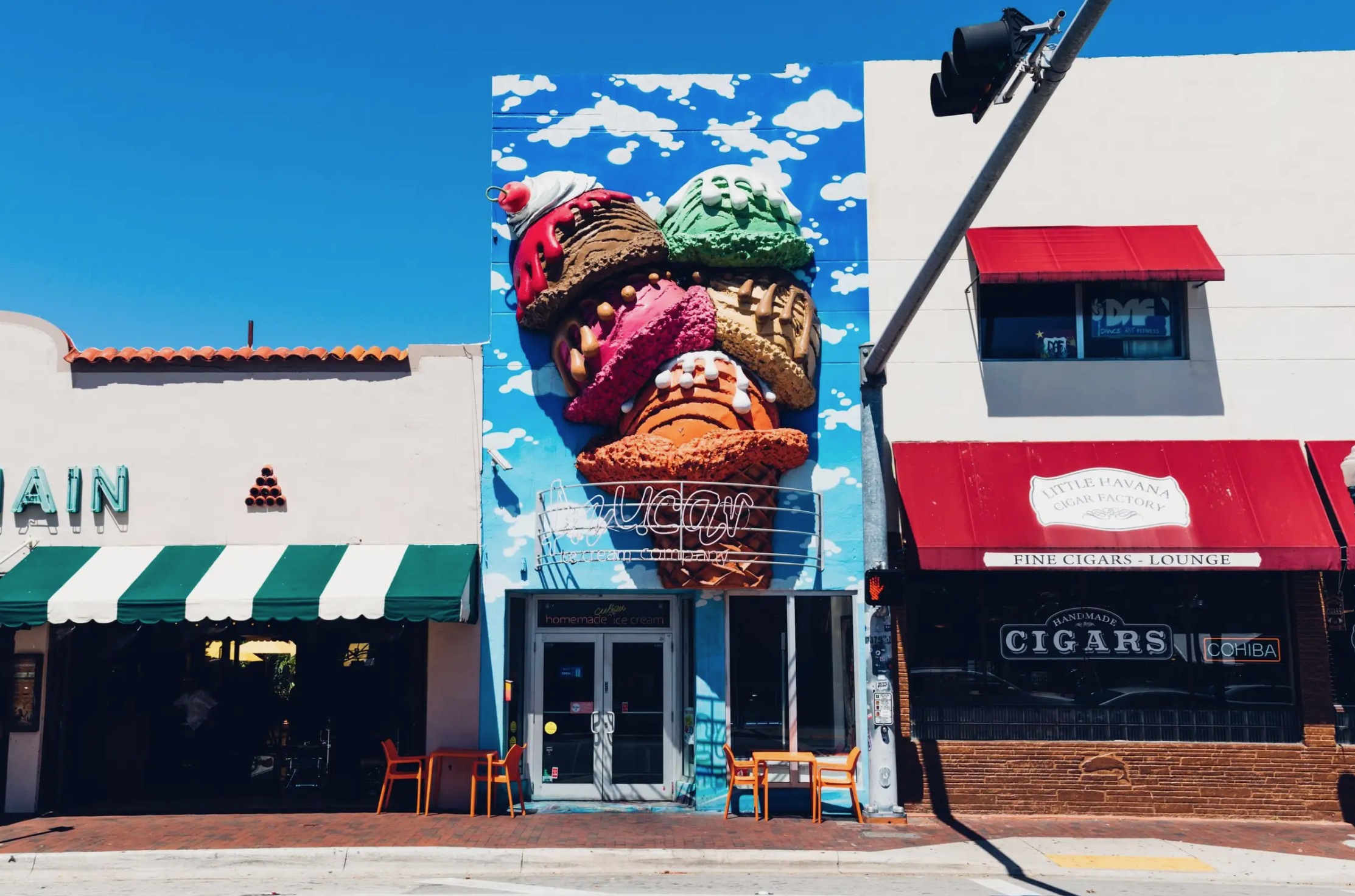
A storefront cigar roller on Calle Ocho, Little Havana, Miami.
Padron’s own story turned violent in 1978, after he traveled back to Cuba on a humanitarian visit that helped free thousands of political prisoners. A photo of him handing Castro a cigar reached Miami’s exile community, a boycott followed, and three bombs went off at his company headquarters. He kept the business running.
Almost none of that history changes the basic economics. Rolling a cigar in Miami costs roughly twenty times what it costs in Nicaragua, so nearly every major brand that started on Calle Ocho, Padron, La Gloria Cubana, Don Pepin Garcia’s Tatuaje, has since moved its real production offshore. What’s left in Little Havana today is smaller, closer to theater than industry: a strip of storefront fabricas where tourists watch Cuban-trained rollers work by hand, alongside cafecito windows and a game of dominoes in Maximo Gomez Park. It is the visible, tourist-facing remnant of an exile industry whose actual manufacturing has already moved on, much like Ybor City’s own relationship to Cuba a century earlier, just with the roles of visitor and source reversed.
The generation after the original 1960s exiles kept expanding who gets to be an American cigar maker at all. Rafael Nodal left Cuba as a teenager on the 1980 Mariel boatlift, spent four days at sea to reach Miami, and later built Aging Room into one of the highest-rated boutique brands in the country. Rocky Patel, an Indian-American who left a Hollywood entertainment law practice, and Steve Saka, who created the Liga Privada line before founding his own Dunbarton Tobacco & Trust, built major American cigar brands with no Cuban exile lineage behind them at all. By the 2000s, being an American cigar maker no longer meant being a Cuban exile specifically. It meant being any of the people the industry let in once the door was open.
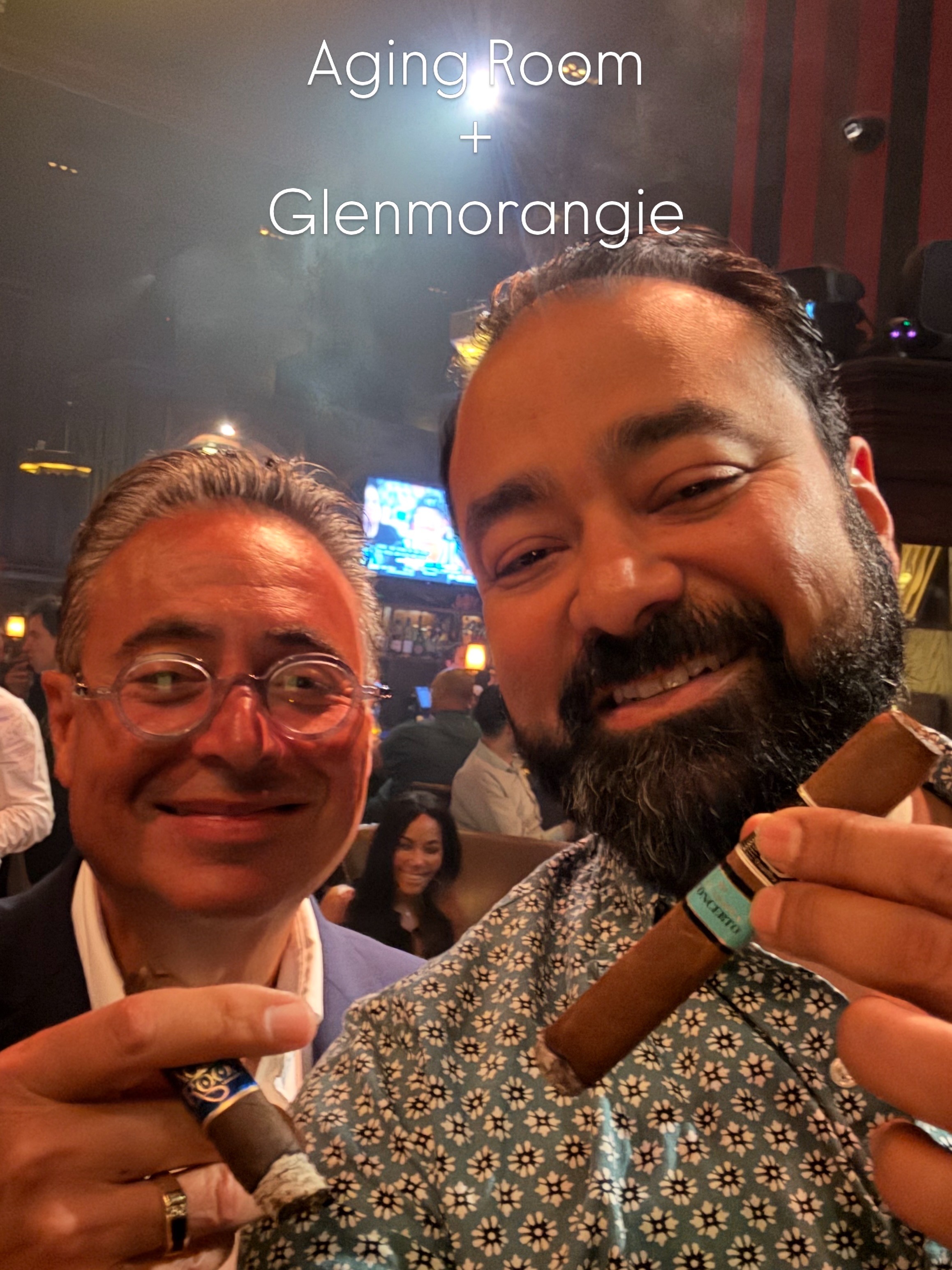
With Rafael Nodal at the Carnegie Club, at an Aging Room and Glenmorangie pairing.
Dates Worth Knowing
- 1612: John Rolfe plants the first commercially successful tobacco crop at Jamestown
- 1630s: Tobacco farming begins in the Connecticut River Valley
- 1820s: Connecticut Valley tobacco shifts toward cigar wrapper leaf
- 1869: Vicente Martinez Ybor opens a cigar factory in Key West, Florida
- 1885: Ybor relocates operations to what becomes Ybor City, outside Tampa
- 1900s: Connecticut farmers begin growing tobacco under cheesecloth shade
- 1920 and 1931: Major Ybor City cigar strikes, driven partly by lector-read material
- 1931: The lector tradition is banned in Ybor City factories after the strike
- 1935: Alonso Menendez launches Montecristo in Havana
- 1937: Menendez acquires the H. Upmann factory and moves Montecristo production there
- 1960: Cuba nationalizes the cigar industry; the Menendez family and others flee
- 1961: Simon Camacho opens Miami’s first cigar factory
- February 7, 1962: Kennedy signs the Cuban trade embargo, Proclamation 3447
- 1964: Jose Orlando Padron opens a Little Havana storefront that becomes Padron Cigars
- 1968: Ernesto Perez-Carrillo Sr. opens El Credito Cigars, birthplace of La Gloria Cubana
- 1978: Padron’s Miami headquarters is bombed after his humanitarian visit to Cuba
- 1978: General Cigar registers the Cohiba trademark in the US, four years before Cuba sells it commercially
- 1980: Rafael Nodal leaves Cuba as a teenager on the Mariel boatlift
- 1995: Rocky Patel founds what becomes Rocky Patel Premium Cigars
- 2015: Steve Saka founds Dunbarton Tobacco & Trust after creating Liga Privada at Drew Estate
- 2025: The US Trademark Trial and Appeal Board rules against General Cigar in the Cohiba trademark case
Houses and Brands Worth Knowing
Ybor City, Tampa, Florida, the historic center of American cigar manufacturing, now a National Historic Landmark District.
The Connecticut River Valley, the only place on earth that can legally call its tobacco Connecticut Shade, still supplying wrapper leaf to premium cigar brands worldwide.
Padron Cigars, founded from a Little Havana storefront in 1964, production long since moved to Nicaragua, company headquarters still in Miami.
El Credito Cigars, Calle Ocho, Miami, birthplace of the La Gloria Cubana brand in 1968, still rolling cigars on site for visitors today.
Cohiba (US version), an American trademark since 1978, made in the Dominican Republic and sold by General Cigar since decades before Cuba's own Cohiba ever reached the public.
Aging Room, founded by Rafael Nodal, a 1980 Mariel boatlift exile, now one of the most decorated boutique cigar brands in the country.
Rocky Patel Premium Cigars, Naples, Florida, founded by Indian-American entrepreneur Rakesh “Rocky” Patel after he left a Hollywood legal practice.
Dunbarton Tobacco & Trust, founded by Steve Saka, creator of Drew Estate’s Liga Privada line before starting his own company in 2015.
29. Where This Leaves Things
None of the spirits in this series started as American inventions. Whiskey came from Scots-Irish immigrant distillers. Rum came from Caribbean sugar plantations. Tequila is Mexican, protected as Mexican by law. Gin, vodka, and liqueurs each trace back to European roots brought over by immigrants too. Tobacco came from indigenous farmers, long before cigars existed as their own category. America took each one and built an industry or a marketing machine around it.
Perfume tells the same story from a different angle. America didn’t invent fragrance either, but Estée Lauder built an empire on it starting in 1946, and the marketing machine around it, books, theater, film, music, and now platforms, sells both spirits and perfume today at a scale that outpaces what America actually owns.
Tiki took that pattern furthest of all. It was a total fabrication built in a converted Hollywood storefront, and it now has a working museum of itself in Tokyo and a bar in Munich that’s been open since 1971. The rum blend behind it, invented by a man who had barely visited the Pacific, is still on drink menus in London, Berlin, and Hong Kong today. The cigar embargo on Cuba runs that same idea backward. One signed proclamation relocated an entire country’s cigar industry to three other countries within a few years. American companies now own the marketing and distribution rights to a spirit, tequila, they are legally barred from distilling on their own soil.
Spirits and perfume run on two different clocks. Spirits go back to before the country existed. Perfume goes back about eighty years. Both run on immigrant founders anyway: Laird, the Shapira brothers at Heaven Hill, Estée Lauder, Ralph Lauren.
The one group excluded from all of this was the one that grew tobacco here first. Native nations were barred by federal law from distilling on their own land for 184 years, a restriction that only lifted in 2018. Every other tradition in this piece got exported, borrowed, or sold back to the world in some form. That one was blocked at the source until a few years ago.
Here’s where I’d like to see that go next. Alcohol and tobacco have caused real, documented harm in Native communities, on land that was taken from those same communities in the first place. I’d like to see the companies built on that land, and on that history, put real money behind treating alcoholism and tobacco-related cancers in Indian Country, not as a marketing gesture but as an ongoing commitment. I’d also like to see more of what Talking Cedar and Copper Crow are already doing: distilleries built on actual Native ownership, using techniques and ingredients with real roots in Native communities, not just tribal land hosting someone else’s brand.
The faces selling all of this still skew narrow. Depp, Pitt, McConaughey, Dylan, that’s the roster of top-dollar endorsement deals this series found, and almost none of them are immigrants in a story built almost entirely on immigrant founders. Perfume has its own version of that same gap. Niche houses have built real audiences through social media since Barneys closed. They deserve real department store space for it, and real transparency in sourcing across niche, designer, and clone houses alike. Whiskey already has a model worth following. Small distilleries are leading on sustainable practices, local grain, spent mash reuse, less water waste. Bigger houses still treat it as a marketing angle instead of catching up. I want that same standard everywhere in this series, spirits, perfume, tobacco alike: sourcing and sustainability as the default, not a footnote, the same way Bottled-in-Bond made honesty the default a century ago.
America turns 250 this year. I feel more hope than worry about what happens next. The Lairds, Nathan Green, Estée Lauder, Donn Beach, José Orlando Padrón, Rafael Nodal, none of them set out to build an industry. They just kept working, and it added up over decades or centuries, depending on where you start counting. I think the next 250 years get built that way too, by people nobody’s watching yet. I’m glad to be around for the start of it.