Key Takeaways
- Five tiki drinks beyond the Zombie and the Mai Tai are the Painkiller, Jungle Bird, Navy Grog, Hurricane, and my own build, the Peat Bog Cutter.
- Most of these drinks have origin stories with real gaps in them. The Jungle Bird's usual 1978 creation date is likely wrong by five years, and Death & Co's own bartender says his Bog Cutter is closer to a Mai Tai than the fog cutter it's named for.
- The scent is Teddy The Perfumer Leather Paradise, #1010 in my perfume collection. Its notes, coconut, rum, pineapple, sea salt, amber, and vanilla, touch a piece of every drink in this lineup instead of matching just one glass.
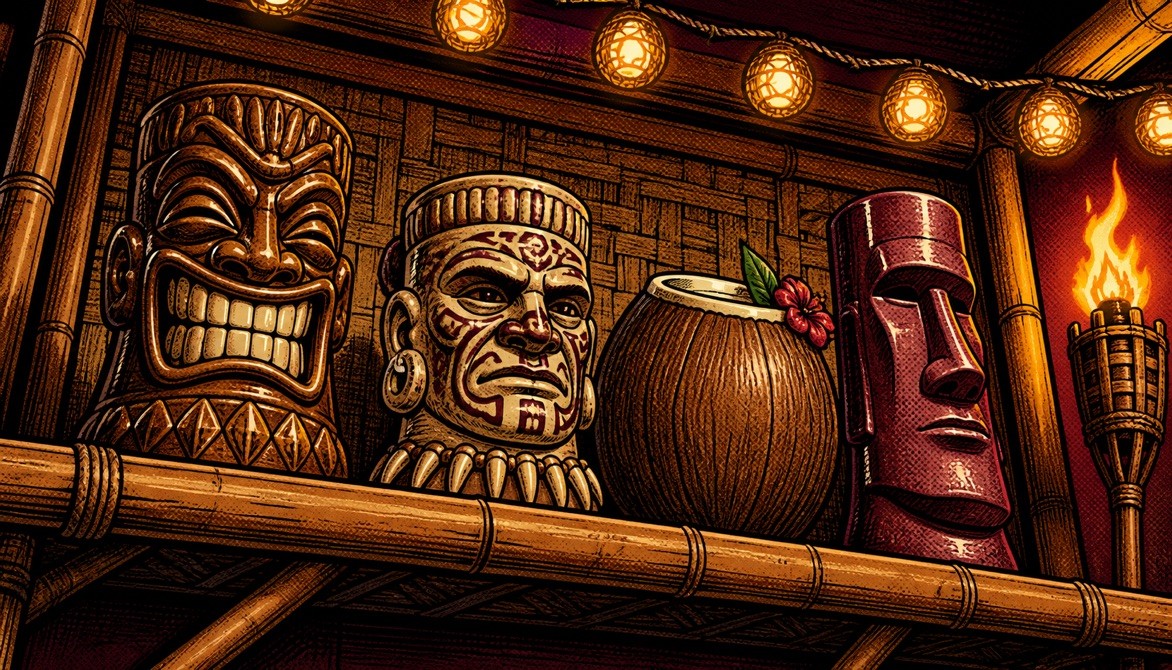
Tiki gets a full history already in this Journal, Don the Beachcomber, the Mai Tai war, Trader Vic's, all of it in Part 3 of America's 250th. This one takes a different angle: five drinks worth actually making, and the mugs they're traditionally served in.
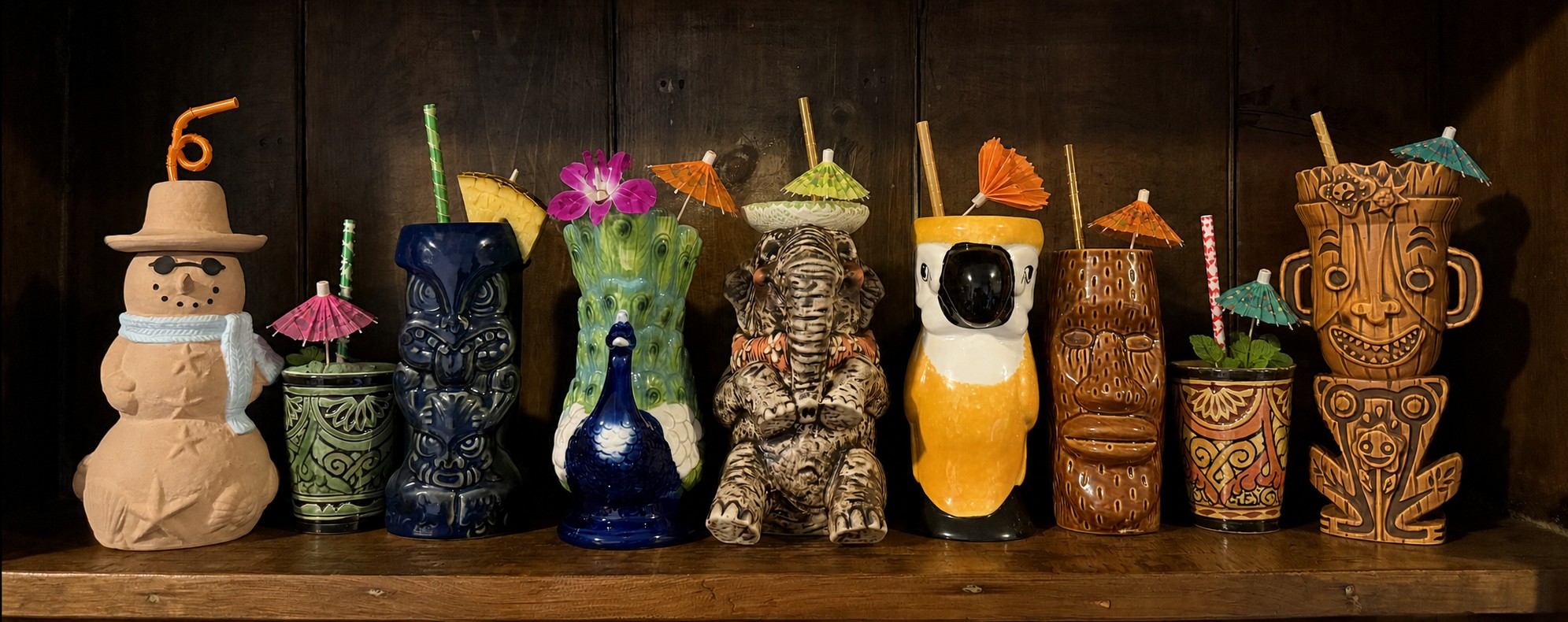
The mugs these five drinks are traditionally served in.
The Mugs of Tiki
The earliest known tiki mug in the world isn't even American. It's a 1949 New Zealand piece called Ruru and Weku, part of Crown Lynn's Wharetana Ware range, designed by Harry Hargreaves and drawing on Māori design work, years before anything like it showed up stateside. Don the Beachcomber's own early menus stuck to plain glassware, with a few specialty pours going into hollowed-out pineapples and coconuts instead. Trader Vic's 1947 Bartender's Guide illustrated thirty different drink vessels, and only four were ceramic: a skull mug, a scorpion bowl, a kava bowl, and a tall Fog Cutter mug, the same drink my own Peat Bog Cutter riffs on below. Sven Kirsten, the historian behind the field's standard references, calls the true tiki-shaped mug's exact origin "shrouded in mystery," tracing its spread loosely back to the elaborate drink presentations at Beach's own bar. He tells one story about Salvador Dali visiting early on and assuming the garnish work had been staged just for him.
The sculptural mugs collectors chase today, grinning gods, tattooed headhunters, came later, once import houses like Otagiri Mercantile and Orchids of Hawaii started bringing ceramic tiki ware over from Japan through the 1950s and 60s, the two companies responsible for most of what's now considered classic. None of the mugs and glasses on my own shelf are especially rare. Most tiki mug value comes down to edition size and condition, not age, a ceramic god from a swap meet is worth whatever someone will pay for it. Real rarities move real money, though, one Parksmith Fertility Goddess Decanter was appraised at over $5,000 in 2019.
Some mugs are tied to a specific drink by design, not preference. Trader Vic's own Port Light Glass, red glass with gold detailing, made by the Imperial Glass Company, has a green twin called the Starboard Light. Port and starboard, the running lights on a ship's bow, red on the left and green on the right. It's the kind of detail that only clicks once you know a Navy Grog is sitting in front of you.
I'm not chasing rare mugs the way I chase a fragrance bottle I don't have yet. But the shelf keeps growing anyway, one grinning god and one ceramic parrot at a time, for the same reason the bottles do. You find one you like, and then you want to know where it came from.
A Special Scent for a Special Day
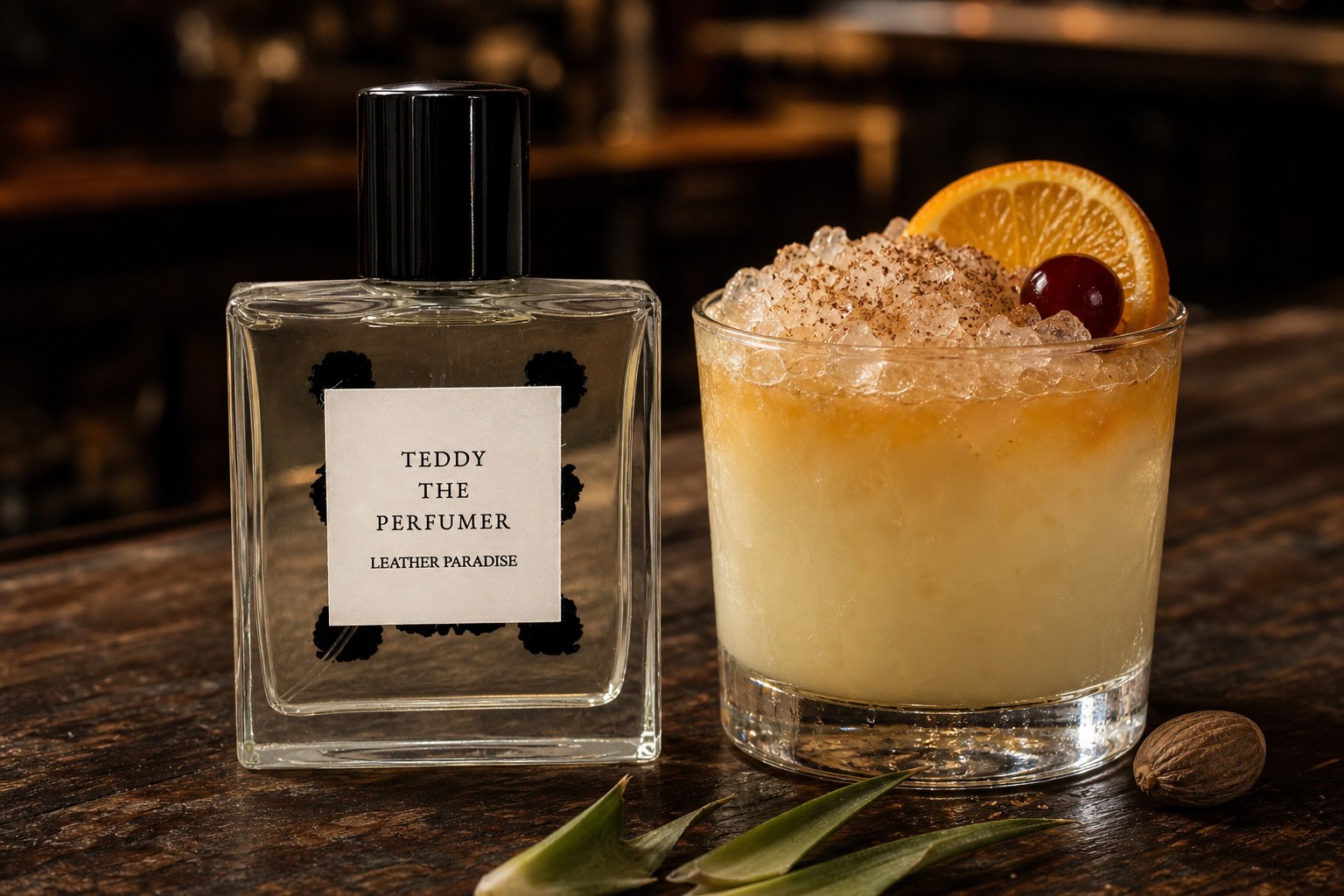
I have the perfect scent paired with the day and the drinks. Teddy The Perfumer Leather Paradise, #1010 in my perfume collection, is what I chose to wear on International Tiki Day itself. Coconut, rum, pineapple, sea salt, amber, and vanilla, all sitting in one bottle, touch a piece of every glass here. The Painkiller especially, still one of my favorite cocktails outside tiki entirely, felt right paired with something I chose on purpose.
The Recipes
1. The Painkiller
Pusser's Rum
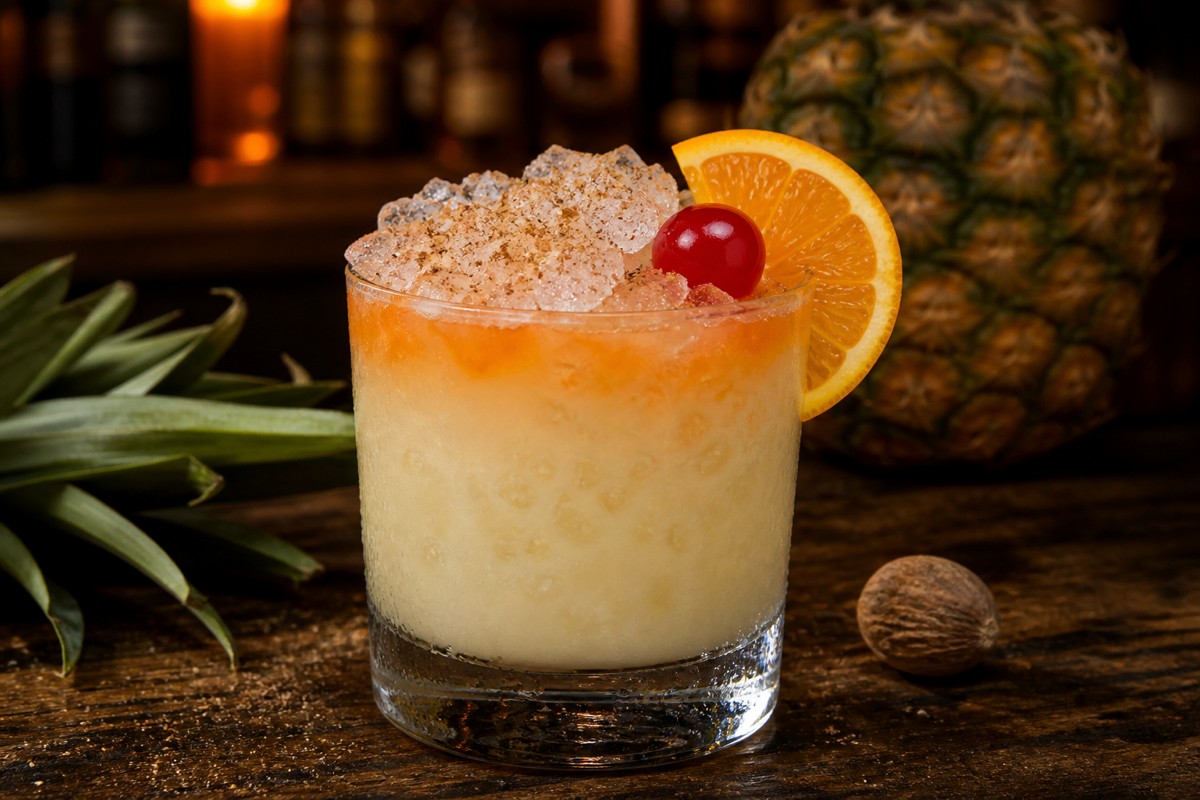
Daphne Henderson invented the Painkiller at the Soggy Dollar Bar on Jost Van Dyke in the British Virgin Islands, a bar reachable only by swimming ashore, which is how it got its name. She refused to share her recipe. Pusser's Rum founder Charles Tobias spent two years trying to reverse engineer it before landing on a 4-1-1-1 ratio, pineapple to cream of coconut to orange juice, plus rum. When he brought his version back to her bar, ten of her own regulars picked his over hers.
The Painkiller
- 60ml (2oz) Pusser's Rum
- 120ml (4oz) pineapple juice
- 30ml (1oz) cream of coconut
- 30ml (1oz) orange juice
- Ice
- Glass: Rocks glass, crushed ice
Method: Shake all ingredients hard with ice. Strain into a glass filled with crushed ice. Grate fresh nutmeg over the top, garnish with an orange slice and a cherry.
Pusser's is the official, trademarked base here, so this is the real recipe, not a version of it. If you don't have Pusser's, a 50/50 blend of Smith & Cross and Appleton Estate 8 gets you close, full-bodied and rich enough to stand in for the real thing.
2. The Jungle Bird
Smith & Cross Jamaican Rum
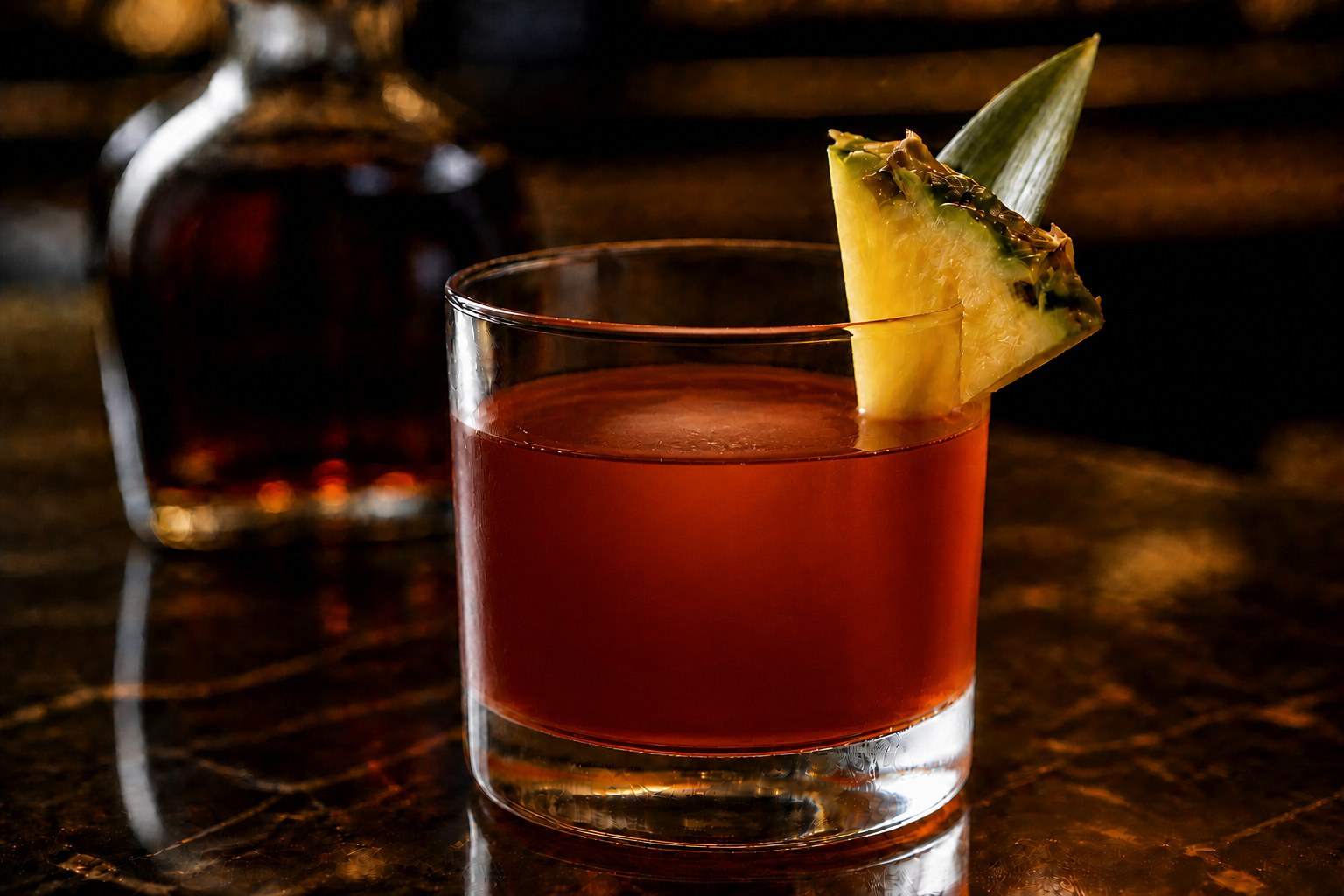
The story usually told is that Jeffrey Ong, beverage manager at the Aviary Bar in the Kuala Lumpur Hilton, invented this in 1978. Former hotel staff corroborate Ong as the creator, but the hotel itself opened on July 6, 1973, five years earlier than the date usually printed. The original recipe did not appear in print until a 1989 bartending guide, and nobody has been able to track Ong down to confirm any of it directly. The drink is real. The exact story around it is looser than most tiki lore admits.
The Jungle Bird
- 45ml (1½oz) Smith & Cross Jamaican rum
- 22ml (¾oz) Campari
- 22ml (¾oz) fresh lime juice
- 15ml (½oz) simple syrup
- 45ml (1½oz) pineapple juice
- Ice
- Glass: Rocks glass
Method: Shake all ingredients hard with ice. Strain over fresh ice into a rocks glass. Garnish with a pineapple wedge or leaf.
3. Navy Grog
El Dorado 12 Year
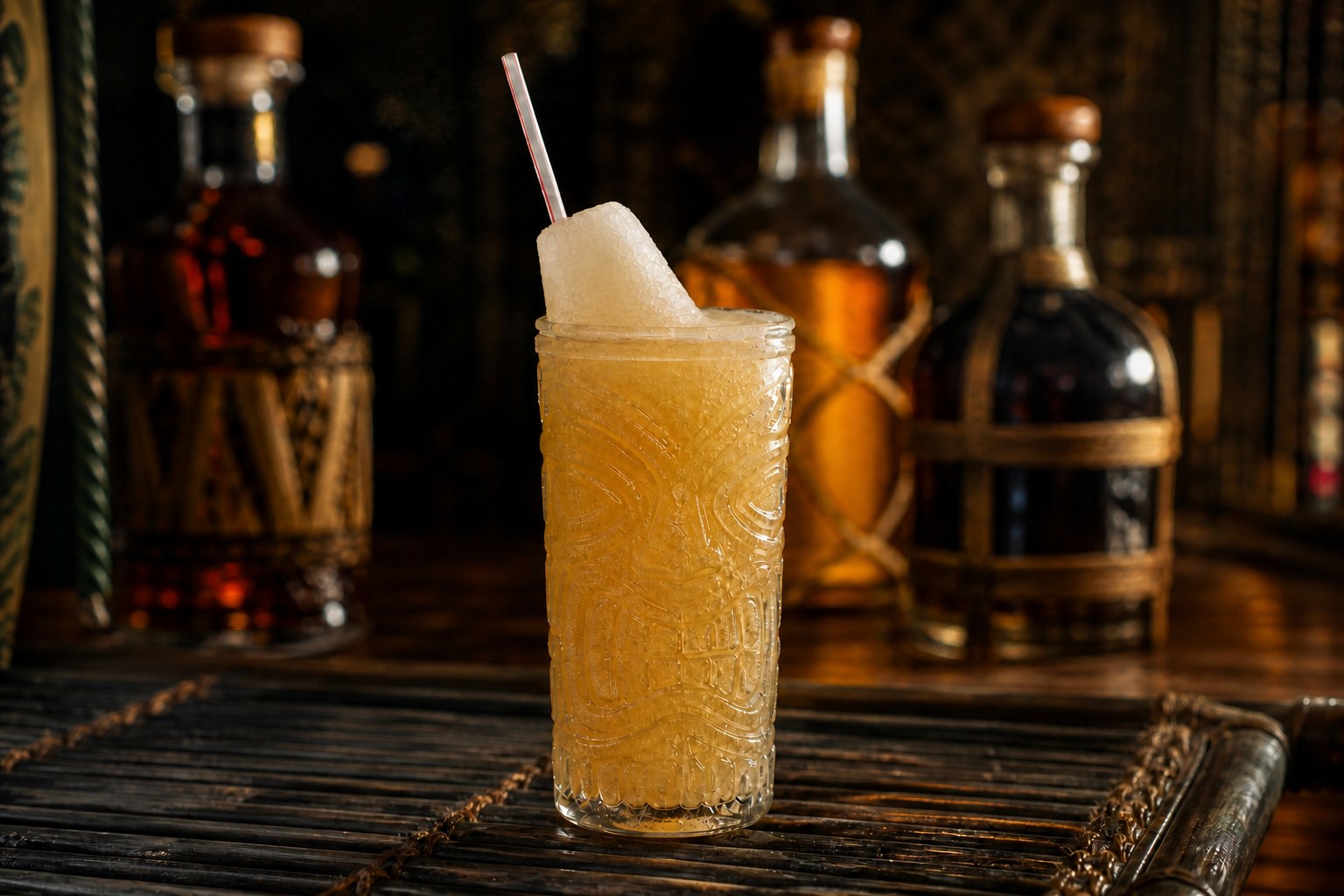
Don the Beachcomber contributed this formula to a U.S. Navy charity cookbook in 1950. Jeff "Beachbum" Berry's modern version, the one that usually gets made in bars today, added club soda and came out of a technique he picked up from bartender Dennis Quan at the Sampan in the 1990s: pre-mixing honey and water into a syrup instead of trying to dissolve raw honey into a cold shaker every time. My own build skips the soda and adds a cinnamon syrup instead, closer to the spiced, no-soda version Beach himself was serving before Berry's era.
4. The Hurricane
Mount Gay Barbados Rum
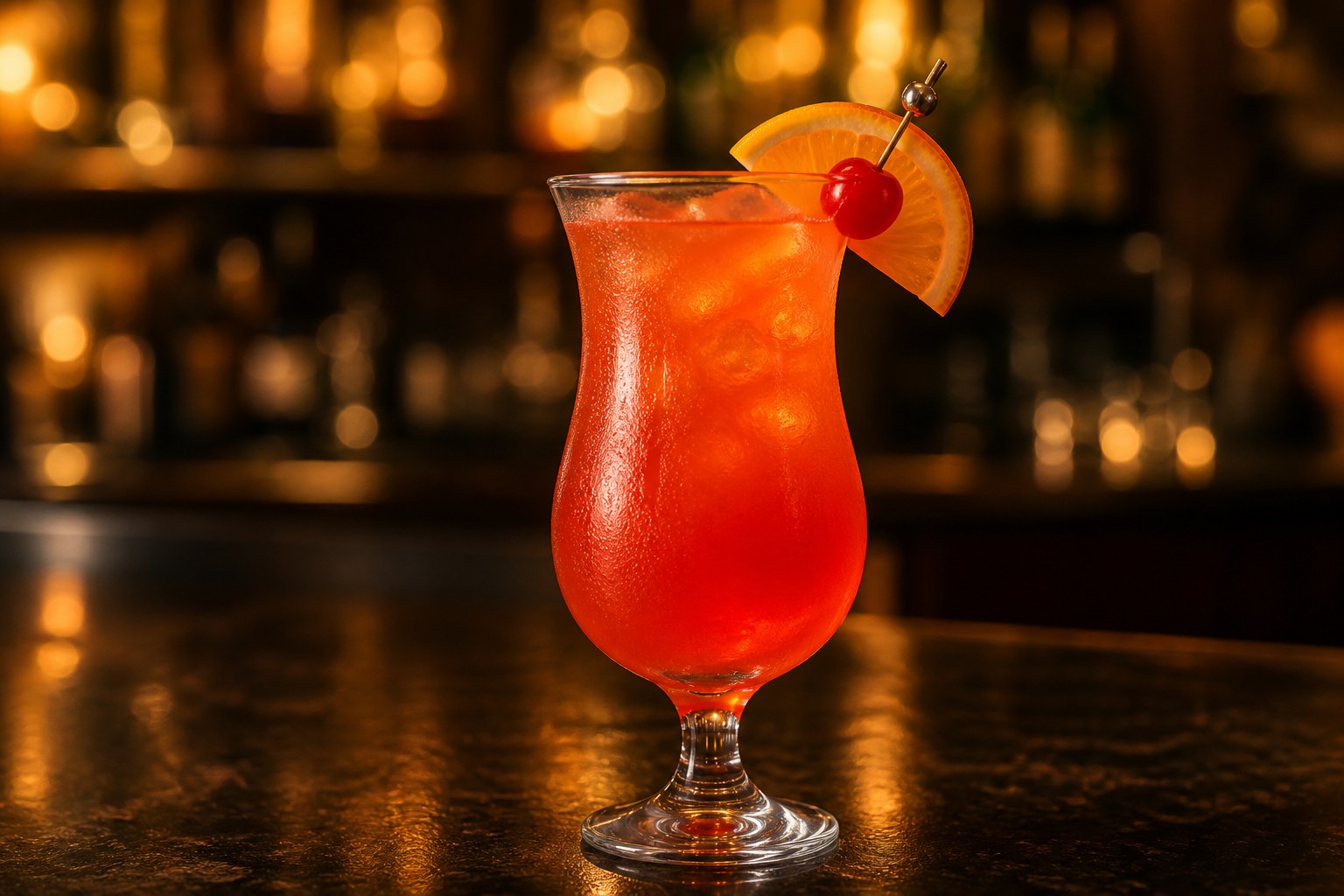
Pat O'Brien, Charlie Cantrell, and manager George Oechsner Jr. built this at Pat O'Brien's in New Orleans during World War Two, when Caribbean rum was flooding the market while whiskey and Scotch stayed scarce. Liquor distributors made bar owners buy cases of rum for every case of the harder-to-get stuff they actually wanted. Pat O'Brien's answer was to turn the surplus into a drink good enough that nobody minded, served in a glass shaped like the hurricane lamps on the tables, which is the whole reason for the name.
The Hurricane
- 60ml (2oz) Bacardi Superior
- 60ml (2oz) Mount Gay Barbados rum
- 60ml (2oz) passion fruit juice or syrup
- 30ml (1oz) orange juice
- 15ml (½oz) fresh lime juice
- 15ml (½oz) simple syrup
- A splash of grenadine
- Ice
- Glass: Hurricane glass
Method: Shake hard with ice. Pour into a hurricane glass. Garnish with an orange slice and a cherry.
5. The Peat Bog Cutter
My own riff on Death & Co's Bog Cutter
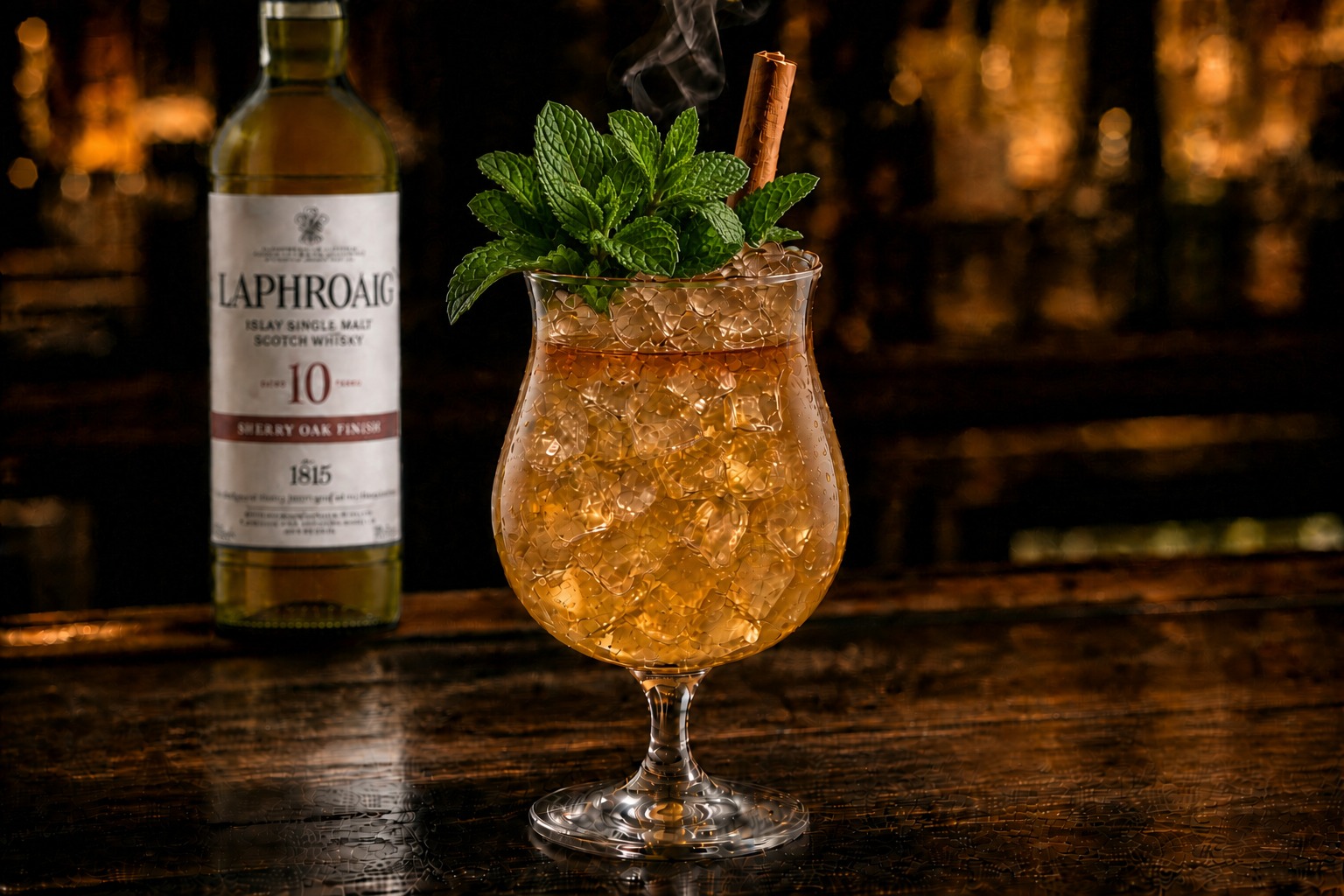
The original Bog Cutter is a Death & Co creation, built by bartender Jake Powell at the chain's Denver location in 2023. Powell's own note on the drink: "This is really more of a Mai Tai than a fog cutter riff," which tracks, since a real fog cutter usually finishes with a sherry float and this one doesn't touch sherry at all. My version keeps Powell's build intact and swaps the float: instead of leaving the drink as written, I finish it with a splash of Laphroaig 10 Sherry Cask poured on top.
The Peat Bog Cutter
- 45ml (1½oz) Denizen dark rum
- 7ml (¼oz) Wray & Nephew overproof white rum
- 7ml (¼oz) Navy Strength gin
- 15ml (½oz) Averna amaro
- 7ml (¼oz) Difford's Banane du Brasil
- 7ml (¼oz) cinnamon syrup
- 15ml (½oz) orgeat
- 30ml (1oz) fresh lemon juice
- A splash of Laphroaig 10 Sherry Cask, floated on top
- Crushed ice
- Glass: Tulip glass or tiki mug
Method: Combine everything except the Laphroaig in a shaker. Whip with crushed ice until fully incorporated. Pour into a tulip glass or tiki mug filled with crushed ice. Float the Laphroaig on top. Garnish with a mint bouquet and a cinnamon stick, extra cinnamon grated over the top.
Always use fresh ingredients, good quality rums, and good vibes. This will guarantee a good tiki drink. It's why tiki is so popular and can be drunk year-round.
Pull up a chair.
New writing on fragrance, spirits, and cigars goes up multiple times a week. Subscribe free on Substack for the Bite-Sized Brief, or pay a nominal fee to read the full article.

Sources
- The Painkiller's origin at Daphne Henderson's Soggy Dollar Bar on Jost Van Dyke, and Charles Tobias's two-year reverse-engineering into the 4-1-1-1 ratio, ending in ten of Henderson's own regulars preferring his version: Pusser's own site.
- The Jungle Bird: Jeffrey Ong as the beverage manager credited with creating it at the Aviary Bar, the Kuala Lumpur Hilton's actual opening date of July 6, 1973 (five years earlier than the 1978 date usually printed), and the drink's first print appearance in John J. Poister's 1989 The New American Bartender's Guide, which is also where the incorrect 1978 date originates: Thirst Magazine's investigation.
- Navy Grog: Don the Beachcomber's formula donated to a 1950 U.S. Navy charity cookbook, and Beachbum Berry's club-soda update built on a honey-syrup technique he picked up from bartender Dennis Quan at the Sampan in 1993: Beachbum Berry's own site.
- The Hurricane: built by Pat O'Brien, Charlie Cantrell, and manager George Oechsner Jr. at Pat O'Brien's in New Orleans during the WWII rum-surplus years, and served in a glass shaped after the hurricane lamps on the tables: NOLA Now.
- The Bog Cutter: created by bartender Jake Powell at Death & Co's Denver location in 2023, including his own "more of a Mai Tai than a fog cutter riff" line and the base recipe this piece riffs on: Death & Co's own site. The Laphroaig 10 Sherry Cask float, and the swap to Difford's Banane du Brasil in place of Powell's Tempus Fugit Crème de Banane, are this author's own changes, not part of the original recipe.
- The tiki-mug history: the Ruru and Weku mug as the earliest known tiki mug in the world, dated 1949, designed by Harry Hargreaves for Crown Lynn's Wharetana Ware range and drawing on Māori design; the breakdown of Trader Vic's 1947 Bartender's Guide, thirty illustrated vessels with only four ceramic (a skull mug, a scorpion bowl, a kava bowl, and a Fog Cutter mug); Don the Beachcomber's own early menus running mostly to plain glassware, with the Pi Yi and coconut-rum drinks served in hollowed baby pineapples and green coconuts instead; and the Parksmith Fertility Goddess Decanter's 2019 appraisal at over $5,000: Wikipedia's tiki mug entry, sourced there to Sven Kirsten's The Book of Tiki and Duke Carter's Tiki Quest.
- Sven Kirsten's own description of the true tiki mug's origin as "shrouded in mystery," and his account of Salvador Dali assuming the bar's garnish work had been staged for him: LA Weekly.
- Otagiri Mercantile Company (formed roughly 1954) and Orchids of Hawaii (founded shortly after WWII) as the two main importers bringing Japanese-manufactured ceramic tiki ware into the U.S. market through the mid-20th century: mytiki.life on Otagiri and mytiki.life on Orchids of Hawaii.
- Trader Vic's Port Light Glass, red glass with gold detailing made by the Imperial Glass Company, and its green Starboard Light companion: mytiki.life.
- Leather Paradise's note list and catalog number are pulled directly from the author's own perfume collection database, not an external source.