Key Takeaways
- The sour format doesn't care what's in the glass. Spirit, citrus, sweetener, shaken, works the same whether the spirit is whiskey, gin, or something that isn't a spirit at all.
- Disaronno isn't an amaro. It's an amaretto, a different liqueur family entirely, despite the names looking related.
- Six bottles, six sours, one apiece: gin, vodka, tequila, mezcal, amaretto, and a true Italian amaro.
Have a Sour Day — A Two-Part Series
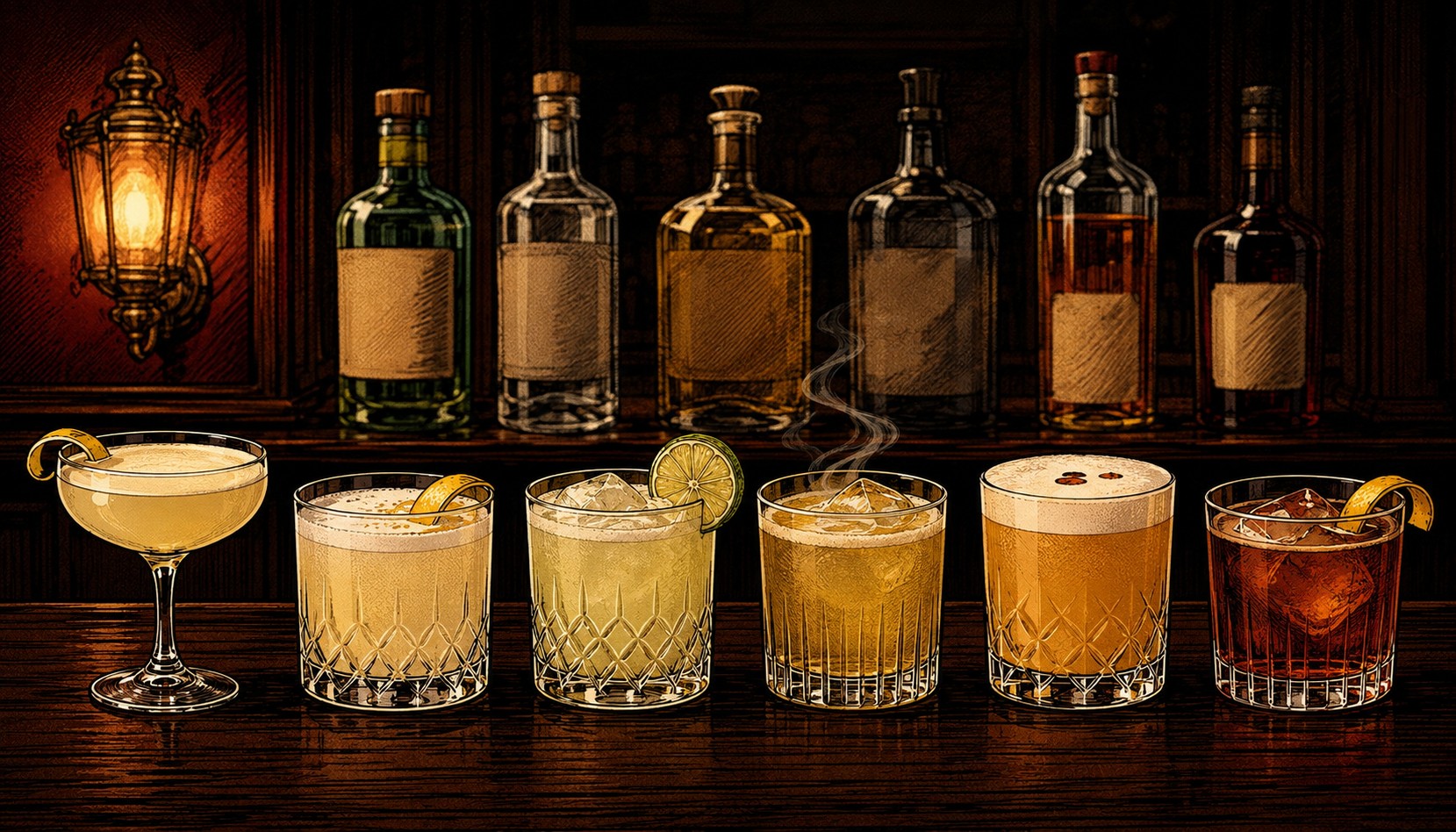
Yesterday's whiskey sour piece made a point of showing its work: primary sources, a page from an 1862 bar book, a page from an 1869 one. This one doesn't. It's the companion piece, six sours built on six different bottles, none of them brown spirits, with proportions and method and nothing else.
The Format Doesn't Care What's in the Glass
A sour is three things: a base spirit, an acid, a sweetener, shaken hard and strained. The whiskey sour piece traced that shape back through Jerry Thomas's 1862 guide, which built it on brandy and gin, not whiskey. The format was never spirit-specific. It holds up whether the base is a barrel-aged spirit, a clear one, or, as it turns out, something that isn't technically a spirit at all.
House proportions here run the same as they did for whiskey. 2 oz base, ¾ oz acid, ¾ oz sweetener, shaken hard with ice, strained. Four of the six below follow that exactly. The other two depart from it on purpose, and each one says why.
Amaro Is Not Amaretto
Disaronno gets called an amaro often enough that it's worth settling before the recipes start. It isn't one. Amaro is Italian for bitter and covers a family of herbal digestifs, Montenegro among them. Amaretto is a different liqueur entirely, sweet and almond-flavored, and the resemblance is right there in the name: amaretto translates closer to "a little bitter," a nod to the bitter-almond character behind the flavor, even though the finished liqueur isn't bitter at all. The two words share a root; the drinks they describe don't.
Disaronno adds a wrinkle of its own. It was sold as Amaretto di Saronno until 2001, when it rebranded as Disaronno Originale and dropped the word amaretto from the label. What's in the bottle didn't change. It's still, by category, an amaretto, and Difford's Guide files it under nut liqueurs, separate from its own amaro listings.
Six Recipes
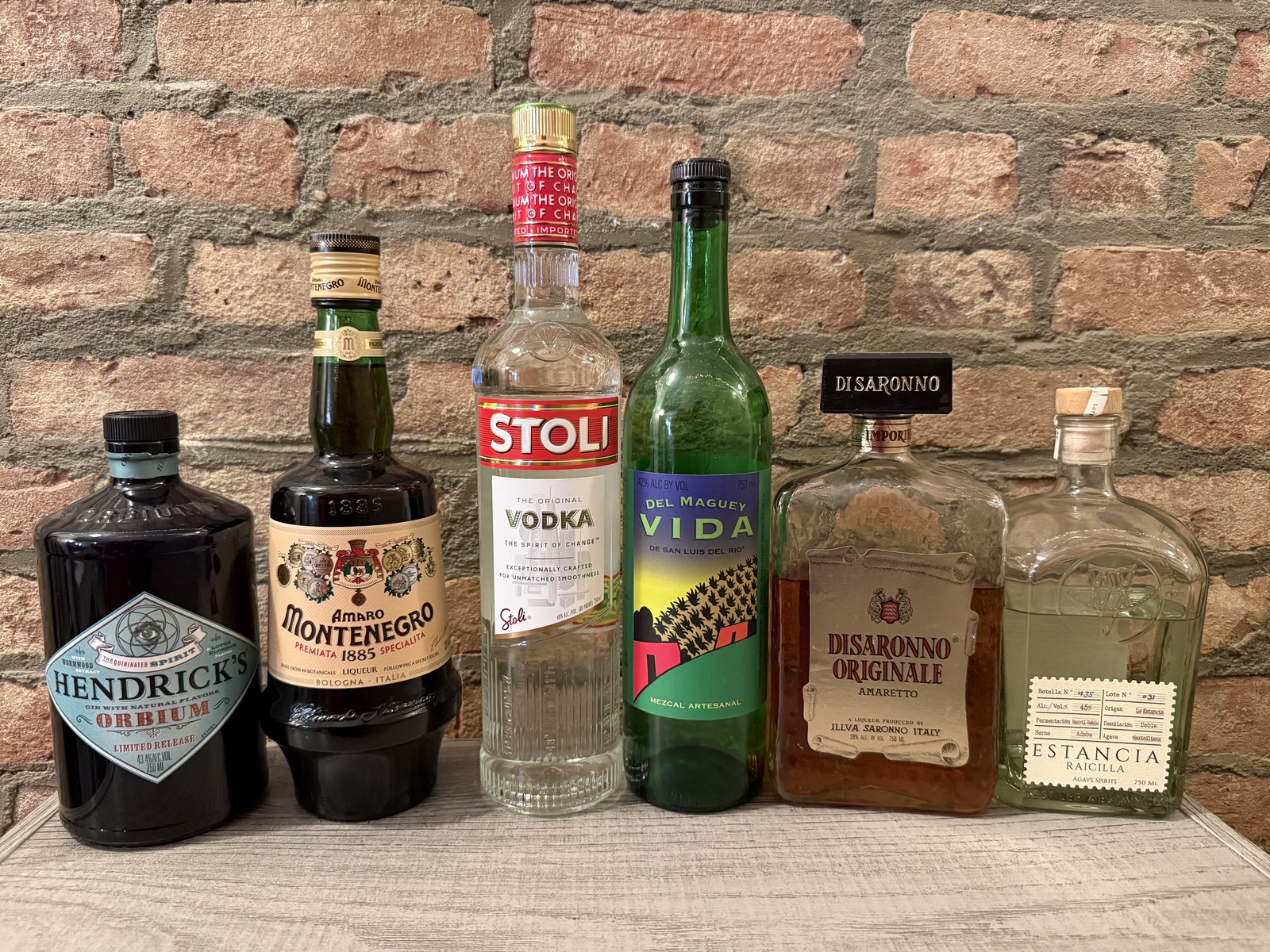
One bottle each. Where a build strays from the house ratio, it's because the bottle asked for it.
On raw egg: four of these six recipes use raw egg white for the foam. Use pasteurized whites if you're serving anyone pregnant, elderly, very young, or immunocompromised, alcohol and citrus don't reliably make raw egg safe. Pasteurized whites whip nearly as well and remove the question.
1. Gin Sour
The most direct cousin of a whiskey sour there is. Thomas's 1862 book had a Gin Sour before it had anything close to a whiskey one. I like Jaisalmer Craft Indian Gin for this one because its citrus peel, lemongrass, and cubeb hold their own against the lemon rather than getting buried by it.
Gin Sour
- 2 oz (60 ml) Gin
- ¾ oz (22.5 ml) fresh lemon juice
- ¾ oz (22.5 ml) simple syrup (1:1)
- Glass: Coupe or rocks over ice
Shake hard with ice until cold. Strain into a coupe, or over fresh ice in a rocks glass. Garnish with a lemon twist.
2. Vodka Sour
The least classic entry here, worth admitting up front. Vodka sours exist and work, they just never built the same literature the others did, because a neutral spirit brings little of its own to the glass. Vodka is vodka here. Skip anything flavored; it just fights the lemon. What you're tasting is mostly the citrus and the syrup, which is either the point or the problem depending on what you want from it.
Vodka Sour
- 2 oz (60 ml) Vodka
- ¾ oz (22.5 ml) fresh lemon juice
- ¾ oz (22.5 ml) simple syrup (1:1)
- Glass: Rocks, over ice
Shake hard with ice until cold. Strain into a rocks glass over fresh ice. Garnish with a lemon wheel.
3. Tequila Sour
Not a margarita, though it belongs to the same sour family. A margarita's defining move is orange liqueur standing in as the sweetener; drop it and the tequila itself carries the drink instead. Lime is what a tequila cocktail traditionally uses. Agave syrup is a separate call, made because tequila and agave share a plant. This build wants blanco: the unaged, peppery agave note is what the lime and egg foam are built to meet, and reposado's barrel char would just compete with it. I like El Padrino de Mi Tierra Blanco here. Mild and straightforward, agave and citrus with a peppery finish, built for mixing rather than sipping, which is exactly the job this drink gives it. Raicilla works too. It's Jalisco's other agave spirit, with its own protected category since 2019, made from wild agave rather than the blue Weber tequila uses. Estancia's is unaged and citrus-forward already, which is exactly where this build wants to land.
Tequila Sour
- 2 oz (60 ml) Tequila Blanco
- ¾ oz (22.5 ml) fresh lime juice
- ¾ oz (22.5 ml) agave syrup (1:1 agave nectar and warm water)
- 1 egg white, or 1 oz (30 ml) aquafaba
- Glass: Rocks, over ice
Dry shake all ingredients without ice for 15 seconds. Add ice and shake again until cold. Strain into a rocks glass over fresh ice. Garnish with a lime wheel.
4. Mezcal Sour
Same build as the tequila sour, one ingredient swapped. I like El Silencio Espadín for this one. Its smoke is present but not overpowering, enough to argue with the lime without taking over. This is the closest thing on this list to what the whiskey piece was doing with peated Scotch, smoke meeting sour and neither one backing down. Del Maguey Vida is just as good a choice. Del Maguey built it in 2010 specifically as a cocktail mezcal: medium smoke, campfire and cooked agave, a little lime peel and white pepper underneath, priced to actually pour into a shaker instead of saving for a sipping glass.
Mezcal Sour
- 2 oz (60 ml) Mezcal
- ¾ oz (22.5 ml) fresh lime juice
- ¾ oz (22.5 ml) agave syrup (1:1 agave nectar and warm water)
- 1 egg white, or 1 oz (30 ml) aquafaba
- Glass: Rocks, over ice
Dry shake all ingredients without ice for 15 seconds. Add ice and shake again until cold. Strain into a rocks glass over fresh ice. Garnish with a thin orange wheel, smoke against citrus.
5. Amaretto Sour
A widely repeated account dates the Amaretto Sour to 1974, when Amaretto di Saronno was being promoted in the United States, built as just amaretto and lemon juice, nothing else. It didn't need anything else, because amaretto already carries its own sugar. No syrup here for that reason; adding one just makes the drink cloying.
Amaretto Sour
- 2 oz (60 ml) Amaretto
- ¾ oz (22.5 ml) fresh lemon juice
- 1 egg white, or 1 oz (30 ml) aquafaba
- 2 dashes Angostura bitters, for the foam
- Glass: Rocks, over ice
Dry shake all ingredients except the bitters, without ice, for 15 seconds. Add ice and shake again until cold. Strain into a rocks glass over fresh ice. Dot the bitters onto the foam.
6. Amaro Sour
The real amaro, distinct from the amaretto two entries up despite the name overlap. I like Amaro Montenegro for this one. It's citrus-forward and already fairly gentle, the amaro bartenders call the gateway bottle, and it takes a sour build better than a punchier amaro like Fernet would. Amaro Nonino or Amaro Meletti work too if Montenegro isn't on your shelf, both similarly approachable, though sweeter. Difford's own Monte Sour, built specifically on Montenegro, runs 1⅔ oz amaro, ⅝ oz lemon, and just ⅓ oz of a rich 2:1 syrup, proportionally more lemon and less sugar than the house ratio below. Montenegro already carries its own sweetness, so this build pulls the syrup back from the standard ¾ oz to keep it from turning cloying; with Nonino or Meletti, taste before adding any syrup at all.
Amaro Sour
- 2 oz (60 ml) Amaro
- ¾ oz (22.5 ml) fresh lemon juice
- ½ oz (15 ml) simple syrup (1:1)
- 1 egg white, or 1 oz (30 ml) aquafaba
- Glass: Rocks, over ice
Dry shake all ingredients without ice for 15 seconds. Add ice and shake again until cold. Strain into a rocks glass over fresh ice. Express a lemon twist over the top and drop it in.
A good sour belongs to no single spirit. It belongs to balance. Change the base, and the drink takes on a different shape, but the same rules still apply: acid, sweetness, structure, and restraint. Get those right, and the spirit is just one part of what makes the sour work.
Pull up a chair.
New writing on fragrance, spirits, and cigars goes up multiple times a week. Subscribe free on Substack for the Bite-Sized Brief, or pay a nominal fee to read the full article.

Sources
- The sour's three-part structure and its appearance in Jerry Thomas's 1862 guide under Fixes and Sours, predating any whiskey version: covered in full, with the primary scan, in Eight Whiskey Sours, One Scent, Four Exceptions on this site.
- The margarita as a tequila sour with orange liqueur standing in as the sweetener, and its standing as part of the broader sour cocktail family: Distiller.
- Jaisalmer Craft Indian Gin's botanicals, coriander, vetiver, orange peel, lemon peel, cubeb pepper, lemongrass, and Darjeeling green tea among eleven total, no cardamom: Master of Malt.
- Stolichnaya's March 2022 rebrand to Stoli, distancing the company from Russia over the invasion of Ukraine: NPR.
- El Padrino de Mi Tierra Blanco's light, mild profile and its peppery, spiced finish: Barrel & Brew.
- Raicilla as its own agave spirit with a protected Denomination of Origin covering 17 municipalities across Jalisco and Nayarit since 2019, made from wild agave species including Maximiliana rather than tequila's blue Weber: Wikipedia. Estancia's Maximiliana bottling as unaged and citrus-forward: Mezcal Reviews.
- Del Maguey Vida launched in 2010 specifically as a cocktail-grade mezcal, medium smoke against Del Maguey's more intense single-village bottlings, with campfire, cooked agave, lime peel, and white pepper on the palate: Drink Lab.
- Disaronno's classification as an amaretto rather than an amaro, and the amaretto/amaro name overlap: Wikipedia, Disaronno's own current product page, Disaronno, and Difford's Guide's separate nut-liqueur categorization for amaretto, Difford's Guide.
- Disaronno's 2001 rebrand from Amaretto di Saronno, and Simon Difford's own confirmation that it remains an amaretto by category: Difford's Guide forum.
- The Amaretto Sour's 1974 origin, amaretto and lemon juice only, introduced by the US importer of Amaretto di Saronno: Wikipedia, citing The Oxford Companion to Spirits & Cocktails. No source found names the importer, and the date is repeated widely without a primary citation; treat it as a widely repeated account rather than a settled fact.
- The Monte Sour recipe used as the reference point for the amaro build, 1⅔ oz Montenegro, ⅝ oz lemon juice, ⅓ oz rich 2:1 syrup: Difford's Guide.