Key Takeaways
- "Champagne" is a legally protected geographic name; everything else, Cava, Prosecco, Cremant, is sparkling wine regardless of quality.
- The price gap comes mostly from the labor-intensive methode champenoise, in-bottle secondary fermentation and hand riddling, not just the name on the label.
- Cava and Cremant use that same in-bottle method at a fraction of the price, making the $20–35 range the best value pick of the bunch.

A bottle of Champagne charges you for two things: a name and a process. The name is a legal fence around a region in France. The process is what actually takes six weeks of a person's time, bottle by bottle.
Champagne has been a protected name for close to a hundred years. Only sparkling wine from that one region in France, made from Pinot Noir, Pinot Meunier, or Chardonnay, gets to use it. Everything else, no matter how good, is legally just sparkling wine. That protection is worth real money on the label. It has nothing to do with what's inside the bottle.
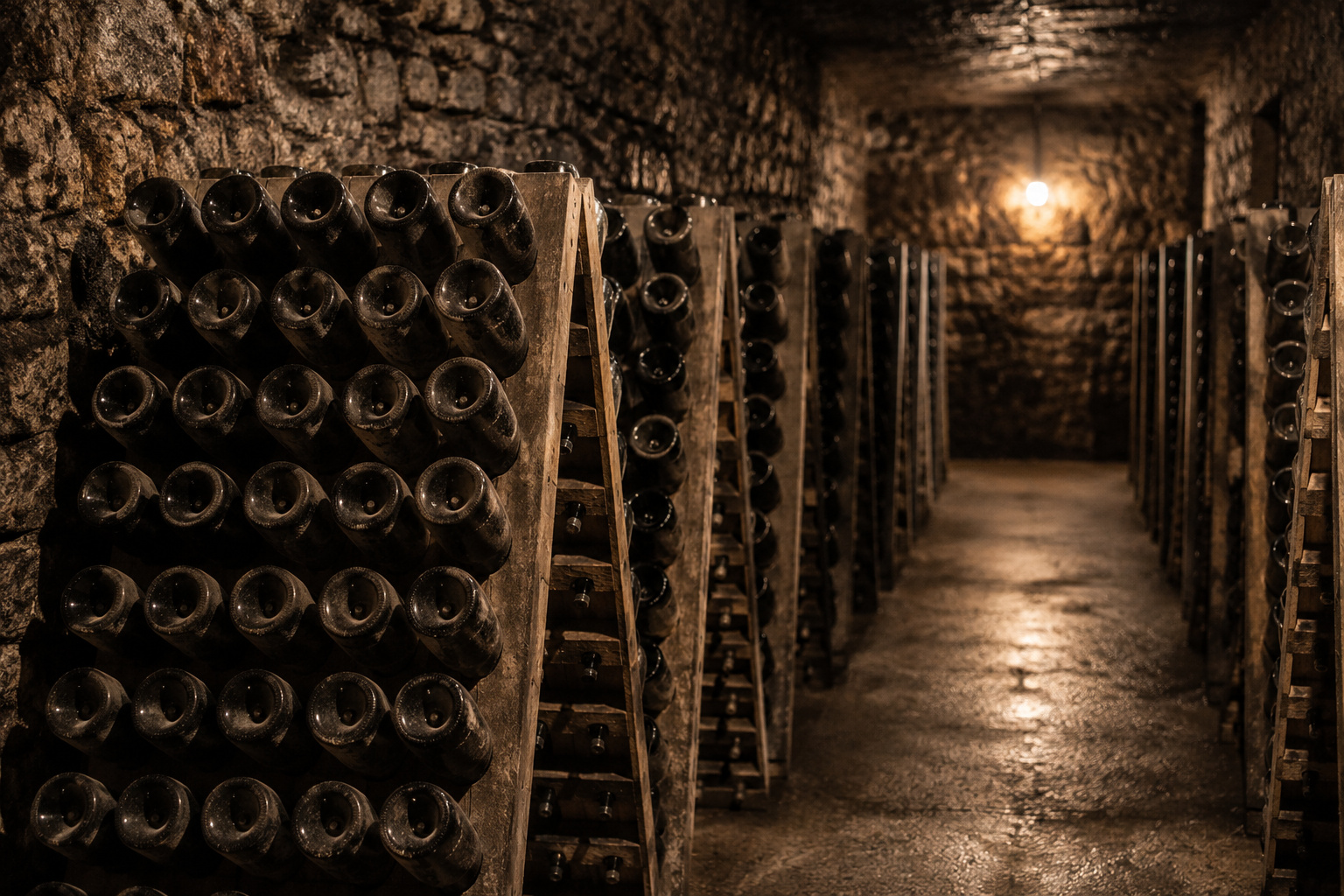
Here's the part the name doesn't buy you. Inside a real Champagne bottle, the wine ferments a second time, then rests on dead yeast for months. Someone turns every bottle by hand, an eighth of a turn at a time. Over six weeks, it tilts slowly from flat to neck-down, so the sediment slides into the neck, ready to be removed. A skilled riddler can work through 40,000 to 60,000 bottles in a single day.
Cava and Cremant use that exact same in-bottle method. They just don't get to use the name. A good bottle in the $20 to $35 range does the same labor as a $45 Champagne, minus the French address.
You're not paying for the bubbles. You're paying for the six weeks it took someone to get them out of the bottle.



Want the full story?
Read the Full Article →