Key Takeaways
- The rum that made the first Mai Tai, a seventeen-year J. Wray & Nephew, was gone from general availability within about a decade and has never returned to regular production.
- A Don the Beachcomber rum list from around 1941 already offered the same 17-year rum, bottled exclusively for Beach's own bars, three years before Bergeron ever poured it into a Mai Tai.
- The popular claim that the drink caused a worldwide rum shortage does not hold up. Trader Vic's own 1970 statement names one discontinued bottling, not a global shortfall.
- Appleton Estate rebuilt the original blend in 2023 at roughly $500 a bottle. It's already reselling for $800 to $2,500, and Appleton says the liquid is gone for good.
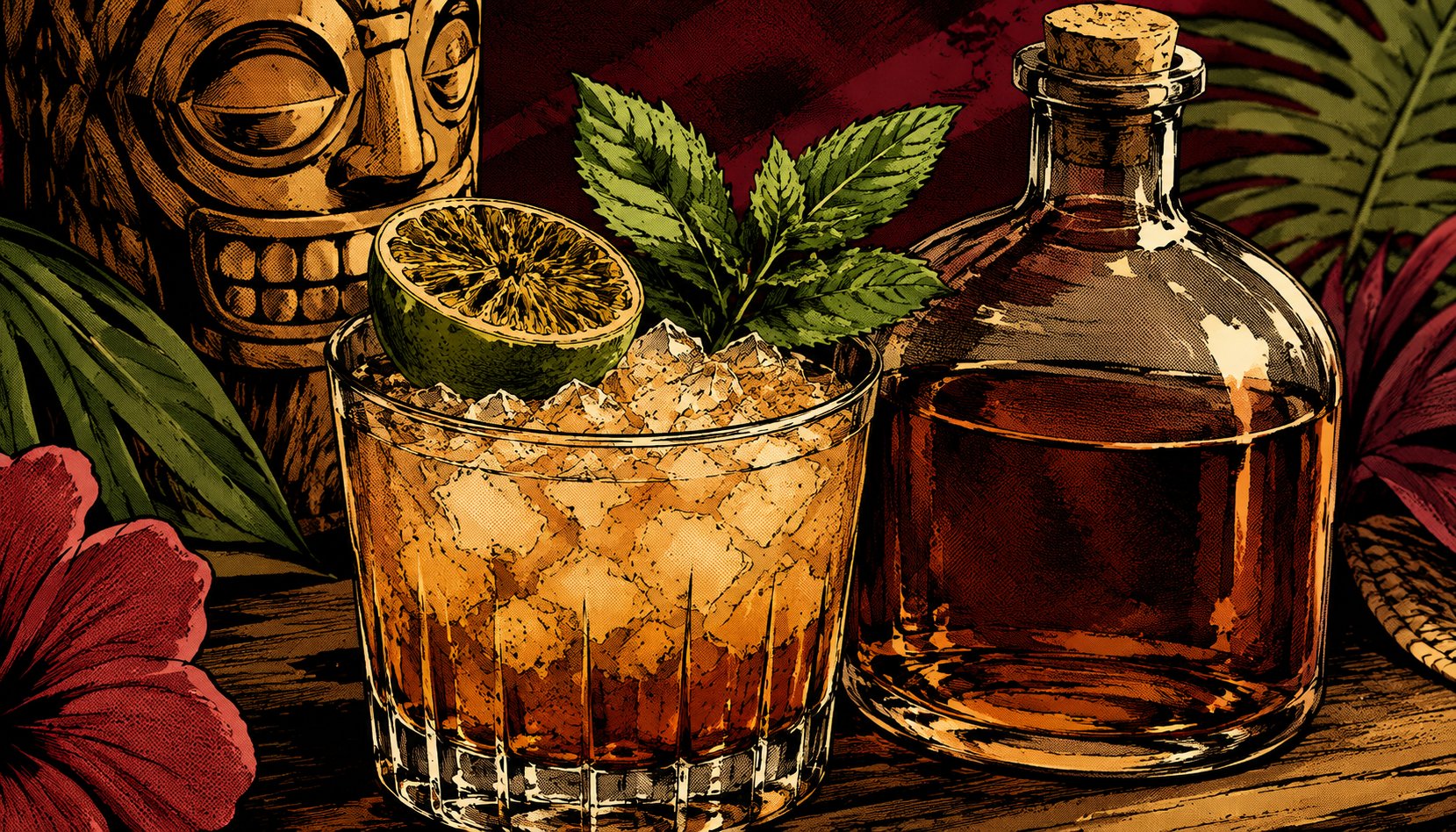
This Journal already has a piece on tiki as America's invented paradise, another on five tiki drinks worth making beyond the Mai Tai, and a tested recipe card for the Mai Tai itself sitting inside the America's 250th series. World Mai Tai Day gets a narrower question than any of them answered, built on research none of them had. Not the whole genre, and not just the recipe. The actual paper trail behind the vanished rum, what decided the 1970 fight over who invented the drink, and three ways to build from a rum nobody can buy anymore.
A Bar in Oakland, 1944
Victor "Trader Vic" Bergeron built the Mai Tai at his Oakland restaurant, Trader Vic's, for two visiting friends from Tahiti, Ham and Carrie Guild. By his own account, he reached for a bottle of seventeen-year-old J. Wray & Nephew Jamaican rum, added orange curacao, French orgeat, a little rock candy syrup, and fresh lime, then hand-shook it over shaved ice. Carrie tasted it and said "Mai tai roa ae," Tahitian for "out of this world, the best." Bergeron kept the name.1
He picked that particular rum on purpose. Bergeron called it golden and medium-bodied, with a pungent edge strong enough to carry the curacao and orgeat instead of disappearing underneath them. The whole drink is built around the rum being loud enough to still be heard. Every version made with a thinner, younger rum since then has been chasing that same idea.1 The origin story itself, and the decades-long feud with Don the Beachcomber it kicked off, gets its fuller telling in the tiki history piece already on this site. What hasn't been told anywhere here yet is what the rum's own paper trail shows.
What the Rum's Own Paper Trail Shows
Bergeron's own account gives the rum a birthday. Seventeen years old in 1944 means it was distilled in 1927 or earlier. Rum historian Matt Pietrek traced the rest of it, working from a 1926 issue of the Jamaican trade magazine Planter's Punch. That issue profiles the Lindo family, who controlled J. Wray & Nephew from 1916 to 1957, and names Bernard Lodge as one of the company's principal distilleries. The rum was almost certainly pot-distilled and aged in puncheons, large casks holding roughly 500 liters, and probably not finished in ex-bourbon barrels, since Prohibition had choked off the usual American supply of used barrels by the time this rum went into wood.2
The bigger twist sits in a Don the Beachcomber rum list from around 1941. It already lists "J. Wray & Nephew Special Reserve 17-Year," marked as bottled exclusively for Don the Beachcomber's own bars, three years before Bergeron ever poured it into a Mai Tai.2 The rum at the center of Trader Vic's signature drink was, for at least part of its life, made for the rival he spent decades fighting over who invented that drink first. Pietrek is careful about what's still unresolved. Which distillery actually bottled it, and whether Appleton Estate's forerunner was the only source, are both open questions his own research doesn't close.
Two Things the Story Gets Wrong
The Don the Beachcomber dispute. Donn Beach, who built the tiki bar chain that gave the whole genre its name, claimed for years that he had mixed a Mai Tai first, back in 1933, under a different name. The claim rests on one account, told decades later by his widow Phoebe Beach, with no written recipe or dated receipt behind it. The dispute went legal in the 1960s after Vita-pakt Citrus Product Co., which had licensed the Don the Beachcomber name, tried to trademark its own bottled Mai Tai mix. Trader Vic's sued, and the case settled out of court in 1970 in Bergeron's favor, decided in large part by a sworn affidavit from Carrie Guild herself, one of the two Tahitian guests in the room the night Bergeron says he built the drink. That settled who owned the name commercially, and gave Bergeron's version a signed witness the Beachcomber side never produced. It did not settle who mixed a drink called a Mai Tai first in some back room, and it never really could.3 The fuller rivalry, the Hilton licensing deal, and the 1990s tiki revival all get their own telling in the tiki history piece linked above.
The rum shortage myth. The other claim that keeps circulating is that the Mai Tai got so popular it drank the world's rum supply dry, forcing Wray & Nephew to pull the seventeen-year rum off shelves entirely. Bergeron's own 1970 press release does not say that. It says the seventeen-year "became unavailable, so it was substituted with the same fine rum with 15 years aging." One specific bottling, not the category. Bergeron's statement establishes only that the seventeen-year became unavailable. It doesn't establish why. Whatever ended the bottling, the evidence does not support the much larger claim that the Mai Tai created a worldwide rum shortage.4
The Original 1944 Mai Tai
- 2 oz (60 ml) 17-year J. Wray & Nephew Jamaica rum
- ½ oz (15 ml) Holland DeKuyper Orange Curacao
- ½ oz (15 ml) French Garnier Orgeat
- ¼ oz (7.5 ml) rock candy syrup (or rich 2:1 simple syrup)
- ¾ oz (20 ml) fresh lime juice, about 1 lime, spent shell reserved for garnish
Hand-shake hard with crushed or shaved ice. Pour the whole thing, ice included, into a double rocks glass or a 15 oz tiki mug. Garnish with the spent lime shell dropped into the drink and a fresh mint sprig at the rim.
For reference only. The seventeen-year J. Wray & Nephew rum this recipe calls for isn't sold today, so it can't be made exactly as written. Three ways to build from it are below.
This same build also anchors a recipe card in the America's 250th series, with its own Appleton-based substitutes, Appleton Estate 17-Year Legend or a blend of Appleton 12 and an agricole-style rhum. Reach for that version if Appleton is what's already in the cabinet. The three riffs below take a different route, plus fragrance pairings that piece doesn't have.
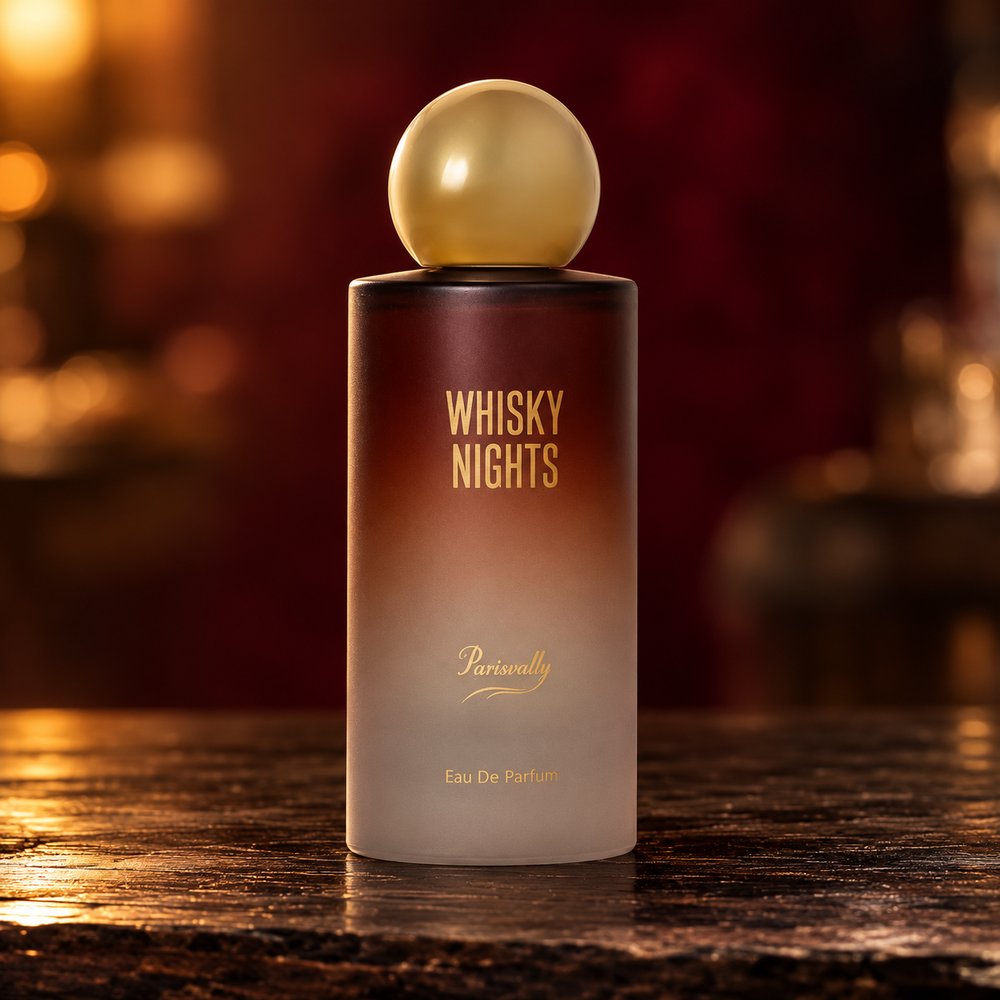
Fragrance pair: Parisvally's Whisky Nights. Cardamom opens it, then rum and whiskey take over the top notes, oak and tobacco carry the middle, cypriol oil, sandalwood, and vanilla close it out. Rum and whiskey sharing the opening is this recipe's whole premise in miniature, and the oak note in the middle points at the same barrel aging that took the seventeen-year rum off shelves.
The Rum Problem
Wray & Nephew made a limited run of the seventeen-year expression, and it was gone from general availability within about a decade of the Mai Tai's invention, which pushed Bergeron onto the fifteen-year and eventually onto blends of his own making. There is one important complication: this was not a clean, total disappearance. Joy Spence, Appleton's current master blender, says a related aged expression, bottled specifically as "Trader Vic's Personal Selection," kept shipping in bulk to Trader Vic's own restaurants as late as 1981. The exact bottle from the 1944 recipe went away fast. A related bottling kept supplying Bergeron's own bars for another 35 years, just never sold at retail.5
Today the closest thing to the original is a bottle almost nobody will ever pour into a shaker. In 2023, Appleton Estate spent seventeen years rebuilding the original four-rum blend from distiller Owen Tulloch's own production notes, using one marque so difficult to recreate that Spence said the project will not be attempted again. Ten barrels' worth came out of it, roughly 1,500 bottles worldwide, priced around $500 each at release. That is a rum for a shelf, not a bar cart.5
That $500 price did not last. Appleton has said it used up every drop of liquid the project produced and will not attempt the blend again, and the secondary market noticed fast. One retailer's allocation sold out within minutes at $799.99, the collector marketplace BlockBar has listed bottles between $2,000 and $2,500, and a recent recorded resale went for $1,403.47, close to triple the original price.6 Owning a full bottle now costs more than every recipe below combined.
Three Ways to Build From It
Bergeron did not stop serving Mai Tais when his rum ran out. He blended what he had: an aged Jamaican rum for weight, and a Martinique rum for a different register of funk, in what he called his "Second Adjusted" recipe. Research from Martin Cate of Smuggler's Cove points to that Martinique component being a molasses-based rum rather than the grassier rhum agricole style, which matters if you are shopping for a bottle. Denizen Merchant's Reserve is built specifically to recreate that later Bergeron blend, Jamaican and Martinique rum in one bottle, and it is the easiest way into something close to the original character without spending five hundred dollars on a single pour.7
The Second Adjusted
- 2 oz (60 ml) Denizen Merchant's Reserve rum
- ½ oz (15 ml) Holland DeKuyper Orange Curacao
- ½ oz (15 ml) French Garnier Orgeat
- ¼ oz (7.5 ml) rock candy syrup (or rich 2:1 simple syrup)
- ¾ oz (20 ml) fresh lime juice, about 1 lime, spent shell reserved for garnish
Same method as the original. Hand-shake hard with crushed ice, pour unstrained into a double rocks glass, garnish with the spent lime shell and a mint sprig.
For a version built from a home bar instead of a new bottle, split the 2 oz (60 ml) between 1 oz (30 ml) of a genuine Jamaican pot-still rum, something like Rhumb Runner's Jamaica Monymusk bottling, and 1 oz (30 ml) of a fuller-bodied Caribbean blend such as Planteray XO 20th Anniversary (formerly Plantation XO). It will not match Denizen exactly, but it gets at the same idea, two rums doing two different jobs in one glass.
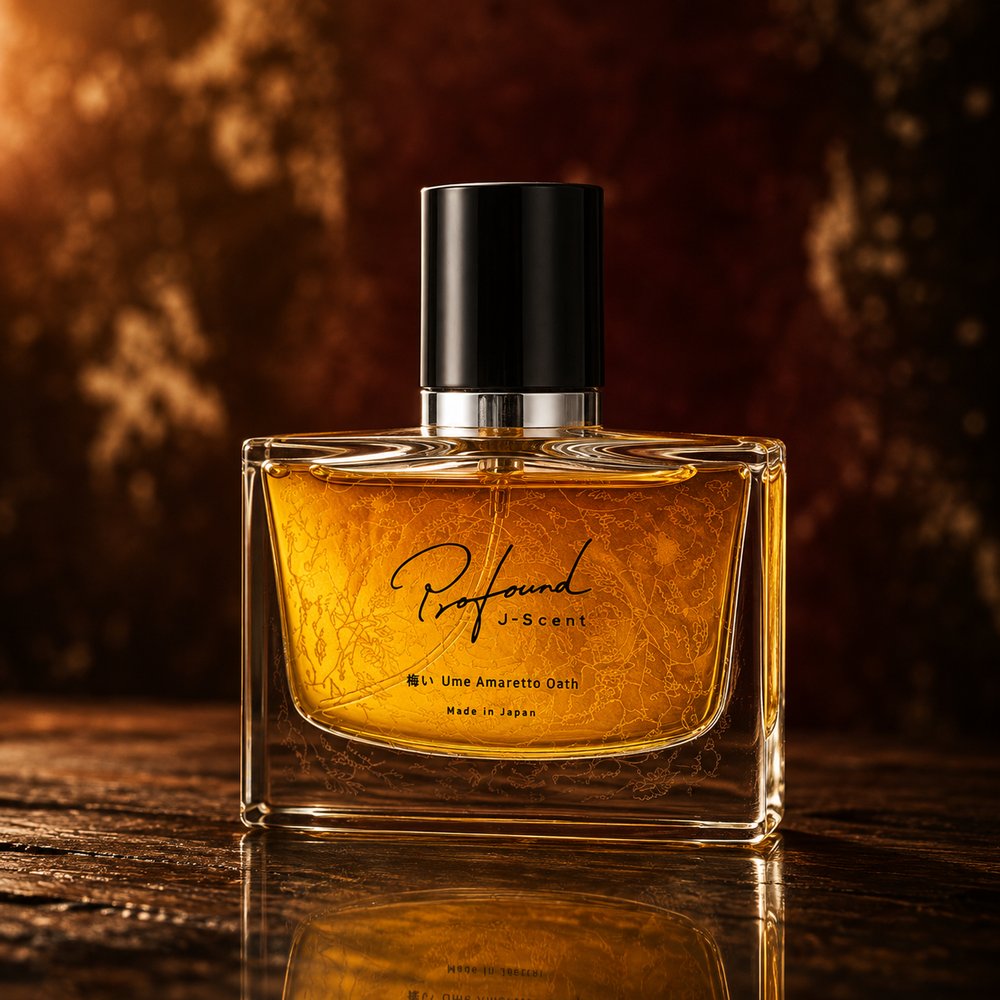
Fragrance pair: J-Scent Profound's Ume Amaretto Oath. It opens on orange, plum, and rum, moves into floral notes, jasmine, and rose through the heart, and finishes in amber, cocoa, labdanum, and patchouli. The orange sits right where the curacao does in the glass, and the turn from a rum-forward opening into a cocoa-and-amber finish gives the fragrance its own two-stage build, the same idea behind blending two rums for two different jobs.
The name Wray & Nephew mostly means one thing on a liquor store shelf now, and it has nothing to do with the vanished seventeen-year rum. It means their white overproof, well over 100 proof and unaged, nothing like the golden sipping rum in the original recipe. There is a certain rightness in bringing the name back into the glass anyway, split with something aged so the whole drink does not turn into a punch.
The Overproof Tai
- 1 oz (30 ml) Wray & Nephew White Overproof rum
- 1 oz (30 ml) Appleton Estate 8 (or another aged Jamaican rum on hand)
- ½ oz (15 ml) Holland DeKuyper Orange Curacao
- ½ oz (15 ml) French Garnier Orgeat
- ¼ oz (7.5 ml) rich 2:1 demerara syrup
- ¾ oz (20 ml) fresh lime juice, about 1 lime, spent shell reserved for garnish
Shake hard with ice, strain over fresh crushed ice into a double rocks glass. Garnish with the spent lime shell and a mint sprig. The richer demerara syrup helps hold up against the overproof rum, so don't skip it.
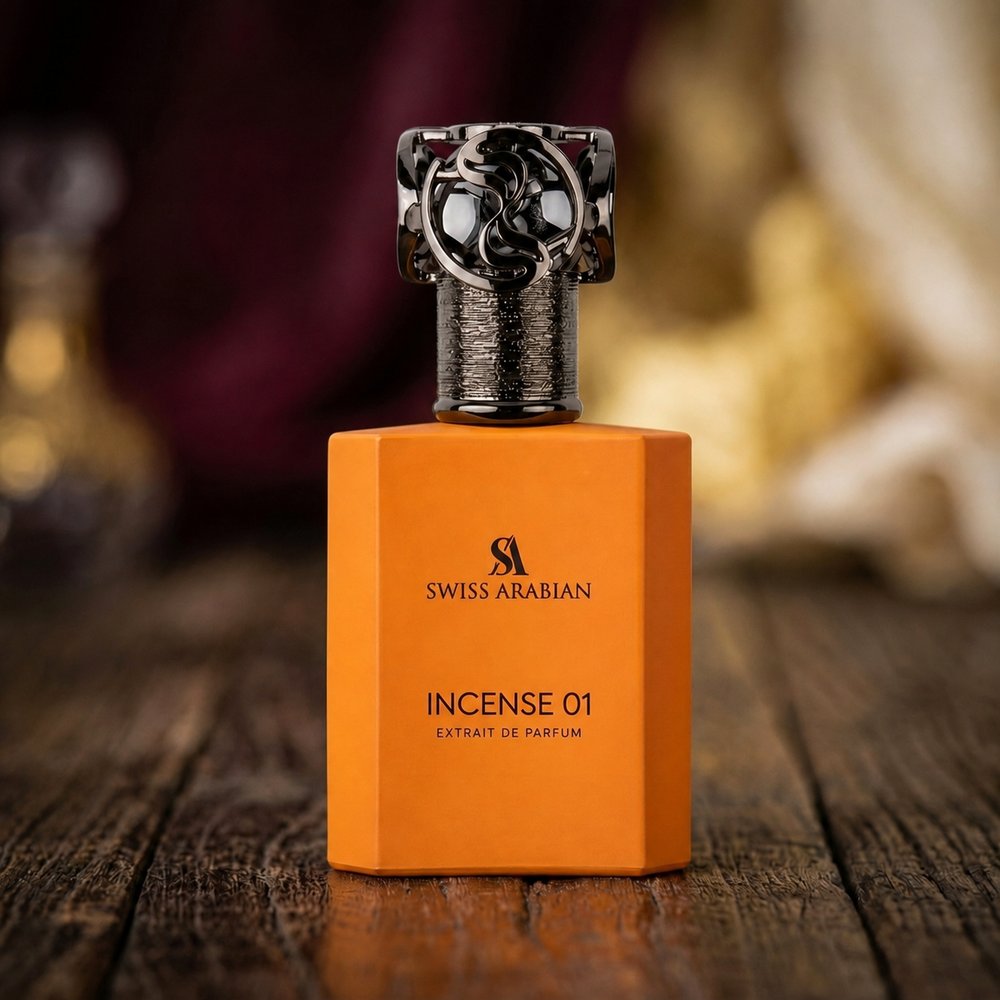
Fragrance pair: Swiss Arabian's Incense 01. Bergamot, frankincense, juniper, and rum open it, fig and lily of the valley sit in the heart, cedarwood, frankincense, sandalwood, and vanilla round out the base. Juniper next to rum in that opening is the exact split this recipe runs on, the overproof's raw edge beside a botanical note nothing else in the collection pairs with rum this directly.
Last one is mine. A splash of peated Scotch on top of a tiki drink is a move I have used before, on a Death & Co riff in an earlier post here, and it works just as well on a Mai Tai as it did there. The smoke does not fight the orgeat, it just adds a layer the original recipe never had a reason to include, because Bergeron was not sitting on a shelf of Islay malt.
The Smoke Tai
- 1½ oz (45 ml) Appleton Estate 8 (or FourSquare Indelible)
- ½ oz (15 ml) Holland DeKuyper Orange Curacao
- ½ oz (15 ml) French Garnier Orgeat
- ¼ oz (7.5 ml) rich 2:1 demerara syrup
- ¾ oz (20 ml) fresh lime juice, about 1 lime, spent shell reserved for garnish
- ¼ oz (7.5 ml) Laphroaig 10 (or Ardbeg Corryvreckan), floated on top
Shake everything except the float over ice, strain into a double rocks glass over fresh crushed ice. Float the peated Scotch on top by pouring it slowly over the back of a spoon. Garnish with the spent lime shell and a mint sprig.
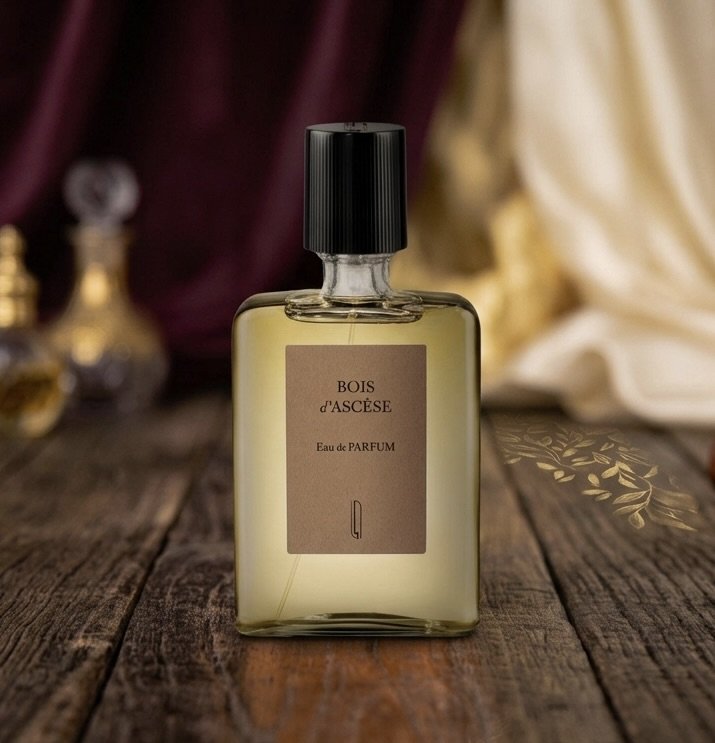
Fragrance pair: Naomi Goodsir's Bois d'Ascese. Tobacco and whiskey open it, incense and labdanum run through the middle, amber and tobacco close it out. Whiskey right at the top is the closest thing in the collection to the actual pour, and the incense running through the middle reads like smoke without needing the word.
The original Mai Tai isn't a recipe anyone can perfectly reproduce anymore. The rum that made it is gone, and its own paper trail raises as many questions as it answers. What survives is an idea about how rum should behave inside the drink, loud enough to carry the curacao and orgeat instead of disappearing under them. The three riffs above aren't replicas. They're different answers to the problem Bergeron solved in 1944. The fuller tiki history and the Appleton-based build are already on this site. The rum's own paper trail is new here.
The Journal goes beyond the bottle.
One thoughtful piece each week on fragrance, spirits, cigars, and the stories behind them.

Sources
- The 1944 origin story, Bergeron's own account of how the drink got its name, and the original recipe's exact measurements: Difford's Guide's Mai Tai (Trader Vic's) recipe page.
- The rum's likely 1927-or-earlier distillation date, its pot still and puncheon aging, the Lindo family's 1916-1957 ownership of J. Wray & Nephew, Bernard Lodge as a named distillery in a 1926 Planter's Punch profile, and the circa-1941 Don the Beachcomber rum list already offering "J. Wray & Nephew Special Reserve 17-Year" bottled exclusively for Beach's own bars, three years before Bergeron's Mai Tai: rum historian Matt Pietrek's "New Insights Into Wray & Nephew 17" on Cocktail Wonk, which is upfront that which distillery actually bottled it and whether Appleton's forerunner was the sole source both remain open questions.
- The Don the Beachcomber dispute, Phoebe Beach's undocumented account, the Vita-pakt Citrus Product Co. trademark dispute that triggered the lawsuit, Carrie Guild's affidavit, and the 1970 settlement in Bergeron's favor: The Search for the Ultimate Mai Tai's history page.
- The correction to the "worldwide rum shortage" claim, including the direct quote from Bergeron's own 1970 press release: the same site's mythbusting piece.
- The seventeen-year J. Wray & Nephew rum's limited production run and its disappearance within about a decade of the Mai Tai's invention: Tasting Table. Joy Spence's account of "Trader Vic's Personal Selection" continuing to ship to Trader Vic's own restaurants until 1981, and Appleton Estate's 2023 recreation, including the seventeen-year rebuilding effort from Owen Tulloch's production notes and the 1,500-bottle, roughly $500 release: Forbes.
- The 2023 recreation's production details, Joy Spence's four-distillate blend, and Appleton's statement that the liquid is fully depleted and will not be remade: The Spirits Business and Gear Patrol, the latter also confirming bottles listed above retail on the collector marketplace BlockBar. The specific resale figures, the $799.99 sellout, the $2,000-$2,500 BlockBar range, and the $1,403.47 recorded sale, come from Resell Calendar, a resale-tracking site rather than spirits trade press; the general above-SRP markup is independently confirmed by Gear Patrol, but these exact dollar figures aren't corroborated elsewhere and are presented as reported.
- Trader Vic's own post-shortage blending fix, described as his "Second Adjusted" recipe, Martin Cate of Smuggler's Cove's research on the Martinique component being a molasses-based rum rather than rhum agricole, and Denizen Merchant's Reserve as the modern commercial recreation of that blend: Punch.
- Perfume catalog numbers and note pyramids for all four fragrance pairings are pulled directly from my own collection database.
- Sources reflect published reporting as of this writing.