Key Takeaways
- U.S. rules let a rum producer add up to 2.5 percent by volume of sugar, brown sugar, molasses, or caramel without changing the label. The EU generally caps sweetening at 20 grams per liter; GI rum bearing the terms traditionnel, tradicional, or agricultural must be unsweetened. Bourbon gets none of this allowance at all.
- Barbados still lacks an agreed, registered GI specification for its rum. Three established producers filed an application prohibiting added sugar; West Indies Rum Distillery opposed the proposal. I own bottles from both sides.
- Twelve rums sorted into four groups, three per group, one of them a recommendation rather than a bottle I own. The scent is Kilian Black Phantom, number 33 in my collection, whose published notes name a Martinique rum accord and sugar cane, though its current published ingredient list names neither.
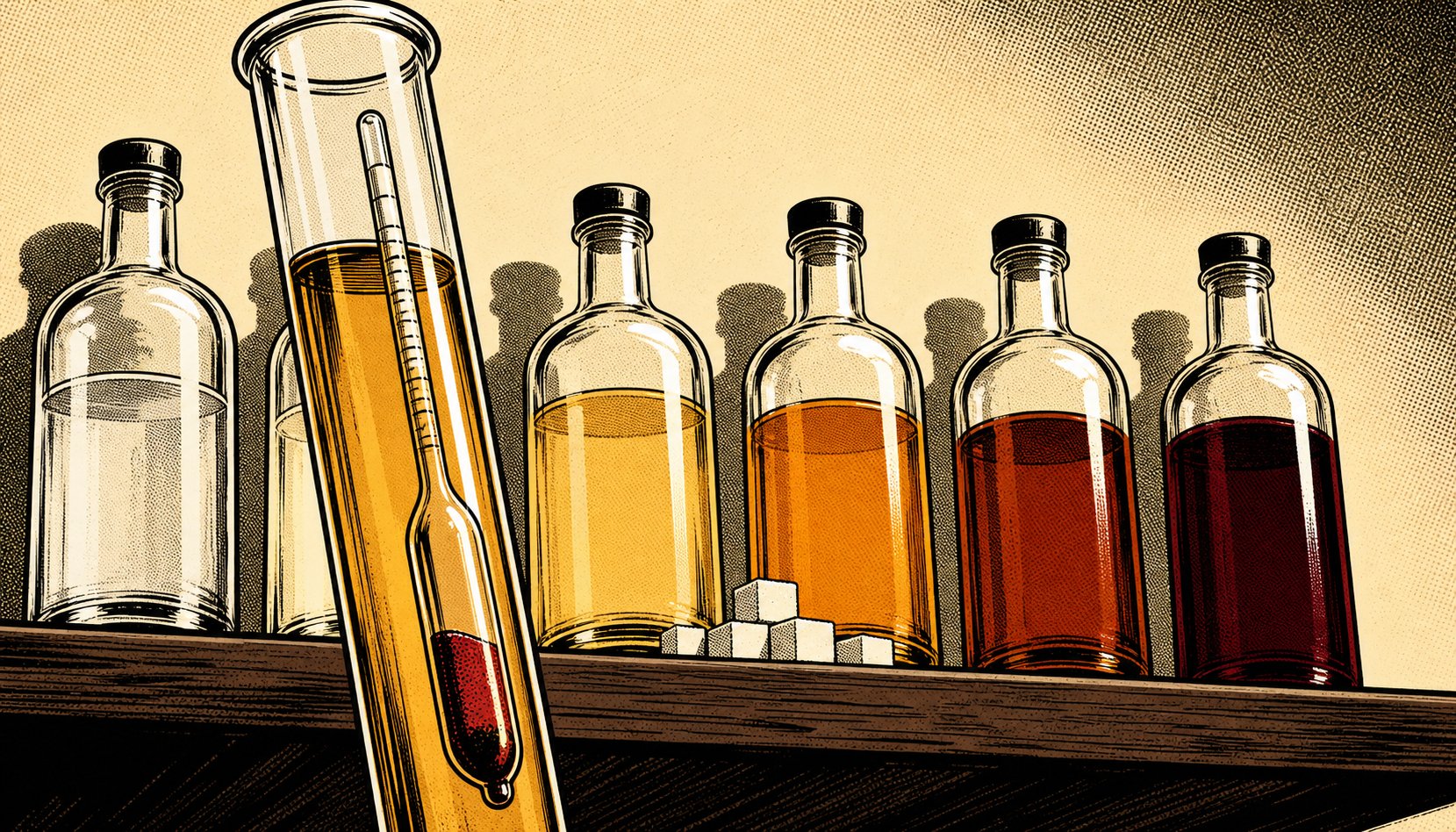
This Journal already has a piece on what rum is and where the styles come from, and another on five tiki drinks worth making. National Rum Day gets a different question. Not what rum tastes like. What is in it.
The Rule Nobody Reads
Start with the law, because the law is the reason any of this is possible. TTB Ruling 2016-3 sets up a general-use formula for rum specifically. It permits sugar, brown sugar, molasses, and caramel, alone or combined, up to two and a half percent by volume of the finished product, without formula approval or a changed class designation, and with nothing required on the label. That is not blanket permission for anything harmless. It is four named materials, capped, and the cap works out to about 18.75 milliliters in a 750 ml bottle.
The EU regulates rum differently. Rum sold there may generally be sweetened up to 20 grams per liter, expressed as invert sugar, with no added flavoring beyond that. It may also contain caramel solely to adjust color.
The stricter rule attaches to three optional terms rather than to geographic indications as a class. Rum labeled traditionnel, tradicional, or agricultural must be unsweetened outright. Agricultural is narrower still, usable only by GIs from French overseas departments or Madeira. A GI rum that skips those terms can still use the general 20 gram allowance.
The same rulebook bans this for bourbon and straight whiskey. Those two categories cannot use added flavoring at all. Rum gets the allowance and they don't, and that asymmetry is written into the regulation itself. When I write about bourbon next month, the difference is going to come up again.
None of this is fraud. It is legal, common, and older than most of us. The problem is narrower than that. You cannot tell from the bottle.
How Anyone Found Out
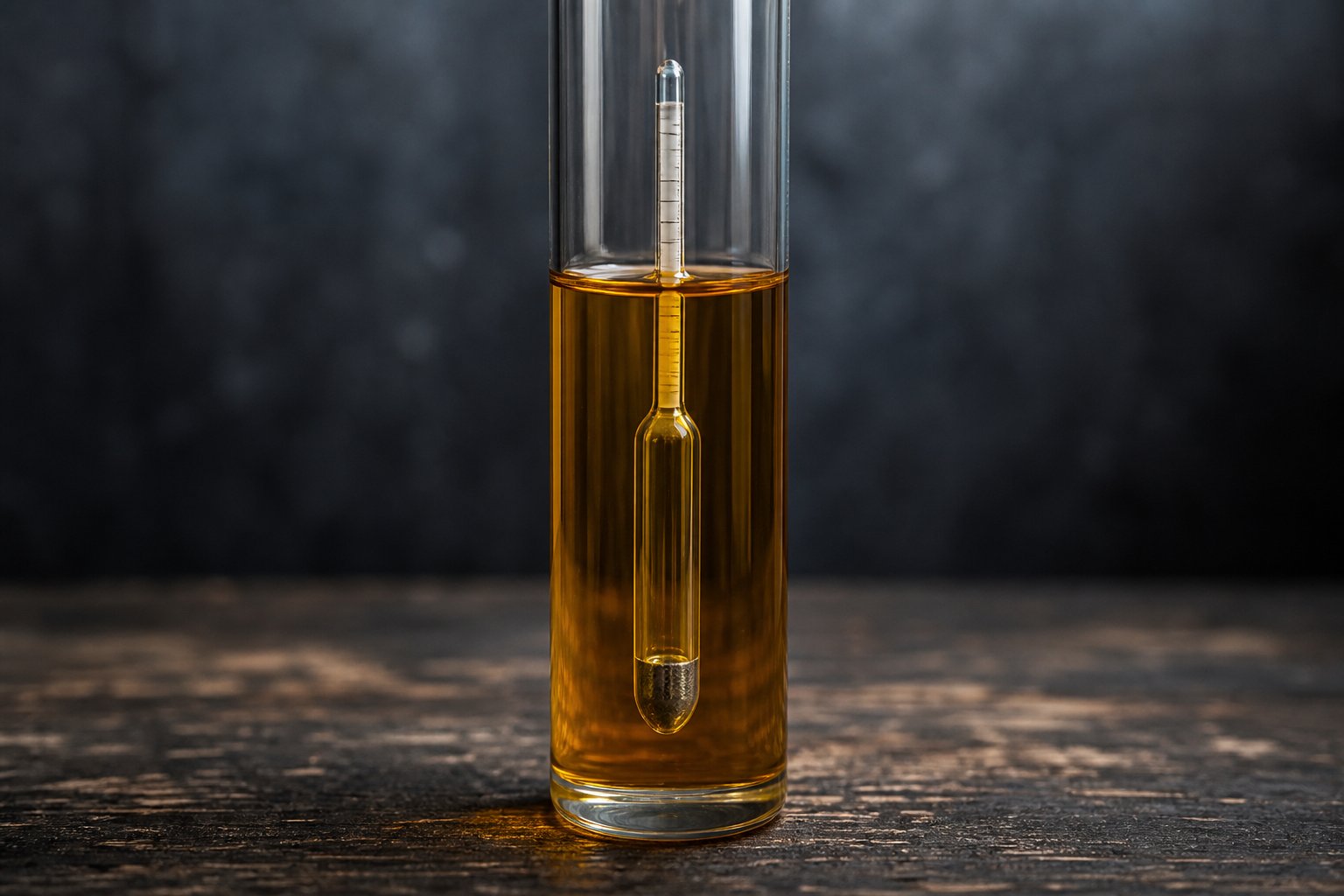
A widely cited public testing effort came from Danish hobbyist Johnny Drejer, who adapted a hydrometer method to rum. A hydrometer reads density, from which an apparent proof can be calculated against a plain ethanol-water solution. If that apparent proof comes back below the number printed on the label, something denser than alcohol and water is in there. The method estimates apparent extract, not confirmed sugar, and it has real limits: it assumes the labeled ABV is accurate, the sample is at the right temperature, and the bottle hasn't evaporated or degraded. It can't tell sugar apart from glycerol, sweet wine, or anything else that raises density. Only a lab measuring sugar directly confirms sugar.
What made the method stick was that he checked it. Sweden and Finland both run state alcohol monopolies, Systembolaget and Alko, and both had already lab-tested a portion of what they sell, including sugar content in grams per liter. Drejer measured the same bottles and published both columns side by side. Angostura 1824 came back at 17 in the lab and 18 on his hydrometer. Angostura 1919, 14 and 13. Botran Solera 1893, 9 and 9. Where he could be checked, he checked out.
Then the numbers got larger, and dated. Hydrometer estimates for older, pre-2020 El Dorado 12 bottlings ranged from roughly 35 to 45 grams per liter of apparent extract, depending on which tester ran it. Hydrometer estimates put El Dorado 15 at 31 g/L of apparent extract and Diplomático Reserva Exclusiva at 41. Ron Zacapa Centenario 23 has laboratory-measured sugar figures of 45 and 20 from different tests, alongside Drejer's hydrometer estimate of 38. Barrel aging alone puts a few grams per liter into a rum, so anything under about five sits within the range barrel contribution alone would explain. Forty sits well outside it.
Tests suggest DDL sharply reduced El Dorado 12's dosage around 2019 and 2020. Newer bottlings have produced hydrometer estimates near 6 grams per liter of apparent extract. That is a significant improvement and it deserves credit. But I could find no public reformulation announcement or corresponding note on the label. The bottle got better; the public record did not.
Richard Seale of Foursquare has pointed out that the material isn't necessarily plain sugar. Sweet wines and concentrates can contribute extract too, and other flavoring materials may be present at levels a hydrometer can't identify at all. Lab work has separately found glycerol in several widely sold rums. The instrument estimates unexplained density. It doesn't reveal which ingredient is responsible. A lab confirming sugar specifically is a different, stronger kind of evidence.
The Fight on Barbados
The original dispute centers on four established producers, Mount Gay, Foursquare, St Nicholas Abbey, and West Indies Rum Distillery, which together account for the overwhelming majority of the island's aged rum. Two newer projects, at Bentley and Hopewell, have entered the picture more recently and complicate any claim that the count stops at four. Martinique has had a protected appellation since 1996. Jamaica has a rum GI. Barbados, often described as a birthplace of modern rum, still lacks an agreed, registered GI specification for rum.
The reason is a disagreement about additives. Foursquare, Mount Gay, and St Nicholas Abbey, which together hold more than ninety percent of the island's aged stock, put forward a geographic indication that would require Barbados rum to be aged on the island with local water, distilled in Barbados on pot or column stills, and produced without added sugar.
The fourth producer didn't join. West Indies Rum Distillery is owned by Maison Ferrand, the company behind Planteray, the rum brand known as Plantation until January 2024, which bought the distillery in 2017. Maison Ferrand owns both, though that doesn't mean every Planteray bottling comes out of WIRD specifically. Its position is that the proposal is too narrow and would freeze a category that's been made more than one way for centuries. The other three say the rules leave room and just describe how the island has always worked.
The three filed formally on July 15, 2022. The dispute itself goes back roughly a decade before that. Both readings are defensible, and the government has said it will not sign anything until all four agree. My own read, not a settled fact, is that a definition prohibiting added sugar would sit awkwardly next to some Planteray bottlings and the practice of finishing them in France, though Maison Ferrand frames its objection differently.
Before moving on, one plain fact about how the island got here. Barbados's claim to the category didn't start with any of these companies. The island's sugar and rum economy was built on enslaved African labor, a history UNESCO's account of Barbados's industrial heritage documents directly, and not something to fold into a romantic birthplace story.
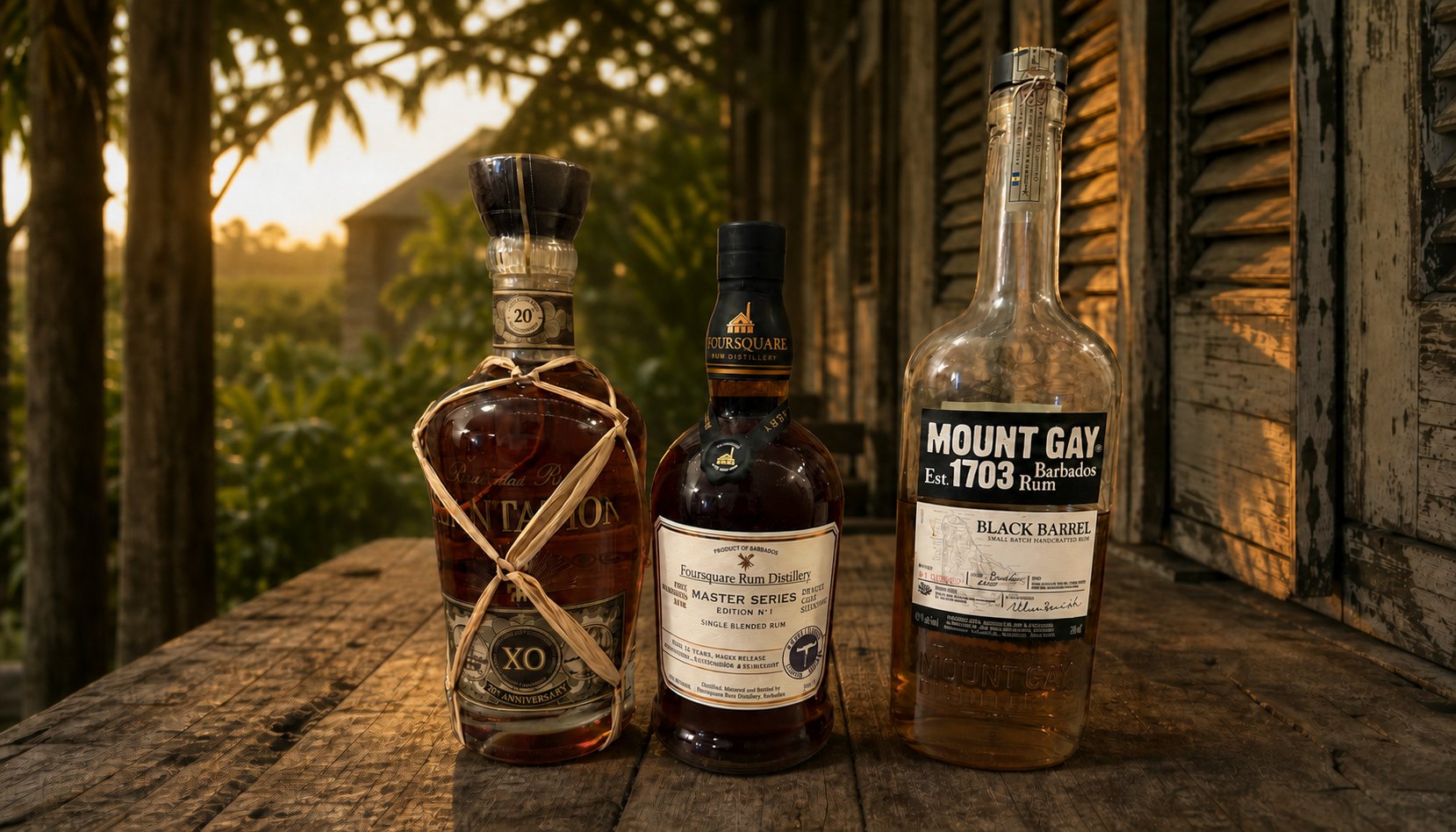
I own four Foursquare expressions, a Mount Gay Black Barrel, and two Planterays. None of that was a statement. I bought what I liked, and the argument just happens to be sitting on my own shelf now.
Where the Rules Are Strict
French cane juice rum runs the other way, and it is worth understanding because it shows what a real standard looks like. The AOC for Martinique was created by decree in November 1996. Rum under it must be fermented and distilled from fresh cane juice, pressed without heating. Enriching that juice with molasses or sugar syrup is forbidden. The juice must hit at least 14 degrees Brix and a pH of at least 4.7. Cane can only be cut between the first of January and the end of August. Distillation runs from the second of January to the fifth of September. A second distillation is not allowed. VO means three years, VSOP four, XO six.
That is a long way from two and a half percent of four named materials.
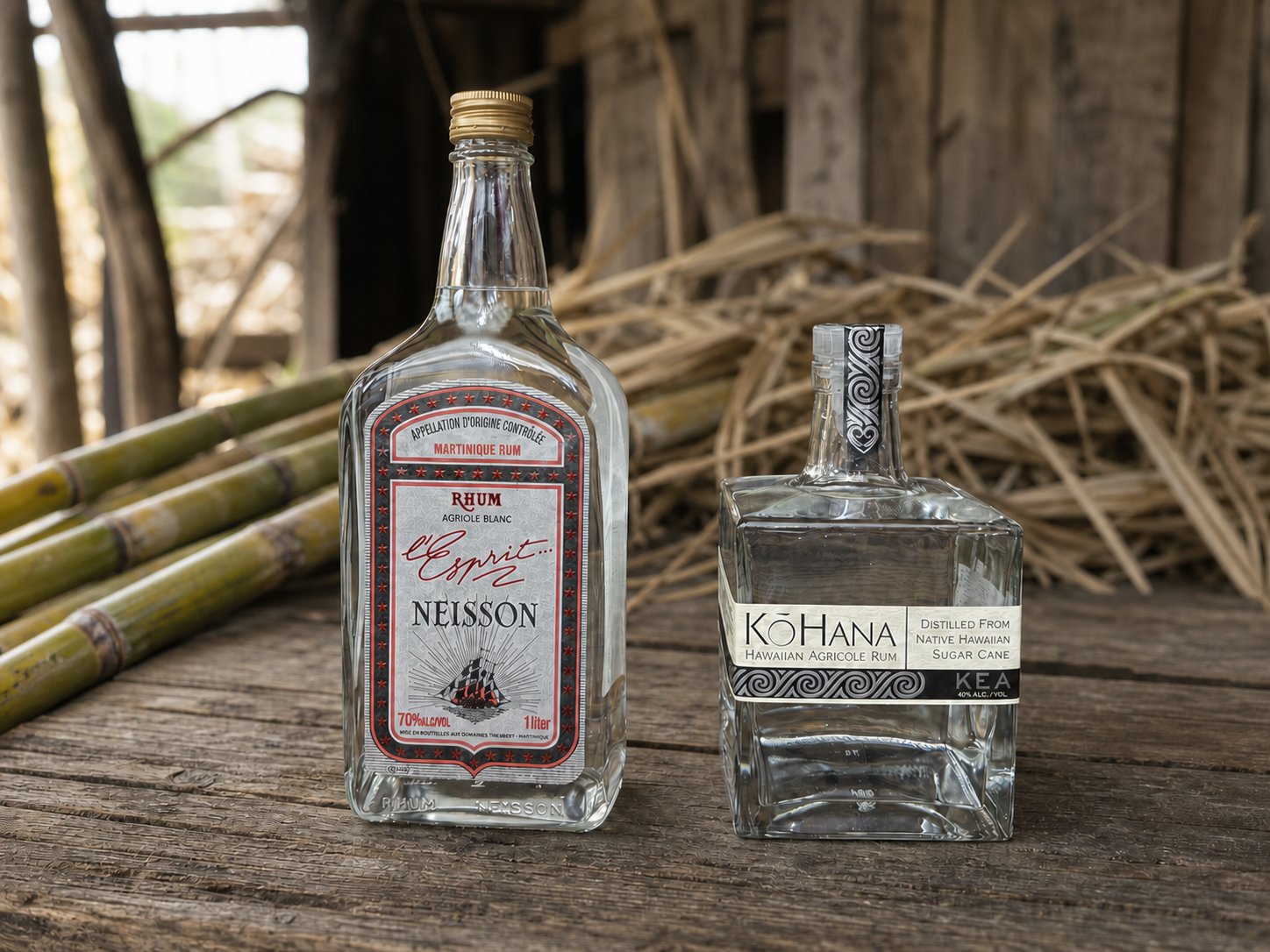
One distinction gets flattened constantly. Only Martinique holds the AOC. My Neisson L'Esprit Blanc sits inside it. The agricole method itself travels a lot further than the paperwork does, all the way to a single farm distillery on Oahu, where nobody is required to follow a French decree and nobody does. They press cane the same way because it works, not because a rulebook said so.
Twelve Rums, Four Groups
Sorted by what goes in them rather than by color. Three per group.
Barbados, no dosage claimed or detected
- Foursquare Sagacity. The distillery that made this argument public, and the loudest voice against dosage in the category. The price still has not caught up to the quality.
- Holmes Cay Barbados 2010. Single cask, bottled by an independent that publishes what is in the bottle. This is what unadulterated aged Barbados tastes like when nobody smooths the edges.
- Mount Gay Black Barrel. The oldest name in the category and a signatory to the same proposal. Not a special occasion pour, and it does not need to be.
If you drink one rum neat this year and want to know exactly what you are drinking, it comes from this group.
Cane juice, near and far
- Neisson L'Esprit Blanc. Martinique AOC, high proof, unaged. Grassy and sharp in a way molasses rum never gets. The rules behind it are the strictest in the category.
- Kō Hana Kea. Oahu, Hawaii. Fresh-pressed heirloom Hawaiian sugarcane, unaged, no appellation attached to it at all. A similar fresh-cane-juice approach to Neisson's, an ocean and a legal system away from any AOC.
- A third Martinique AOC bottle. Rhum J.M and Clément both fit here and neither is mine, so treat this as a flexible slot rather than one specific recommendation. Either is easy to find if you want a second comparison point against the Neisson.
Two of these are in my cabinet. The third is an honest recommendation rather than a pour I can describe from memory.
Characterful distillates with no published evidence of dosage
- Appleton Estate 8. Jamaica under its own geographic indication. The funk is the point, and funk is difficult to fake with additives.
- Rhumb Runner Jamaica Monymusk. An independent bottling of a distillery most people meet secondhand in blends. Louder than the Appleton and better for it.
- Rhumb Runner Diamond Guyana 14 Year. Demerara from the last working wooden stills in the world. Fourteen years, with a weight that reads as distillate- and cask-driven rather than sweetened.
Independent bottlers publish what they release, but that's a habit of the specific bottlers here, not a rule of independent bottling generally. They market their own stories just as hard as producers do.
Reported or Historically Dosed, Still Worth Knowing
- Ron Zacapa 23. Laboratory-measured sugar figures of 45 and 20 grams per liter across different tests, alongside a hydrometer estimate of 38. Also among the rums where lab work has turned up glycerol. It is pleasant, but the 23 refers to the oldest rum in a solera blend of spirits aged from 6 to 23 years, not the age of the entire bottle.
- Planteray XO 20th Anniversary. Bottled under the Plantation name and still labeled that way on older stock, renamed Planteray in January 2024. Maison Ferrand has never denied using dosage. That is the honest position in this argument, and it is an enjoyable bottle. Its use of dosage and off-island finishing represents one of the commercial practices at the center of Barbados's GI dispute.
- El Dorado 12 Year. Hydrometer estimates for older bottlings reached approximately 45 g/L of apparent extract; newer bottlings have tested closer to 6, with nothing on the label to flag the change. Check the bottling code before you assume which one is in your glass.
Know what you bought before you decide how you feel about it. My Pyrat XO belongs in this conversation too, but I could not find a published lab figure for it, so I am leaving the number blank rather than guessing.
The Santiago de Cuba 12 and the Mandinga Panama sit in my cabinet untested by anyone I trust. I am not going to assign them to a group on instinct.
One Recipe, Two Rums
To feel the difference between an undosed rum and a dosed one, make the same drink twice and put both glasses side by side. A daiquiri is the right test. Three ingredients, no distractions, and the ratio is old enough that generations of bartenders have already tuned it to taste right on a rum with nothing added.
This isn't a controlled experiment. Sagacity and Zacapa differ in more than dosage: fermentation, distillation, aging, casks, and blend construction all vary too. What follows is a tasting exercise, not a lab result.
Glass One: The Sagacity Pour
- 2 oz (60 ml) Foursquare Sagacity
- ¾ oz (22.5 ml) fresh lime juice
- ¾ oz (22.5 ml) simple syrup
- Ice
- Glass: Chilled coupe
Combine rum, lime juice, and syrup in a shaker with ice. Shake hard until the shaker is cold to the touch. Double strain into a chilled coupe. Sharp, dry, the lime doing most of the talking. Nothing in the bottle is softening the acid before the syrup gets a chance to.
Glass Two: The Zacapa Pour
- 2 oz (60 ml) Ron Zacapa 23
- ¾ oz (22.5 ml) fresh lime juice
- ¾ oz (22.5 ml) simple syrup
- Ice
- Glass: Chilled coupe
Same shake, same strain, same glass. Rounder before you've added anything, and the finish sits thicker on the tongue. Some of that is the reported dosage, and some of it is everything else that differs between these two rums, so treat this as a tasting note, not proof of cause.
Taste them back to back and the syrup becomes the tell. Cut it to a half ounce in the Zacapa glass and it usually snaps back into balance, which may partly reflect the rum's reported dosage. The Foursquare needs the full three quarters to stand up to the lime. Same method, same hands, the syrup adjusted, two different amounts of sugar required to reach the same place.
A Scent for the Day
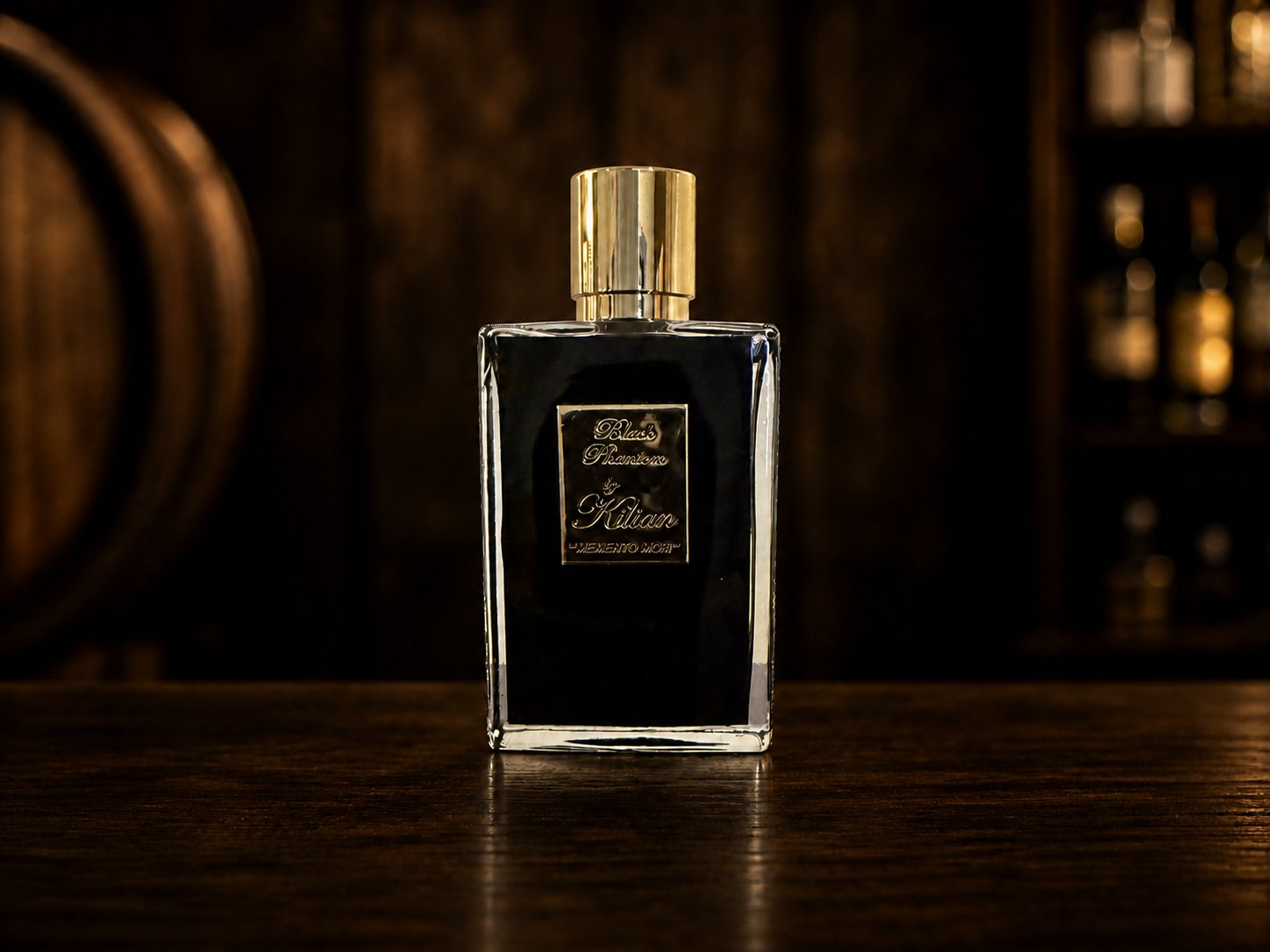
Kilian Black Phantom, or to give it the full name, Black Phantom Memento Mori. Number 33 in my collection, released in 2017, composed by Sidonie Lancesseur.
Rum sits at the top with caramel. Coffee runs through the heart with dark chocolate, almond, and heliotrope. Underneath: sugar cane, sandalwood, vanilla, tonka, and vetiver essence from Java. Kilian's own copy calls the opening a rum accord from Martinique.
Two things make it the right bottle for today rather than just a boozy one. The rum accord is specifically Martinique, the only place discussed here whose cane-juice rum is governed by an AOC. And the base note is sugar cane. Not sugar. Cane.
So a perfumer put sugar cane on the note list, publicly, as part of the story Kilian tells about the fragrance. But a note isn't an ingredient. Kilian's current online ingredient list names five things: alcohol denat., fragrance, water, isoeugenol, and BHT. Sugar cane and rum never appear on it. They're folded into the single word "Fragrance," the same catch-all term covering a formula no outsider gets to see.
Two industries arrive at the same opacity from opposite directions, and neither one is more honest than the other. Rum tells you what's legally allowed to go in the bottle and stays quiet about whether it's actually there. Perfume tells you what the bottle is supposed to smell like and stays quiet about what's actually in it. Both reach for specific, romantic language, cane, rum, oak, smoke, to describe things the law only requires them to name in the vaguest possible terms.
I also considered Lorenzo Pazzaglia Van Py Rhum, which carries rum in both the opening and the base. It lost on a technicality. It is a vanilla fragrance with rum in it, and today called for the reverse.
What to Do With Any of This
Nothing, if you like what you drink. Zacapa 23 is popular because it works, and there is no prize for drinking something austere you do not enjoy.
What changes is the price question. The number 23 and an apparent-extract estimate near 38 grams per liter tell you two very different things about the same premium-priced bottle. Once you know which one is in your glass, the shelf reorganizes itself. Bottles I once thought of as expensive turned out to be the bargains. A few I thought were bargains stopped looking like it.
Pour something neat tonight. If it is thick and sweet on the first sip and you were not expecting that, now you know one reason why.
Pull up a chair.
New writing on fragrance, spirits, and cigars goes up multiple times a week. Subscribe free on Substack for the Bite-Sized Brief, or pay a nominal fee to read the full article.

Sources
- The 2.5 percent allowance for harmless coloring, flavoring, and blending materials, and its prohibition for bourbon and straight whiskey: 27 CFR Part 5, explained further in TTB Ruling 2016-3.
- Johnny Drejer's hydrometer method and its validation against government lab results: Drecon, with background in The Fat Rum Pirate's interview with Drejer. He's also on Instagram.
- The Angostura and Botran lab-versus-hydrometer comparison, and the laboratory sugar figures and hydrometer apparent-extract estimates for El Dorado 12, El Dorado 15, Diplomático Reserva Exclusiva, and Ron Zacapa Centenario 23: Drejer's data as republished on Capn Jimbo's Rum Project Forum.
- DDL's post-2019 reduction of El Dorado's sugar dosage, old versus new bottling comparisons, and newer-bottling estimates near 6 g/L: Single Cask Rum and Rum Wonk.
- The five grams per liter threshold for barrel-derived sugar, and the compiled master list of lab and hydrometer results: Rum Revelations.
- Laboratory findings of glycerol in Zacapa and other widely sold rums: Cocktail Wonk.
- Richard Seale's point that the additive is frequently sweet wine or concentrate rather than sugar itself: RumShopBoy.
- The Barbados geographic indication proposal, its terms, and the distilleries backing it: The Spirits Business.
- The July 15, 2022 formal GI application by Mount Gay, Foursquare, and St Nicholas Abbey: Taste Trinbago.
- Barbados's Geographical Indications Act, Cap. 320, and the registration process: Corporate Affairs and Intellectual Property Office, the Barbados government body that administers it.
- The dispute's unresolved status as of mid-2025, with three distillers agreed and West Indies Rum Distillery still opposed: The Spirits Business.
- West Indies Rum Distillery's objection and Maison Ferrand's 2017 acquisition of the distillery: Barbados Today.
- The ten-year stalemate on the Barbados GI among the four established producers: Wine Enthusiast.
- The Plantation to Planteray rebrand, announced January 2024: Rumporter.
- Bentley and Hopewell as newer Barbados rum projects since the original four-producer dispute: Rum Revelations.
- The 1996 Martinique AOC decree and its production requirements, including the ban on second distillation and the harvest and distillation windows: rhum-agricole.net, cross-checked against INAO's official Martinique specification.
- The absence of any required label disclosure for permitted materials: TTB Beverage Alcohol Manual.
- Zacapa 23's stated solera range of rums aged 6 to 23 years: Zacapa's own site.
- Diamond's surviving wooden stills: El Dorado's stills page.
- EU Regulation 2019/787's rum sweetening rules, the 20 gram per liter general cap, and the traditionnel, tradicional, and agricultural terms: EUR-Lex.
- Barbados's sugar and rum economy and its history of enslaved labor: UNESCO.
- Neisson's standing within the Martinique AOC: Barlist.
- Kō Hana's Hawaiian agricole method, fresh-pressed heirloom sugarcane grown and distilled on the same Oahu farm: Kō Hana Rum.
- Black Phantom's full note list, its 2017 release, and Sidonie Lancesseur as perfumer: Fragrantica.
- The Martinique rum accord and the Cellars collection's stated theme of rum, coffee, cacao, cognac, and whisky: Kilian's own product page.
- Van Py Rhum's full note list: Lorenzo Pazzaglia's own site.
- Kilian's current online ingredient declaration for Black Phantom, distinct from its published note list: Kilian's own site.
- Both fragrances' catalog numbers, and which of the twelve grouped rums are in my own cabinet, are pulled directly from my own collection database.
- Lab and hydrometer figures reflect published testing as of this writing and can shift as brands reformulate.
A note on the images in this piece: the hero illustration and the Bite-Sized card are AI-generated, one in a comic style and one in watercolor. The hydrometer shot is a real photograph, staged. The Barbados shelf, the Neisson and Kō Hana pairing, and the Black Phantom bottle all show the actual bottles with the background digitally replaced.